Jizu Mountain: A Peaceful Buddhist Journey in Yunnan
Jizu Mountain (also called Chicken Foot Mountain) is located in Binchuan County, near Dali city in Yunnan Province. It is a very special place for Buddhists. Many people believe this is where Mahākāśyapa, one of the Buddha’s closest students, once lived and taught.
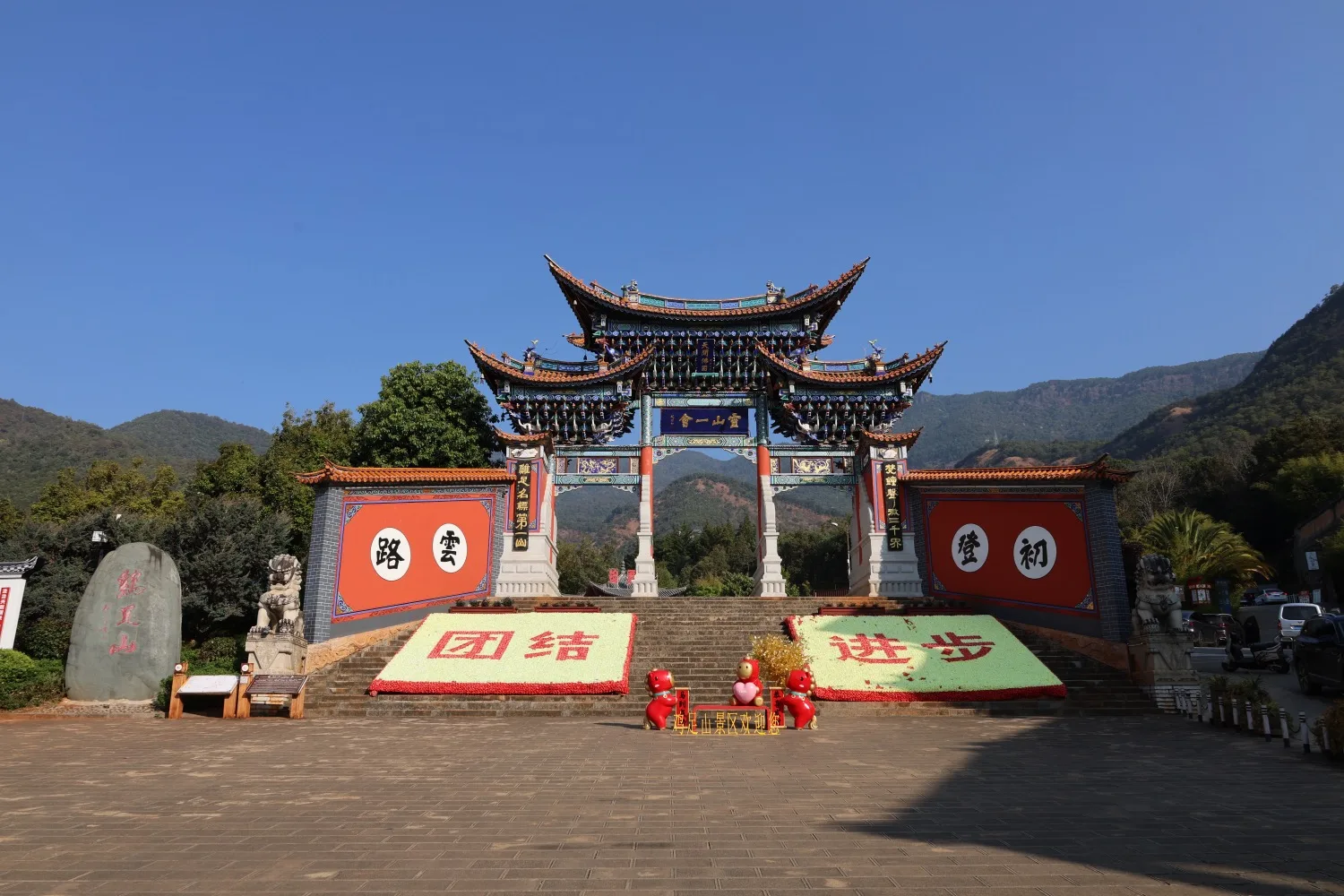
The mountain has a unique shape: three peaks stand in the front and one long ridge runs behind. Together they look like a chicken’s foot. That is why people call it Jizu Mountain.
The highest point of Jizu Mountain is Tianzhu Peak. It stands 3,248 meters tall (about 10,660 feet). The whole area covers roughly 2,822 hectares. You will find thick forests, steep cliffs, clear springs, deep caves, and many old temples here.
Visitors come for two main reasons. First, the views are wonderful. Second, the place feels calm and spiritual. There are four famous views to enjoy:
- To the east: a bright sunrise
- To the south: beautiful soft clouds
- To the west: views of Cangshan Mountain and Erhai Lake
- To the north: snow-covered peaks
There are also eight classic scenes people talk about, such as:
- Buddha’s Light shining on Tianzhu Peak
- Pine trees making soft sounds in the wind
- Autumn moon over the pagoda courtyard
- Waterfalls that look like they cut through the clouds
Getting to Jizu Mountain
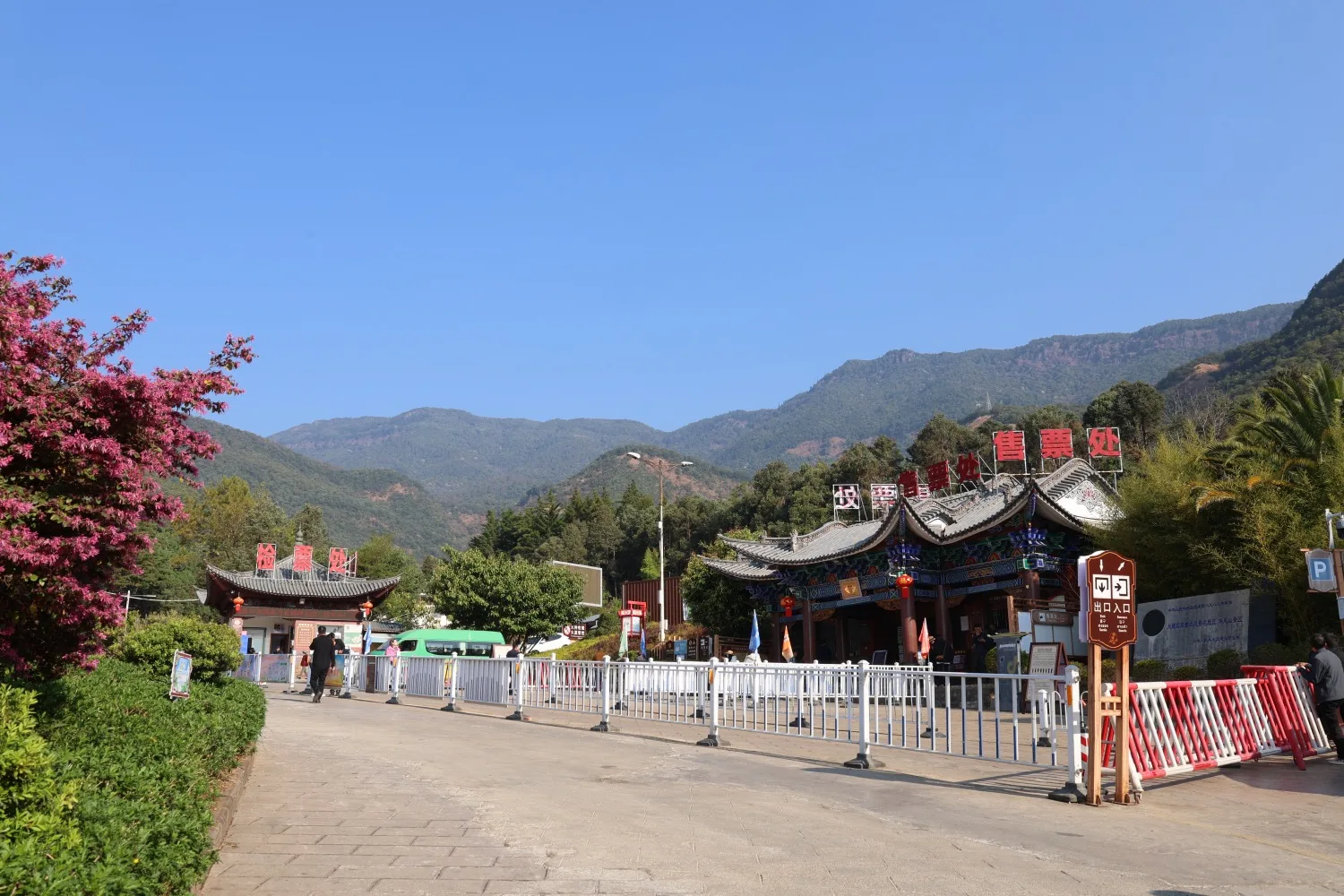
Driving from Dali
If you depart from Dali, Yunnan, the drive to the Jizu Mountain scenic area takes about 1.5 hours and covers roughly 80 km.
Navigate to: Jizu Mountain Visitor Center (鸡足山游客中心)
Off-Season Driving Rules:
- During the off-peak season (typically November to March, excluding major holidays), private vehicles are usually allowed to enter the scenic area directly. You only pay the entrance fee per person (based on the number of passengers in your car).
- There is no additional charge for the vehicle itself.
- Parking is free at designated areas.
- You can drive from the gate to Zhusheng Temple.
Peak-Season Restrictions:
- In high season (April to October, plus Chinese holidays such as Spring Festival, May Day, and National Day), private cars are not permitted beyond the scenic area gate.
- You must park there and transfer to the official sightseeing bus to continue farther up the mountain.
- Off-Season Advantage
In quieter months, you can often drive all the way up to the Zhusheng Temple area. From there, park your car and switch to the sightseeing bus to reach the lower cable car station.
This flexibility makes off-season travel much more relaxed and cost-effective, allowing you to stop at temples and viewpoints at your own pace.
Taking Public Transit
If driving is not an option, you can easily reach Jizu Mountain by bus from Dali.
Option 1: Direct Shuttle Bus
- Departure point: Dali Ancient City Visitor Center
- Price: ¥34 per person
- Travel time: About 1.5 hours
- This is the most convenient direct route.
Option 2: Regular Buses from Xiaguan
- Departure point: East Long-distance Bus Station in Xiaguan (Dali)
- Price: ¥35 per person
- Departure times: 7:30 a.m., 8:30 a.m., 9:30 a.m., and 10:30 a.m.
These buses run on a regular schedule and drop you off at the Jizu Mountain scenic area.
Return Buses to Dali:
- Return buses depart from Shizhong Temple (the main parking and transfer point on the mountain).
- Departure times: 11:00 a.m., 12:00 p.m., 1:00 p.m., and the last one at 2:00 p.m.
Jizu Mountain Ticket
- The basic entry price for each adult is 55 RMB per person
- Visitor over 60 can enjoy 50% off
- The sightseeing bus is 15 RMB per person per trip
- Cableway round trip is 75 RMB
Purchase your ticket at Jizu mountain visitor center.
How to plan your visit?
Plan at least 5 hours to fully explore Jizu Mountain. The mountain has many temples spread across its slopes. You will need enough time to walk around, pray, take photos, and enjoy the peaceful atmosphere without rushing.
Driving Option
If you are driving, the best way is to arrive in Jizu Town the day before. Find a local guesthouse or hotel to stay overnight. Then, start driving up the mountain early the next morning.
Xishuiyunpan Guesthouse (溪水云畔客栈)
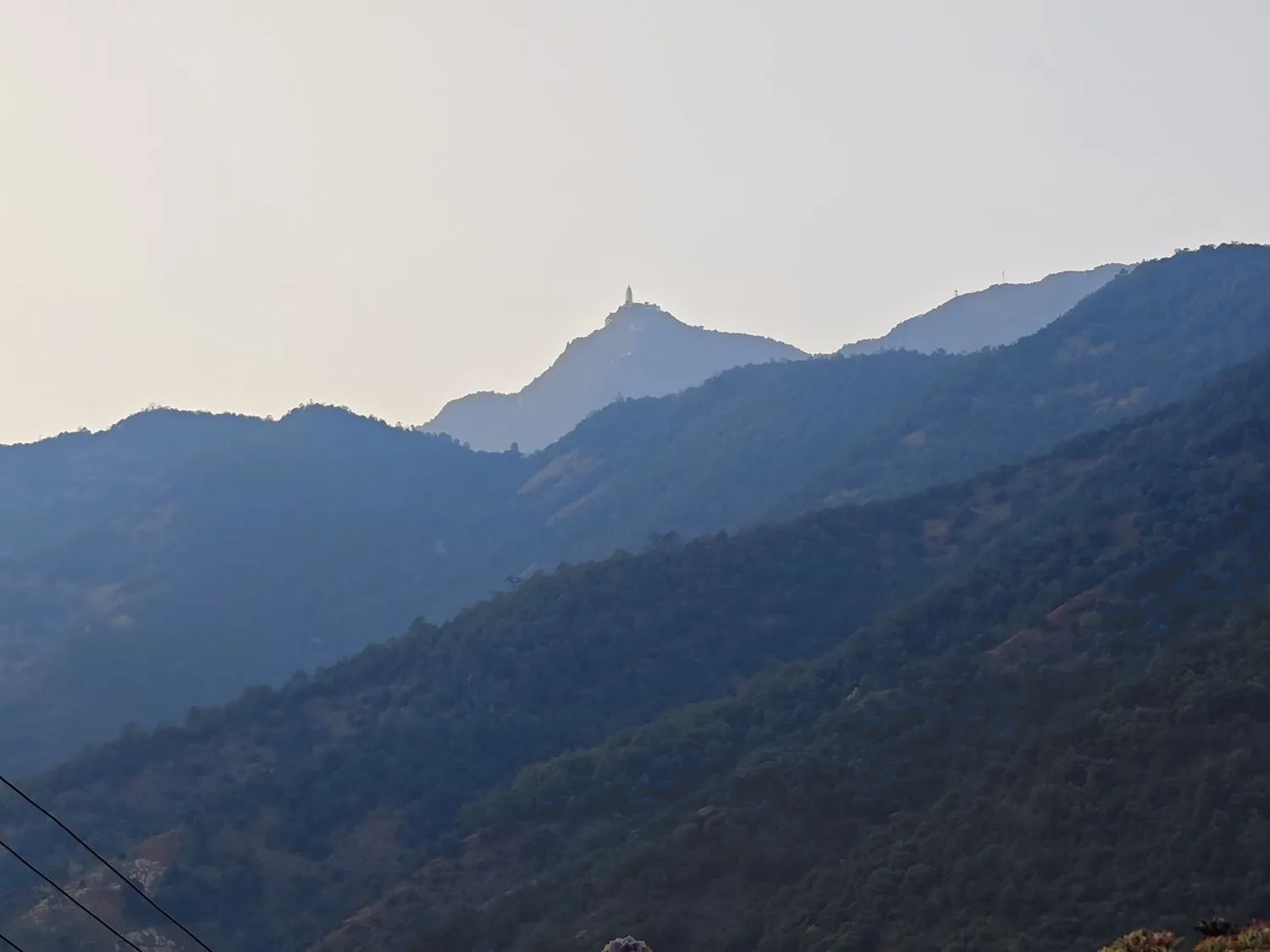
We chose to stay at Xishuiyunpan Guesthouse (溪水云畔客栈), and it turned out to be an excellent choice. This family-owned guesthouse sits right at the foot of Jizu Mountain, making it super convenient for an early start the next day.
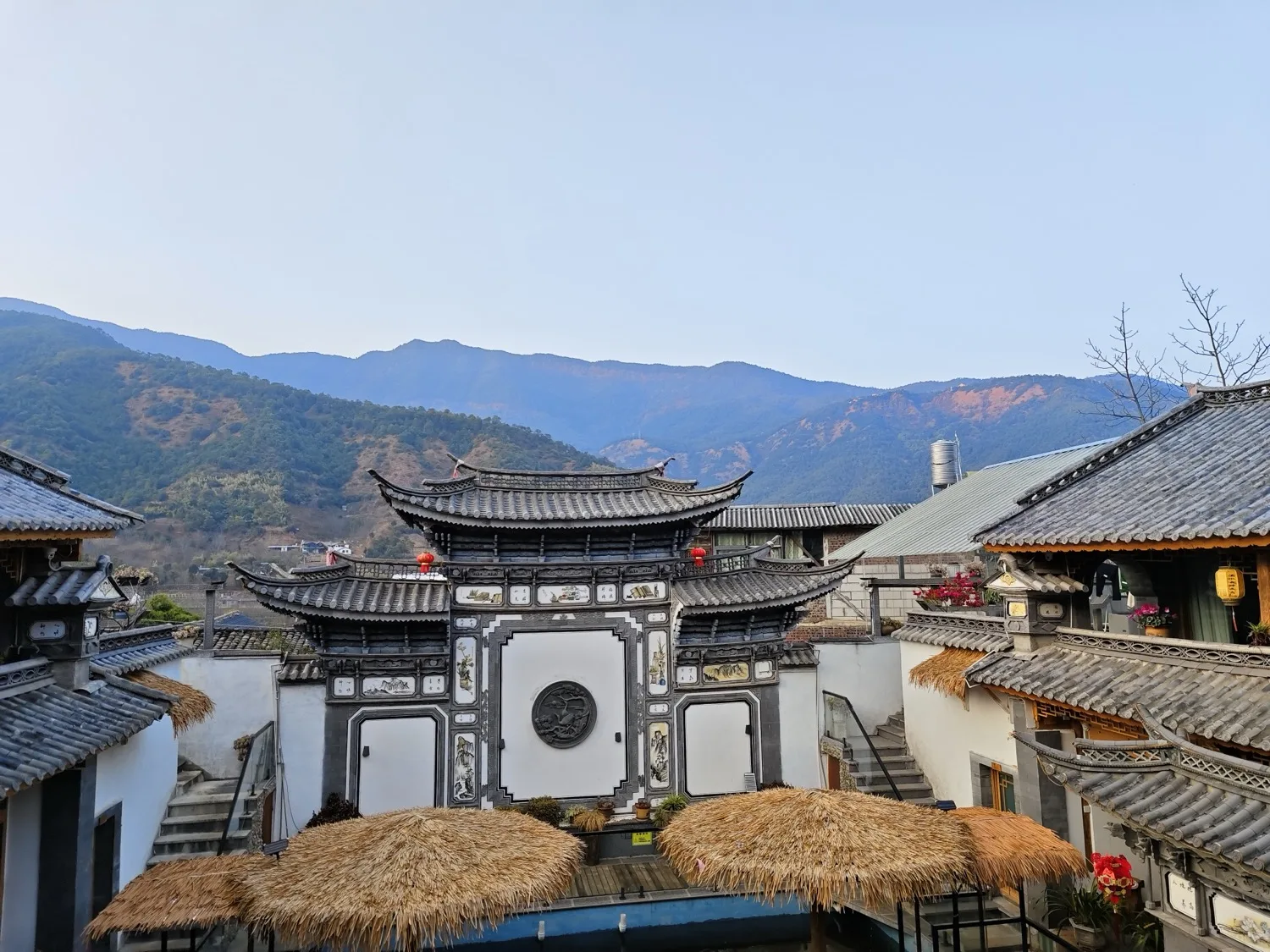
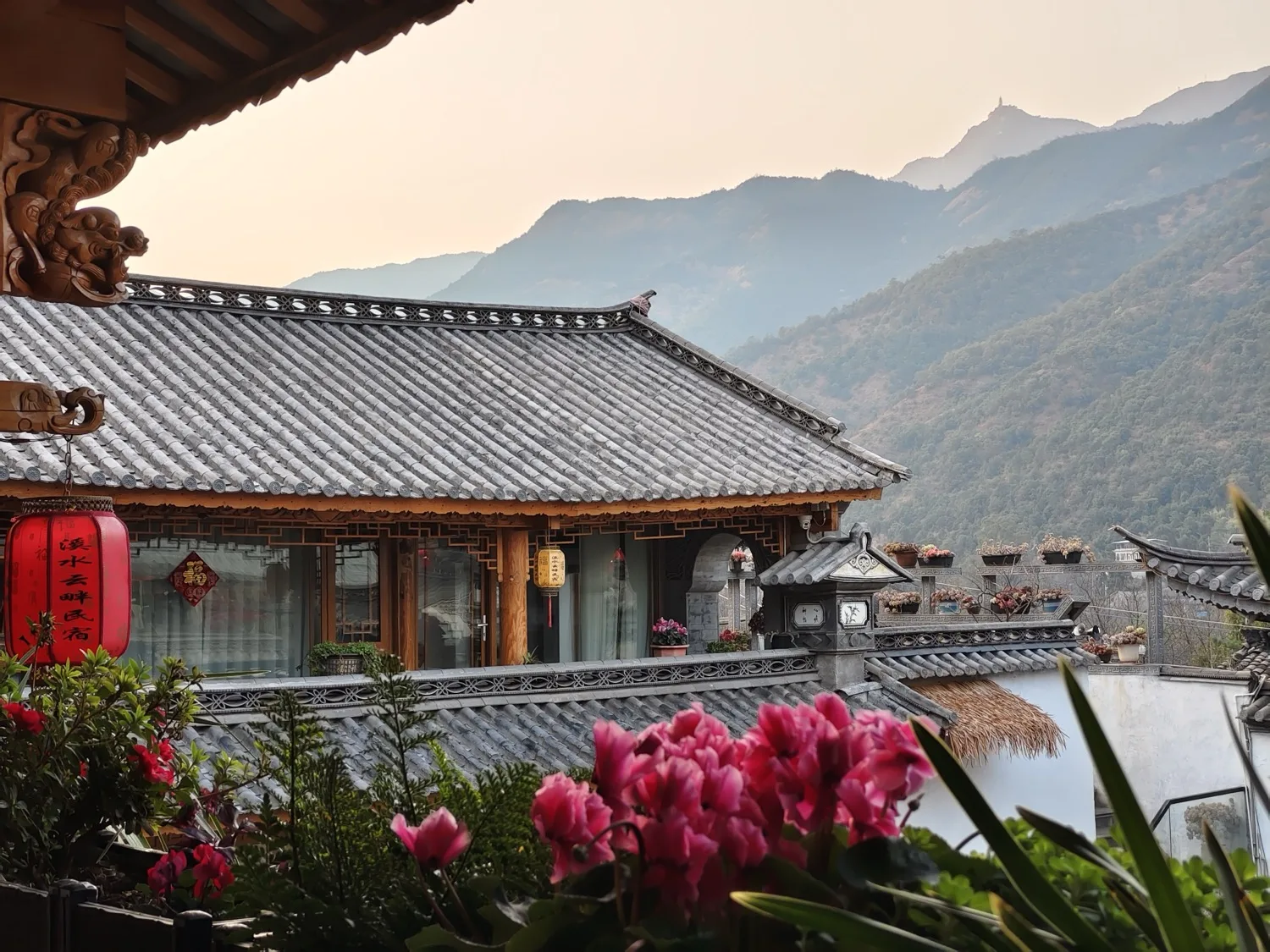
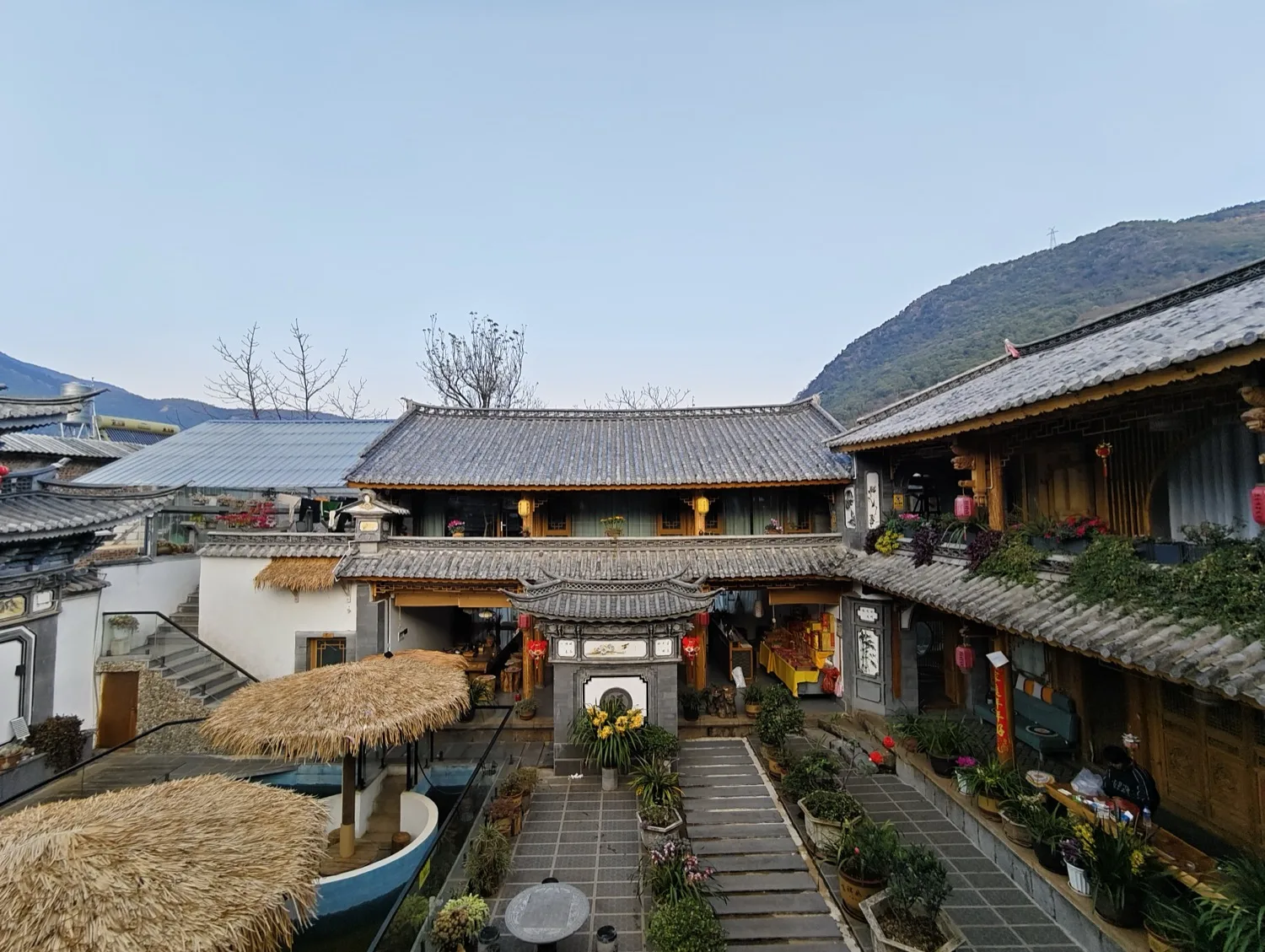
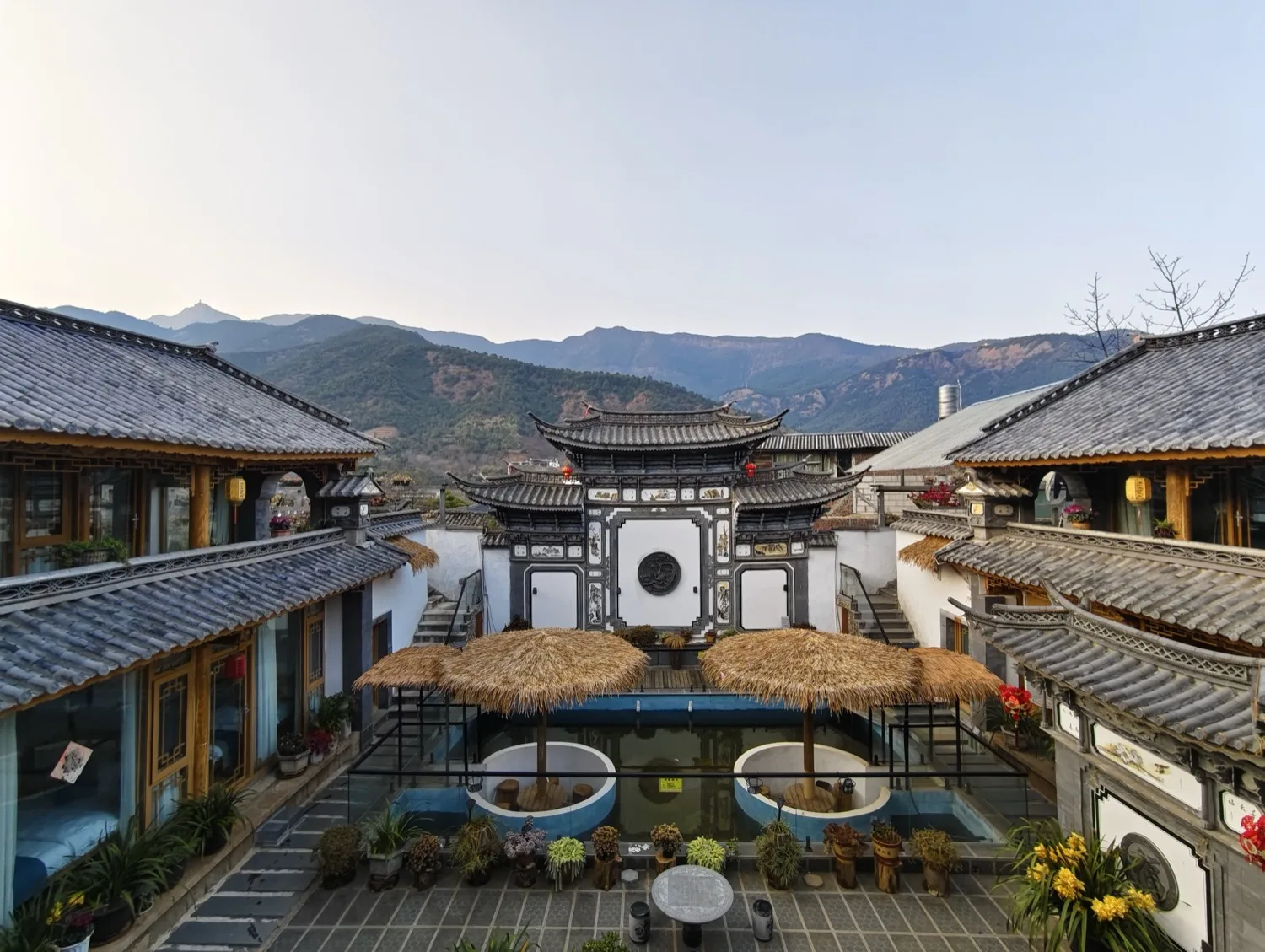
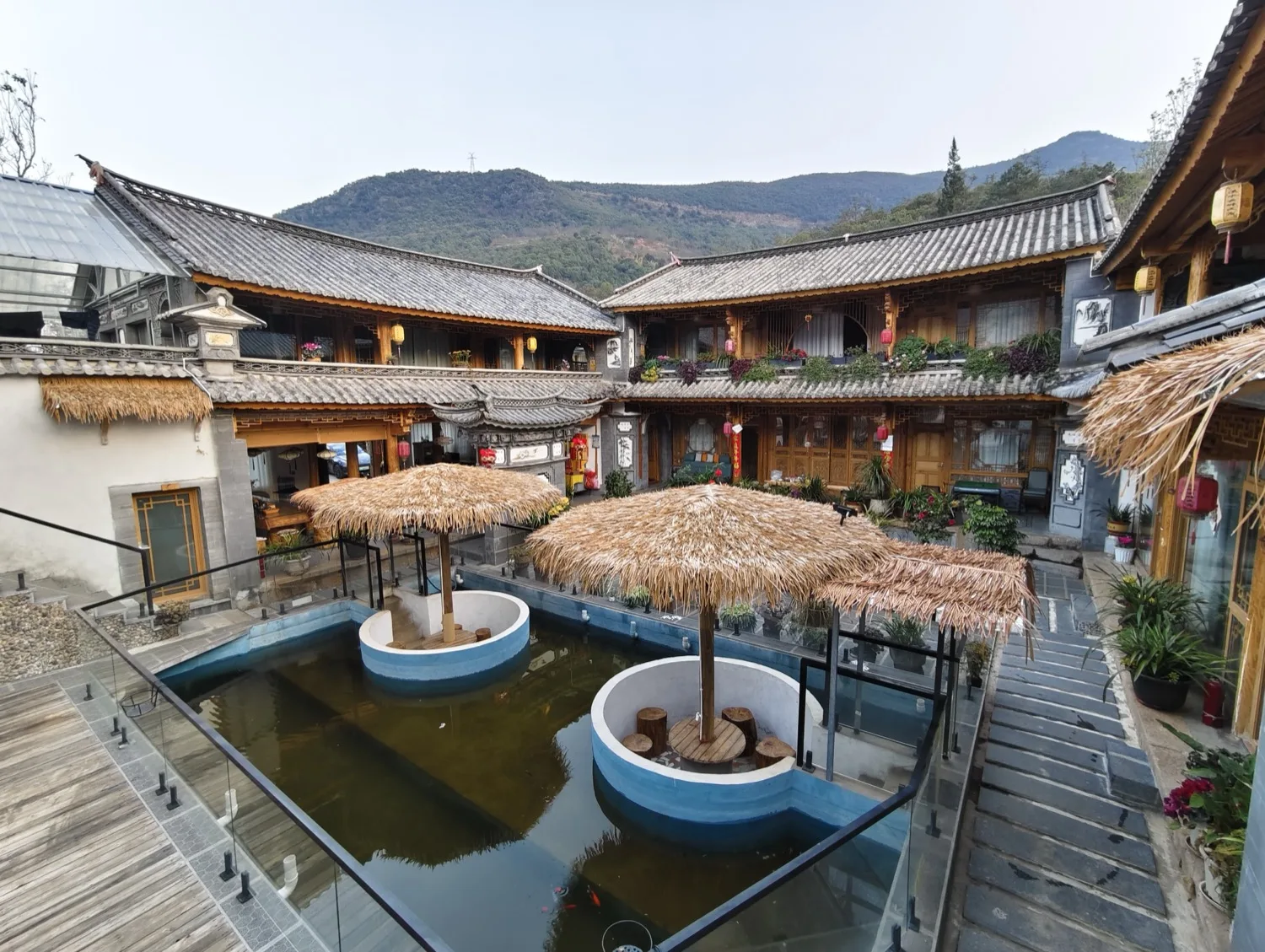
The entire building is designed in the traditional siheyuan courtyard style — a beautiful, enclosed layout with rooms surrounding an open central courtyard. The owners keep everything spotless and well-maintained; you can really feel the care and love they put into the place.
The guesthouse has two floors, with comfortable rooms upstairs and downstairs. One of the biggest highlights is the hot tub — perfect for soaking in warm water during the cooler months or after a day of walking the mountain trails.
In winter, relaxing in the hot tub while looking up at the mountain stars would be incredibly relaxing and cozy.Overall, it’s a peaceful, charming spot that matches the calm spirit of Jizu Mountain perfectly. If you’re looking for a relaxing overnight stay before or after exploring the temples, Xishuiyunpan Guesthouse is highly recommended.
With a car, you have the most flexibility. Begin at the visitor center and visit each temple and hermitage one by one, starting from Nine Lotus Temple (Jiulian Temple). You can stop whenever you like to explore, pray, or rest.
Bus Option
If you are taking the bus, I recommend leaving early.
Depart at 7:30 a.m. from Dali, arrive at Jizu Mountain around 9:00 a.m., and take the 2:00 p.m. return bus back to Dali. This gives you a full morning and early afternoon on the mountain.
Alternatively, plan to stay one night inside the scenic area (at a temple guesthouse or private accommodation) so you can explore more slowly and even watch sunrise or sunset.
When taking the bus, the sightseeing bus usually goes directly from the visitor center to Zhusheng Temple (祝圣禅寺). This means you will miss some lower temples along the way.
Don’t worry too much — among the ones you skip, I only strongly recommend visiting Pagoda Temple (佛塔寺). You can safely skip Nine Lotus Temple (Jiulian Temple) and Bao’en Temple if time is short, as the higher areas and summit offer the most iconic experiences.
General Tips for a Good Visit:
- Start early to avoid crowds and enjoy cooler weather.
- Wear comfortable shoes for walking and steps.
- Bring water, snacks, and layers (it gets cooler higher up).
- Respect temple rules: walk clockwise, keep quiet, and no flash photos inside halls.
- If you want sunrise/sunset or more temples, stay overnight at the top.
Jizu Mountain is best enjoyed slowly — take your time to pray, breathe the fresh air, and feel the spiritual calm. Safe travels! Have you decided on driving or bus?
Jizu Mountain Scenic Area Map

Jiulian Temple
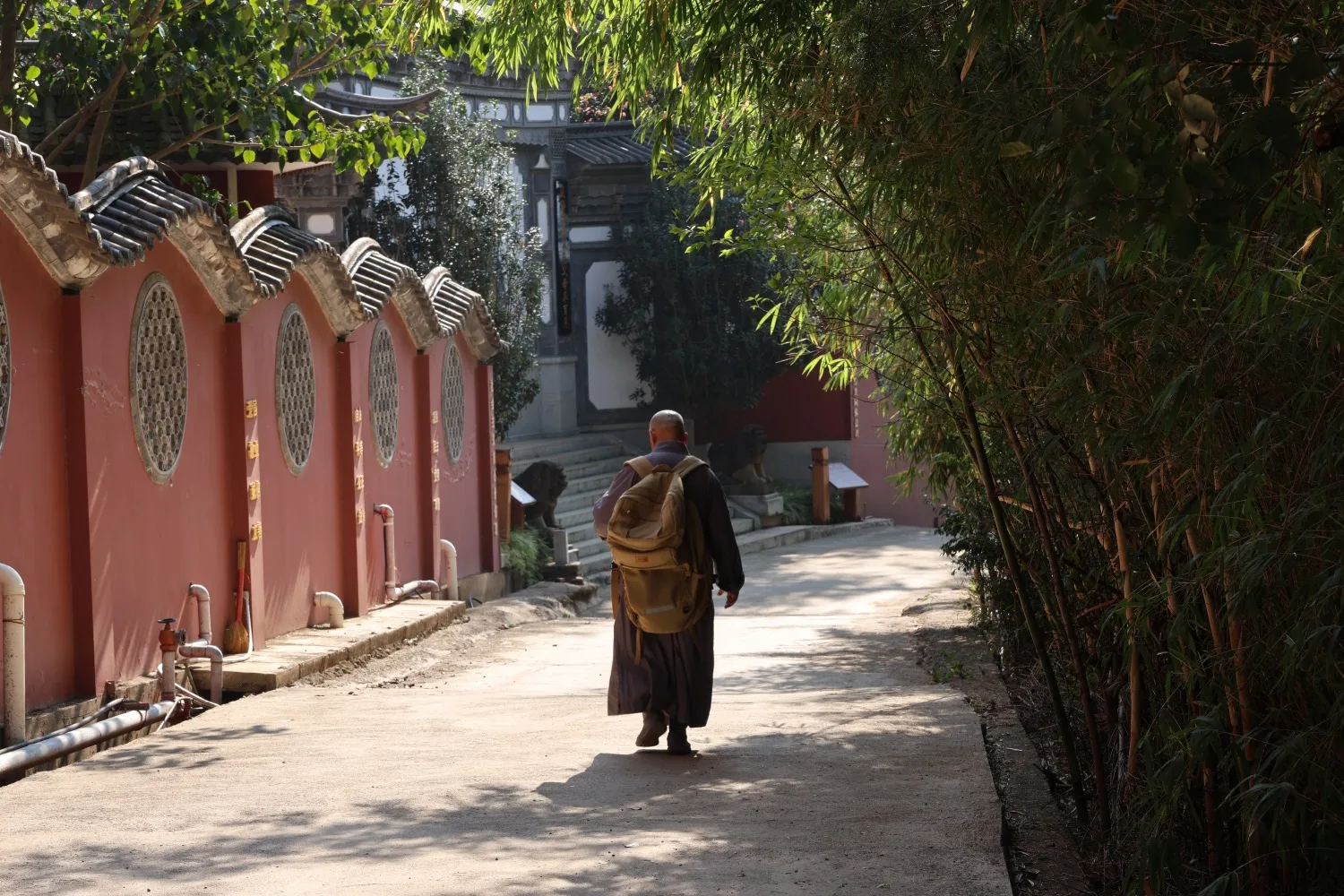
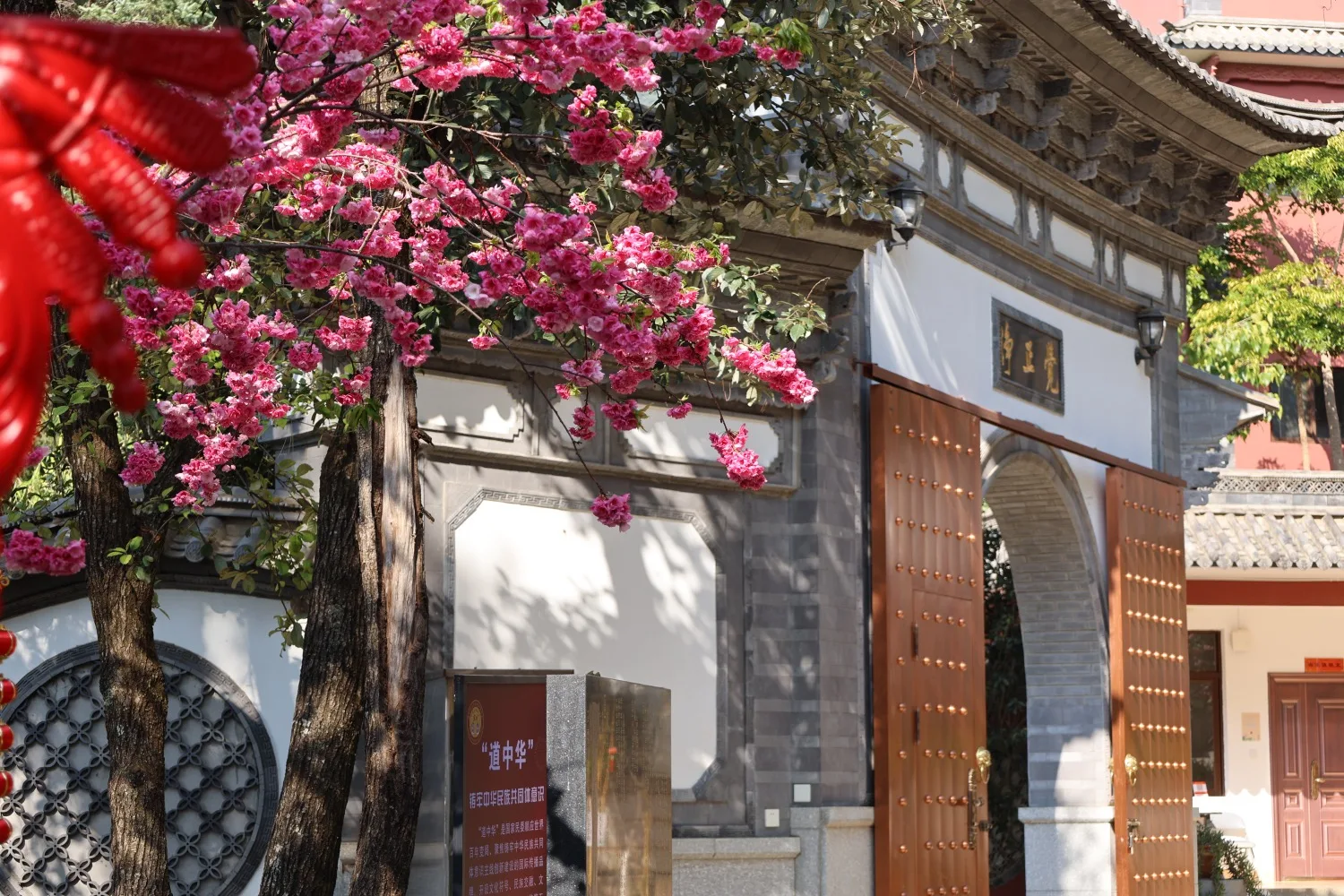
Jiulian temple (nine lotus temple) is the first temple you will encounter after you’ve entered Jizu Mountain. Built during the Ming Dynasty’s Wanli era, it now serves as the women’s division of Yunnan Buddhist College.
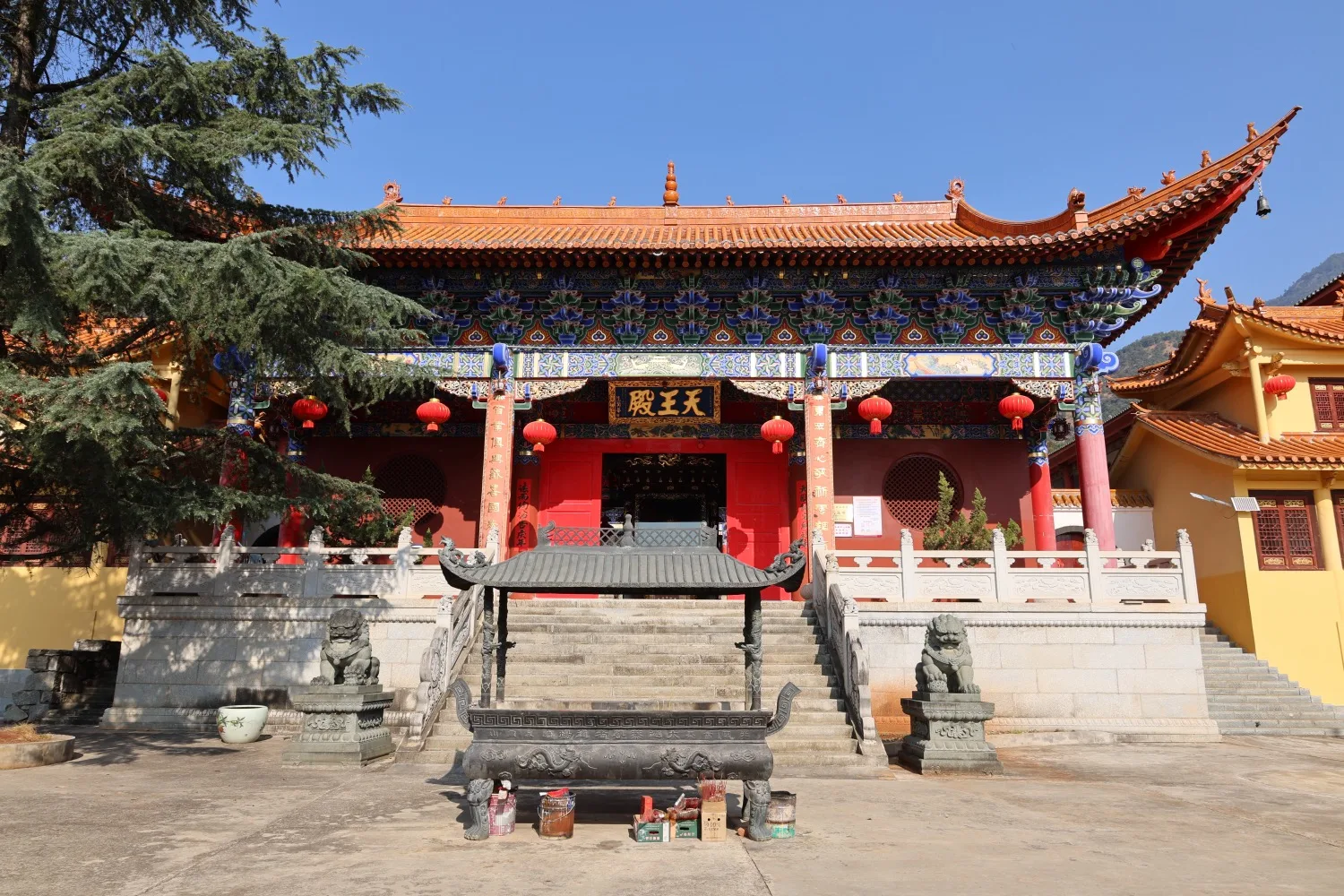
The surroundings are peaceful — ancient trees tower overhead, birds sing, and flowers bloom year-round. In the main hall courtyard, a large pond teems with vibrant red koi and a few relaxed turtles.
What surprised me most? Dozens of cats lounging everywhere — elegant, independent, and utterly photogenic. They don’t beg for attention but add a gentle, living charm to the temple grounds.
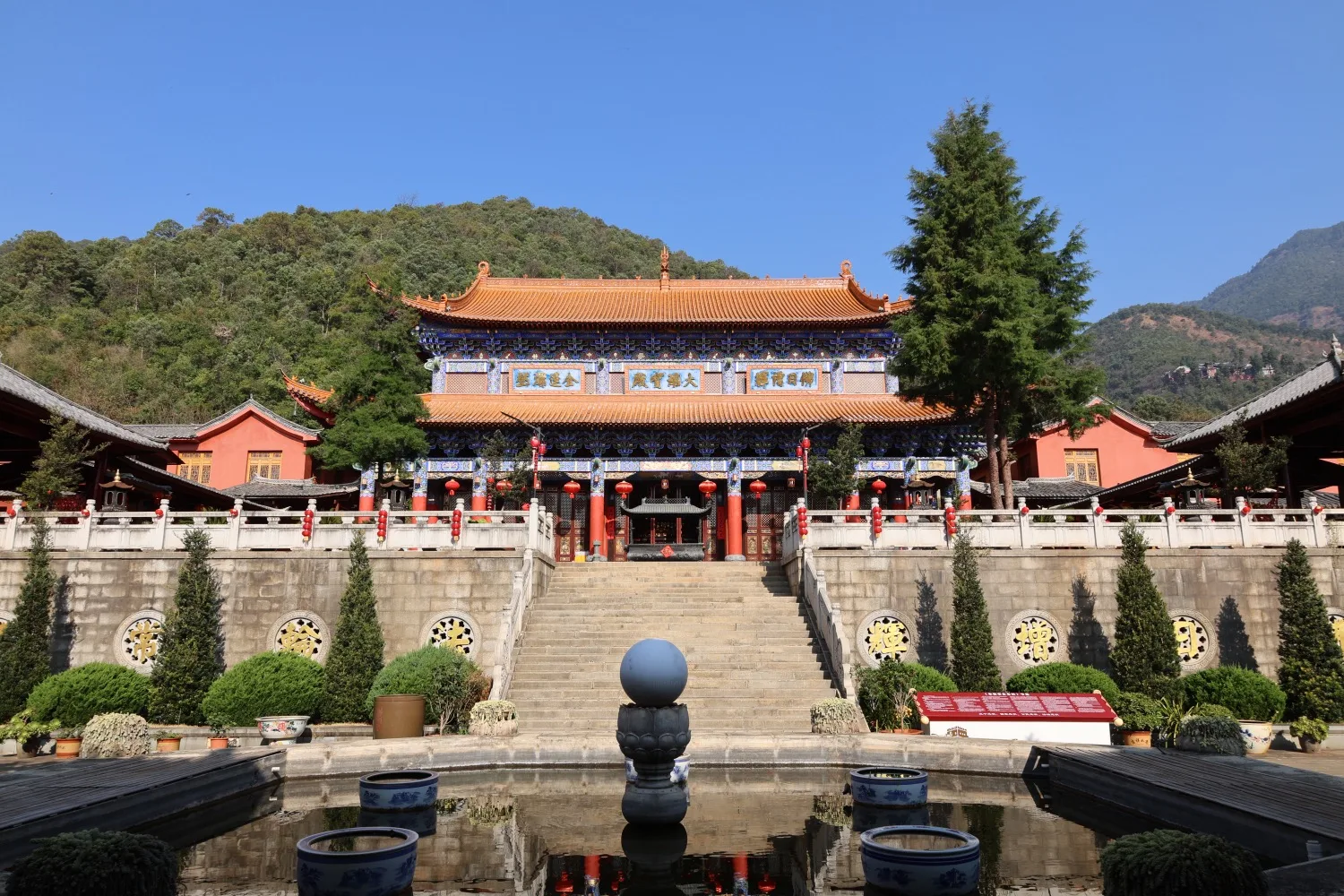
Staying overnight here lets you experience monastic life: wake-up at 4:30 a.m. with wooden fish clappers, followed by the deep toll of the bronze bell at 5:00 a.m.
Monks, nuns, volunteers, and lay practitioners gather for about 90 minutes of morning chanting. The air fills with incense and calm recitation — it’s an unforgettable way to start the day.
Bao’en Temple
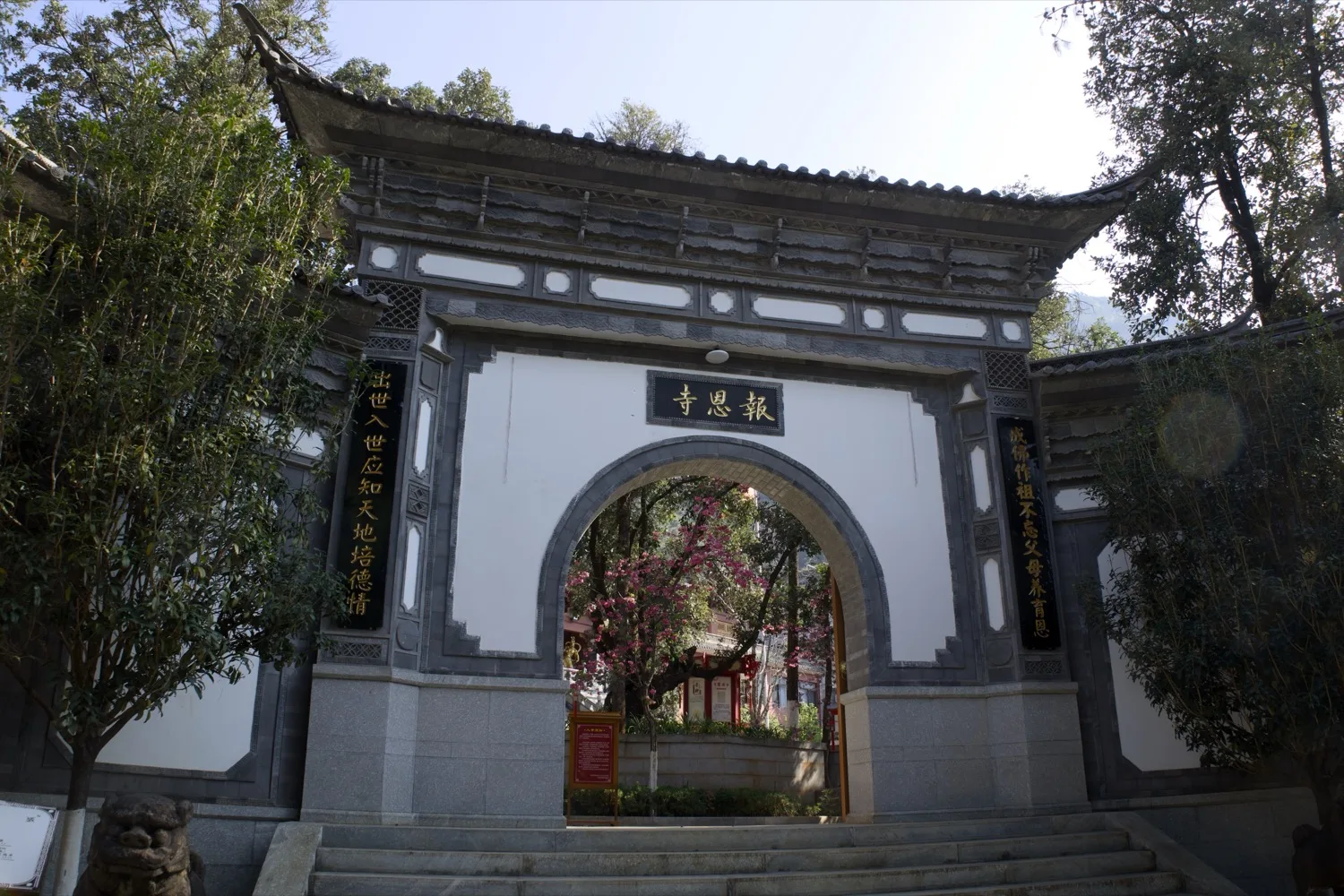
Bao’en temple, home to a precious Bodhi tree transplanted here in 2014 from Dehong (originally from Sri Lanka’s lineage).
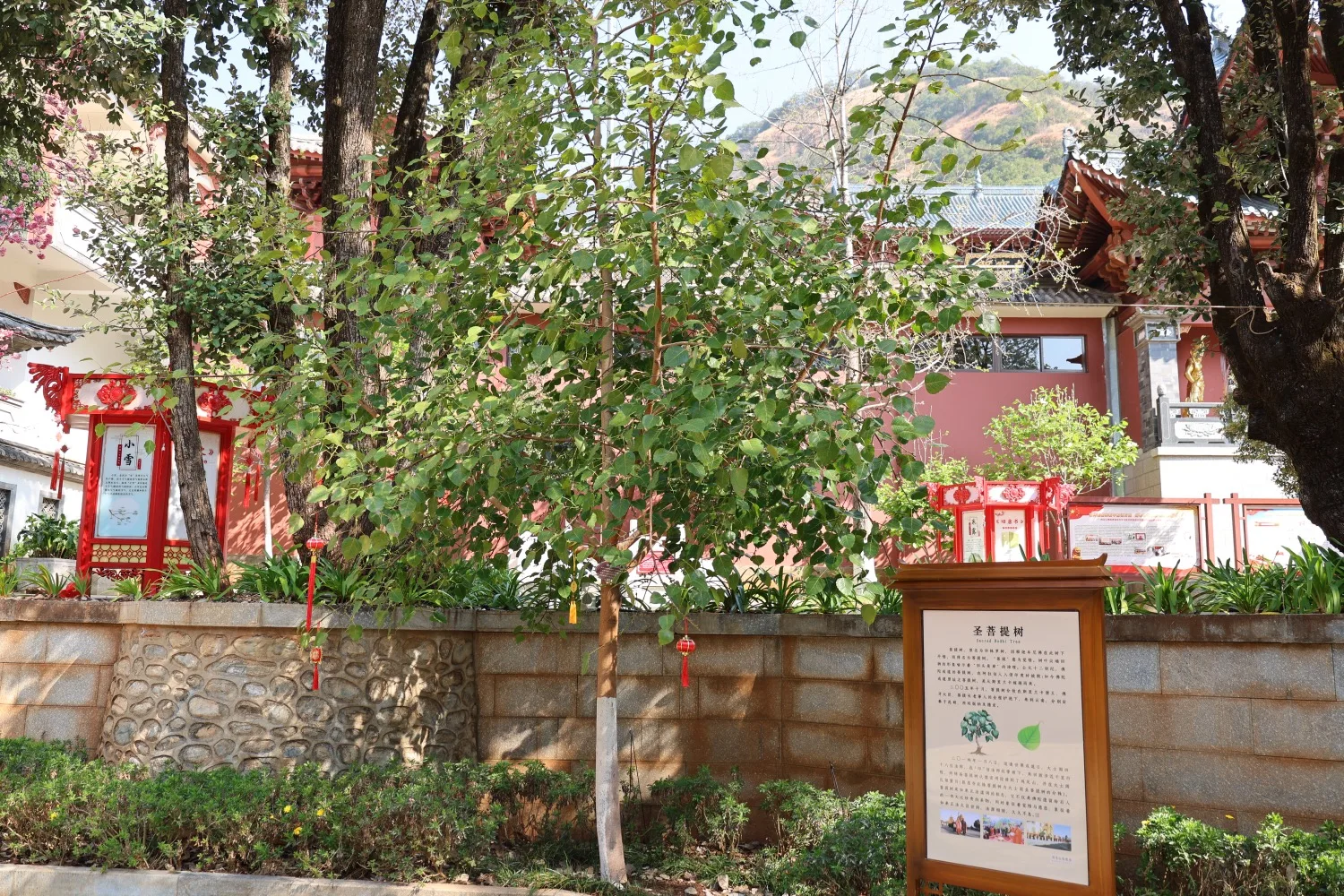
The Bodhi tree was originally called the pipal tree (or assattha tree). It got the name “Bodhi tree” because Shakyamuni Buddha sat under this kind of tree and reached full awakening (enlightenment).
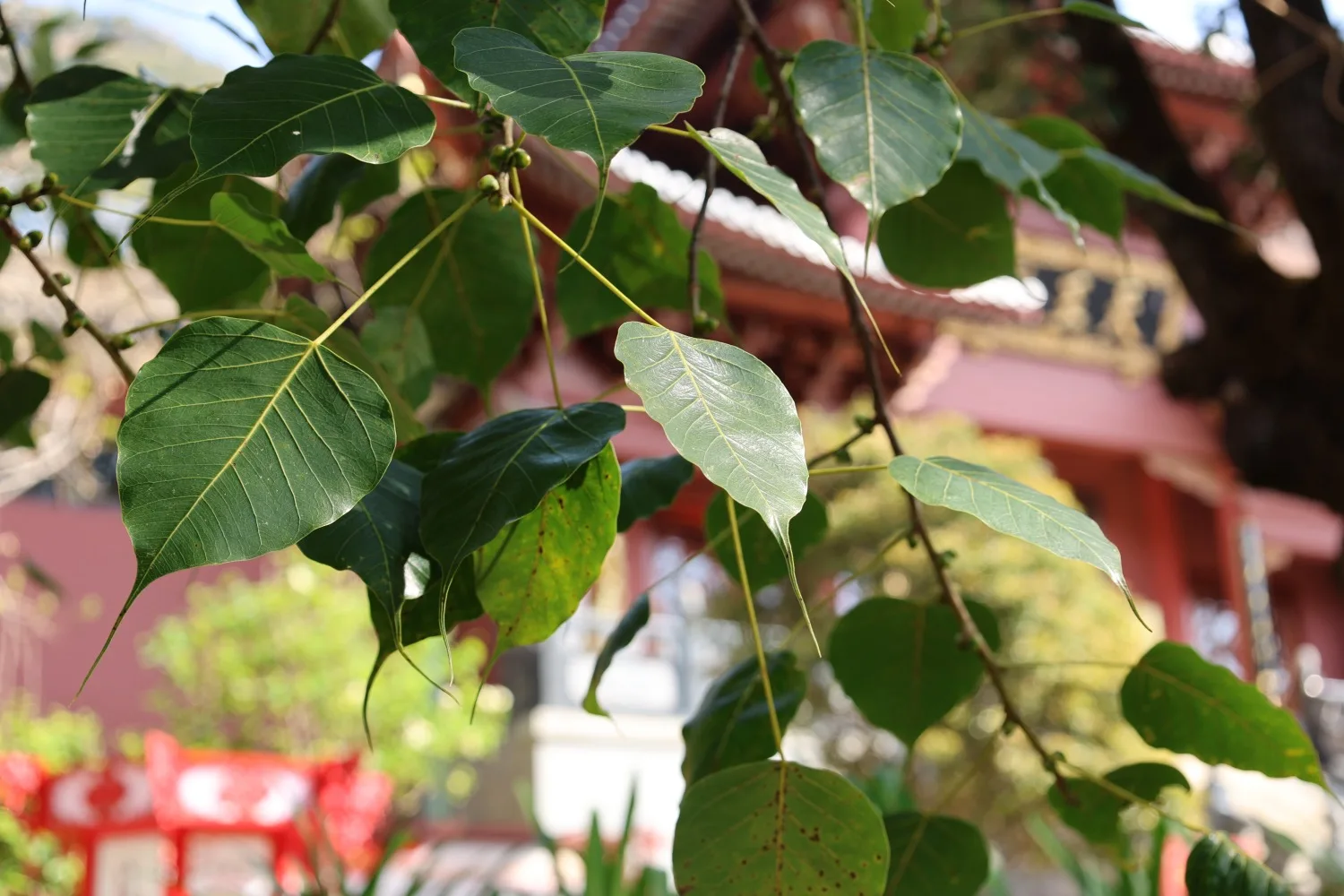
The word “Bodhi” means awakening or enlightenment. The leaves of the Bodhi tree have pointed tips that curl back. This shape reminds people of an important Buddhist teaching: “Turn back and you reach the shore” — meaning if you change your wrong ways, you can find peace and freedom.
In the 12th century, the original Bodhi tree — the one under which the Buddha attained enlightenment — was destroyed during an invasion of India by Arab forces. Today, the true-lineage Bodhi trees that exist come from grafts (cuttings) taken from the ancient tree in Sri Lanka.
In October 2005, with the help and protection of Sri Lankan elders including the minister in charge of the Buddha’s tooth relic and Venerable Bodhi, branches of the Bodhi tree were brought to Yunnan Province. They were planted in Kunming, Xishuangbanna, and Dehong.
On January 8, 2014 — which was an important day honoring the Buddha’s enlightenment — 48 monks from Dashige (Great Bodhisattva Pavilion) traveled nearly a thousand miles round trip. They respectfully invited and brought a thriving Bodhi tree from Dehong Prefecture to Jizu Mountain.
There, it was planted at Dashige, where it took root and continues to grow. The Bodhi tree is a symbol of the pure Dharma field of the Tathagata (the Buddha). It is not only an extremely precious holy object left by the Buddha for future generations. It also stands for awakening and compassion. It represents the Buddha’s true teachings staying in the world for a long time, with the source of the Dharma flowing on, lasting forever without end.
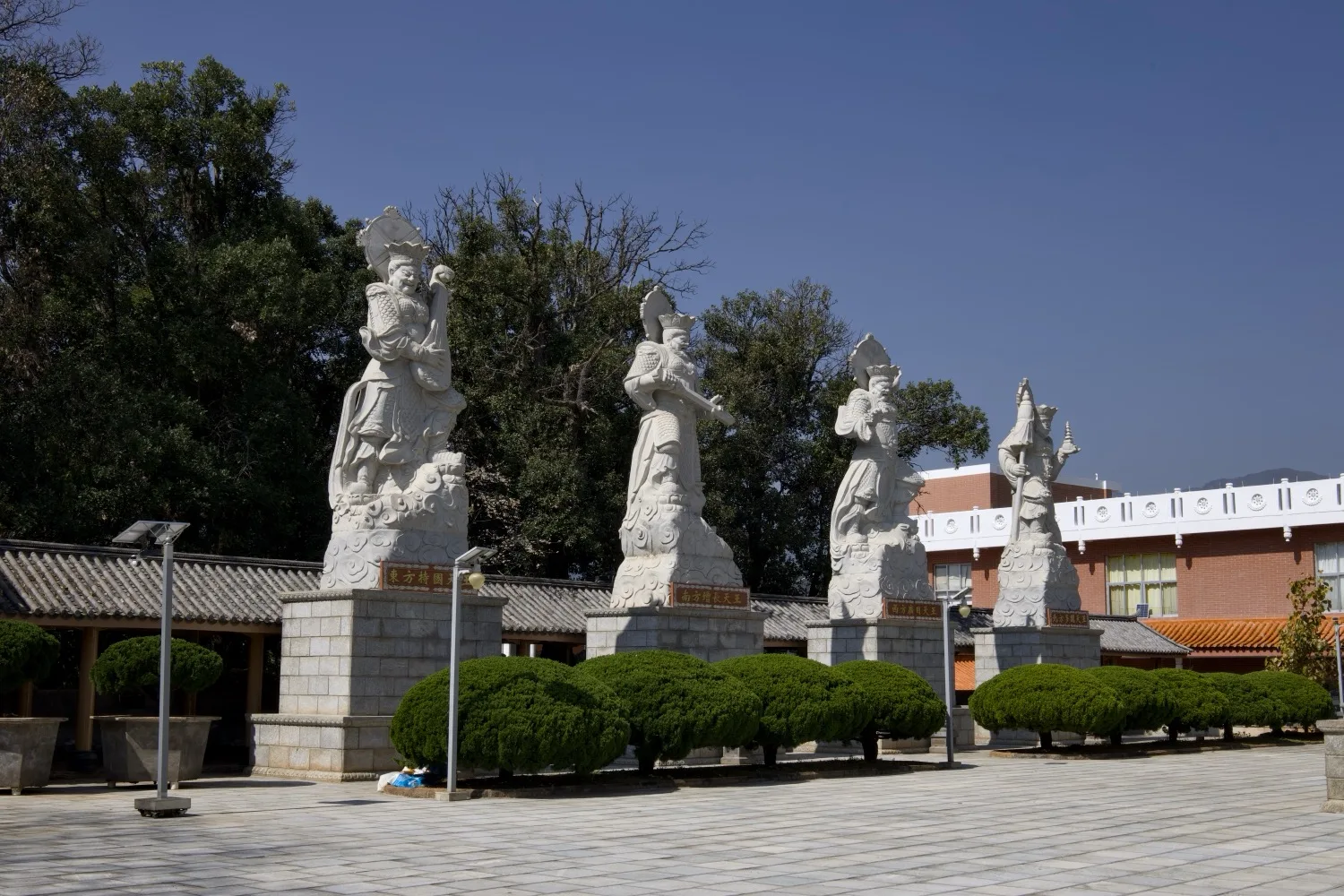
Buddhist Pagoda Temple
Among all the temples on Jizu Mountain, I think Pagoda temple is the most beautiful one.
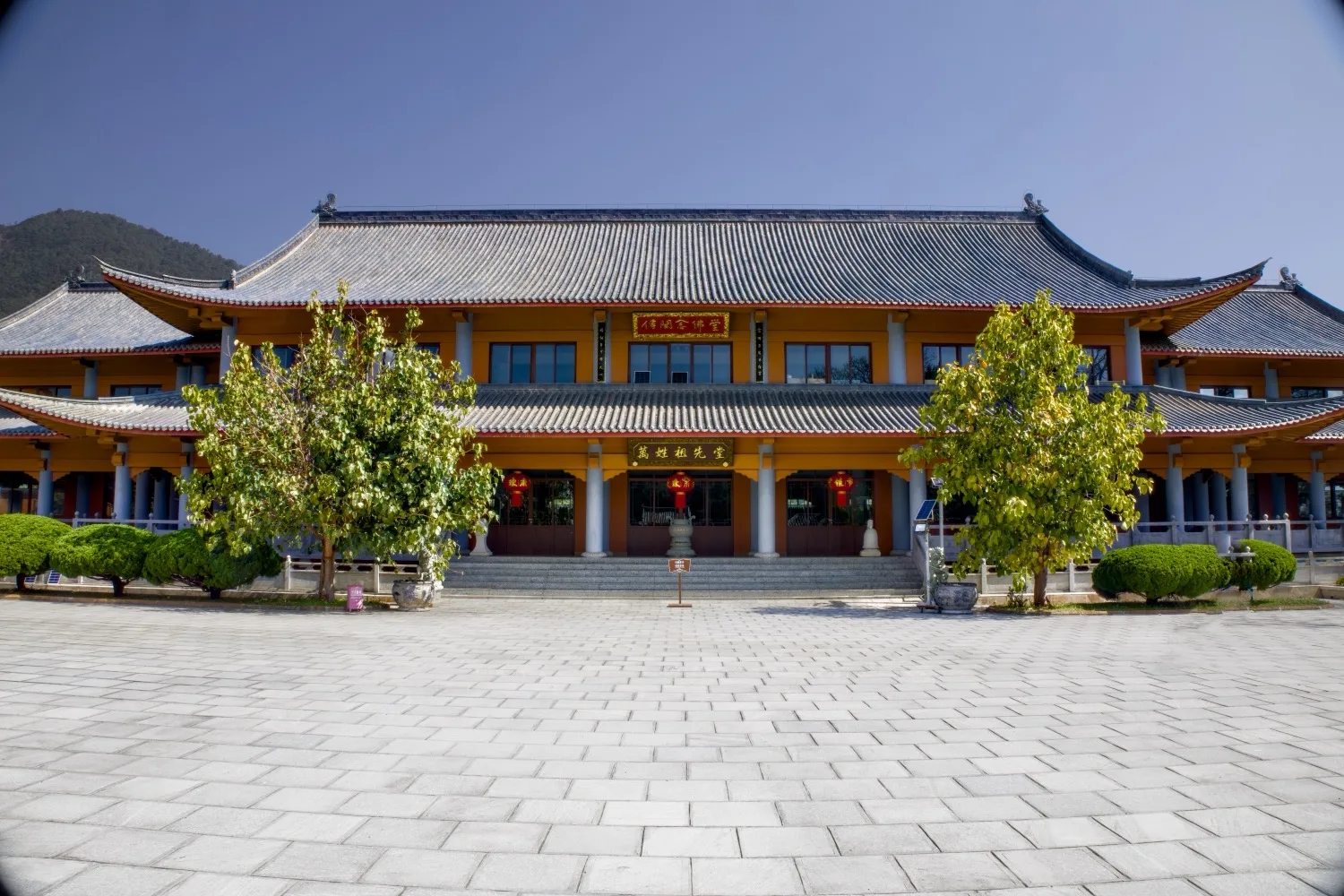
According to records in the Kangxi Jizu Mountain Gazetteer (《康熙鸡足山志》), the white pagoda here was first built in 1638 during the Chongzhen reign of the Ming Dynasty. It was jointly constructed by the local chieftain (土知府) of Lijiang and monks from the Xichan Temple on Jizu Mountain.
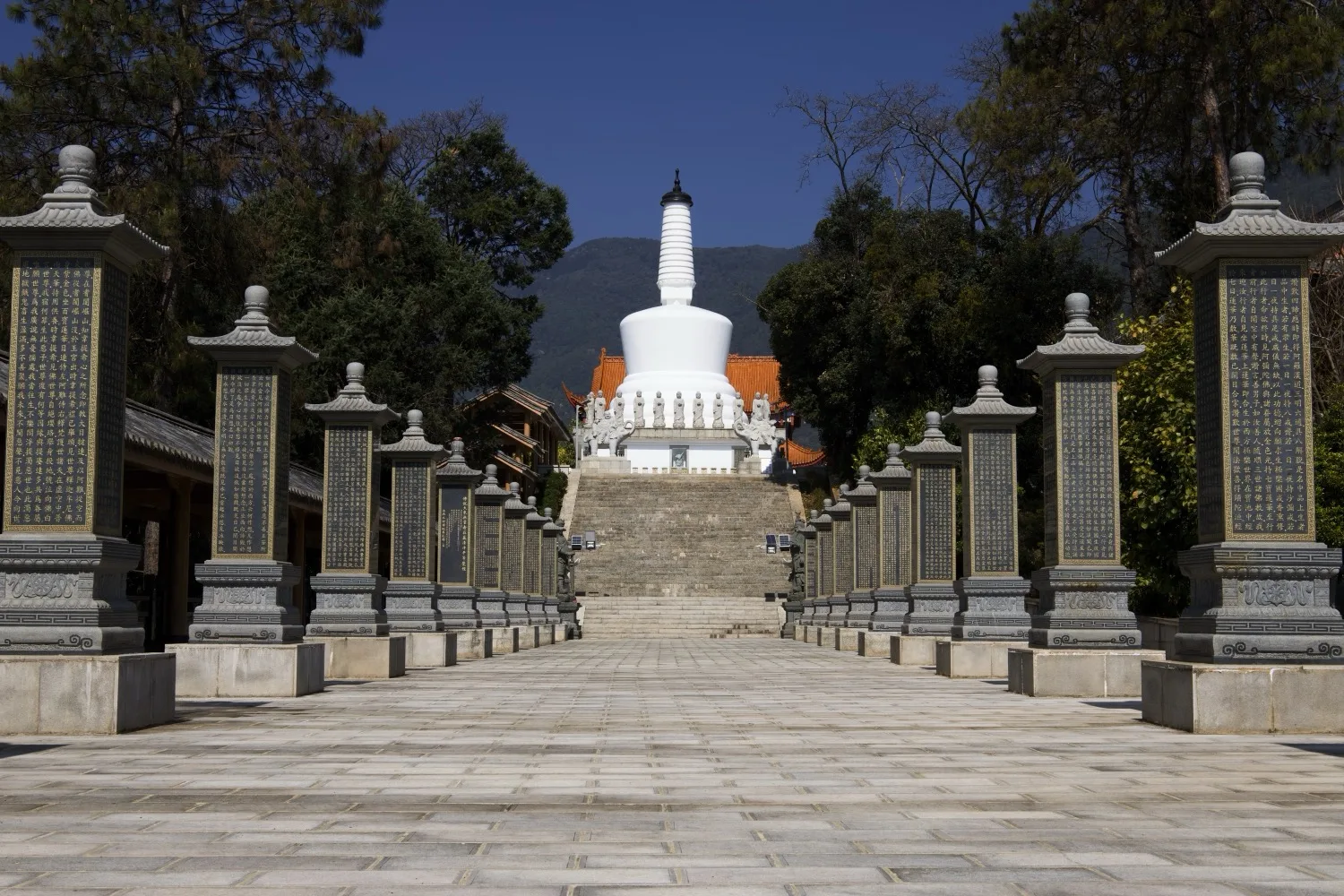
The pagoda stands 22 meters tall and follows the Tibetan Buddhist “vase-shaped” style, with a square base. It is a wonderful example of how Tibetan and Han Chinese Buddhist traditions came together in one beautiful structure.
Sadly, the original pagoda was destroyed in the mid-to-late 20th century. What visitors see today is a faithful reconstruction on the same site, built in the 1990s with generous donations from Venerable Dao Xing, a Buddhist nun from Taiwan.
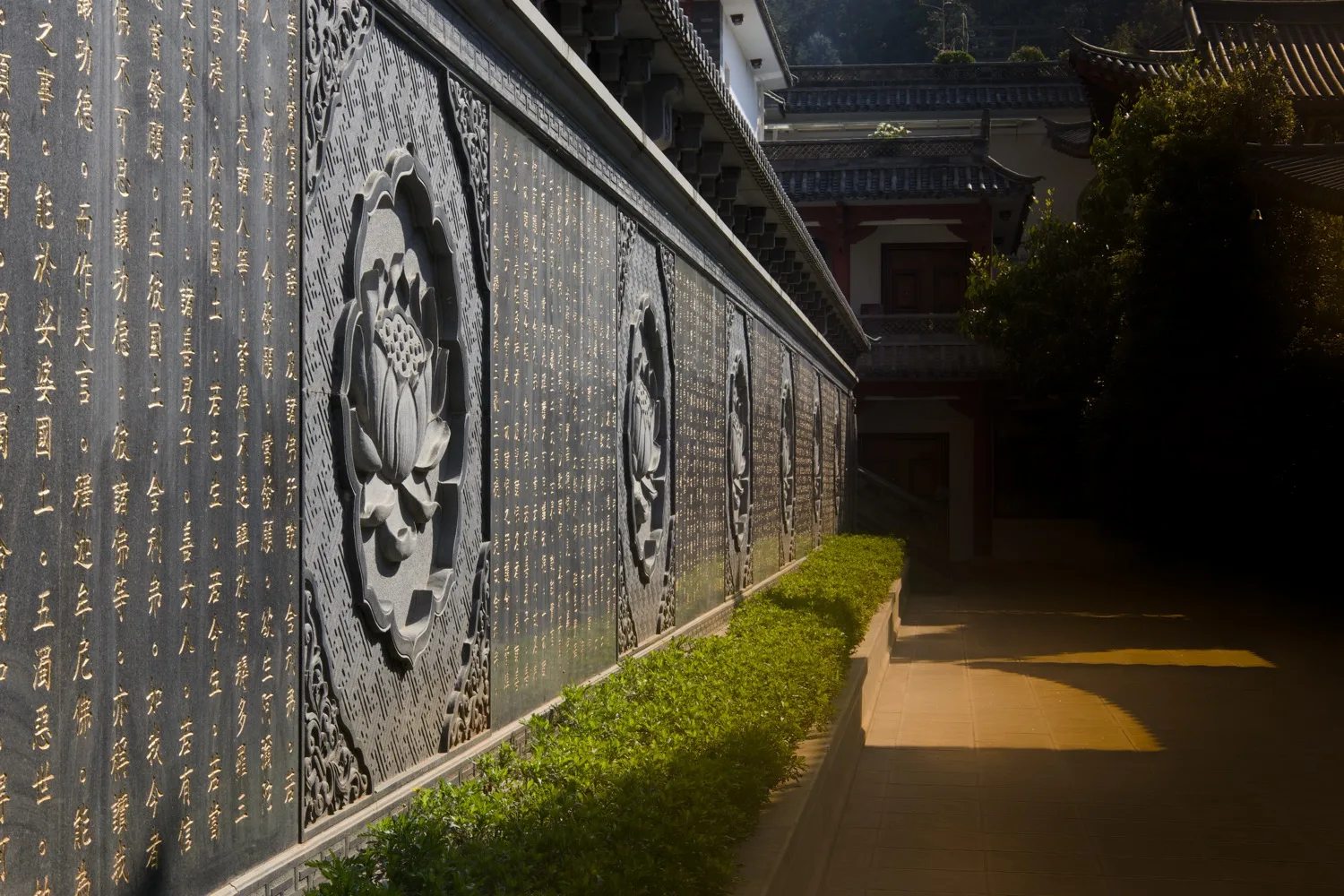
At the base of the pagoda, these inspiring words are carved:
“True sincerity and purity,
Equal and perfect awakening,
Compassion with clear insight,
Letting go brings true freedom,
Recite the Buddha’s name naturally as conditions arise.”
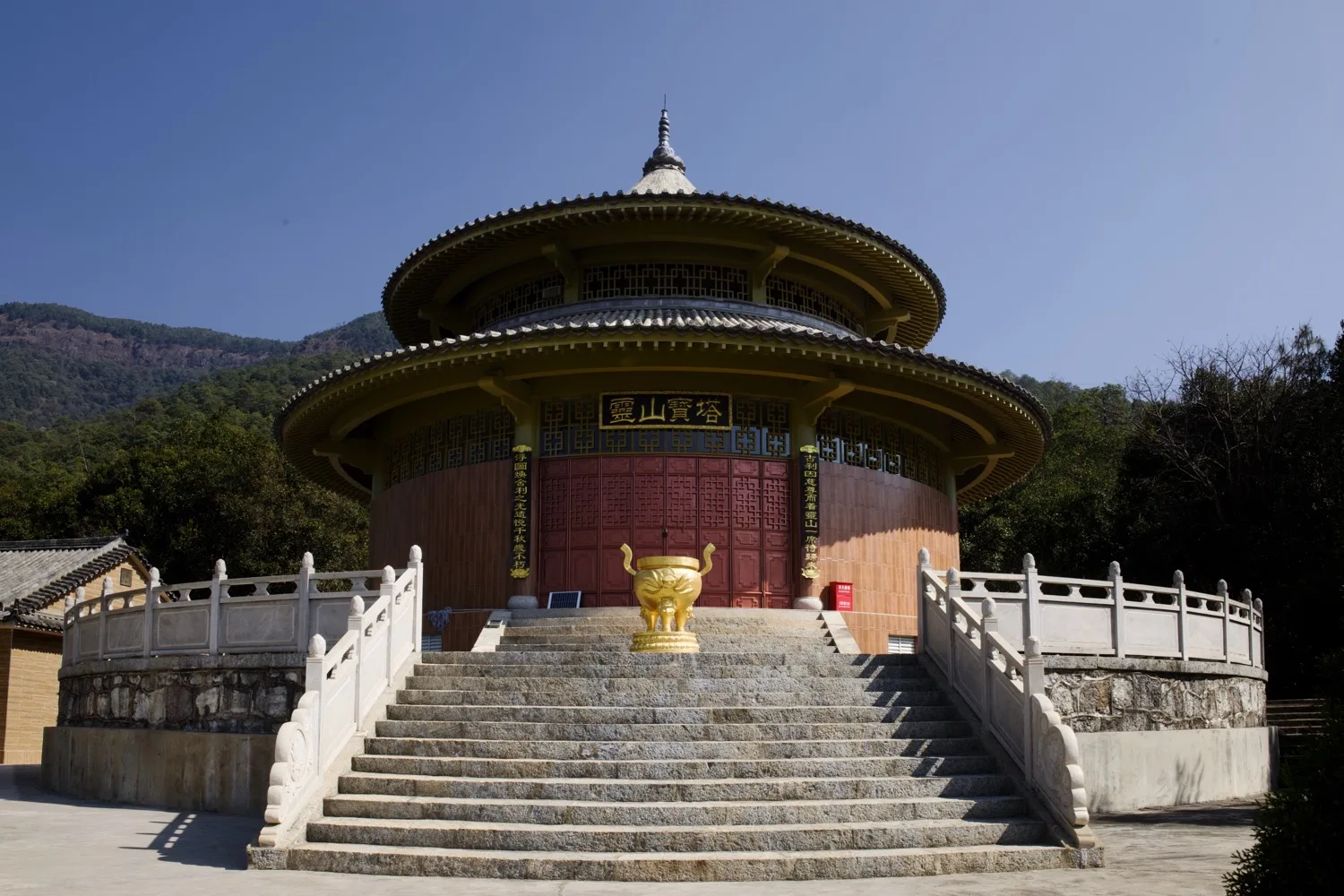
Many people walk around the pagoda three times in a clockwise direction while praying silently for peace, safety, and good fortune. (This clockwise circumambulation is a traditional Buddhist practice to show respect and gather positive energy.)
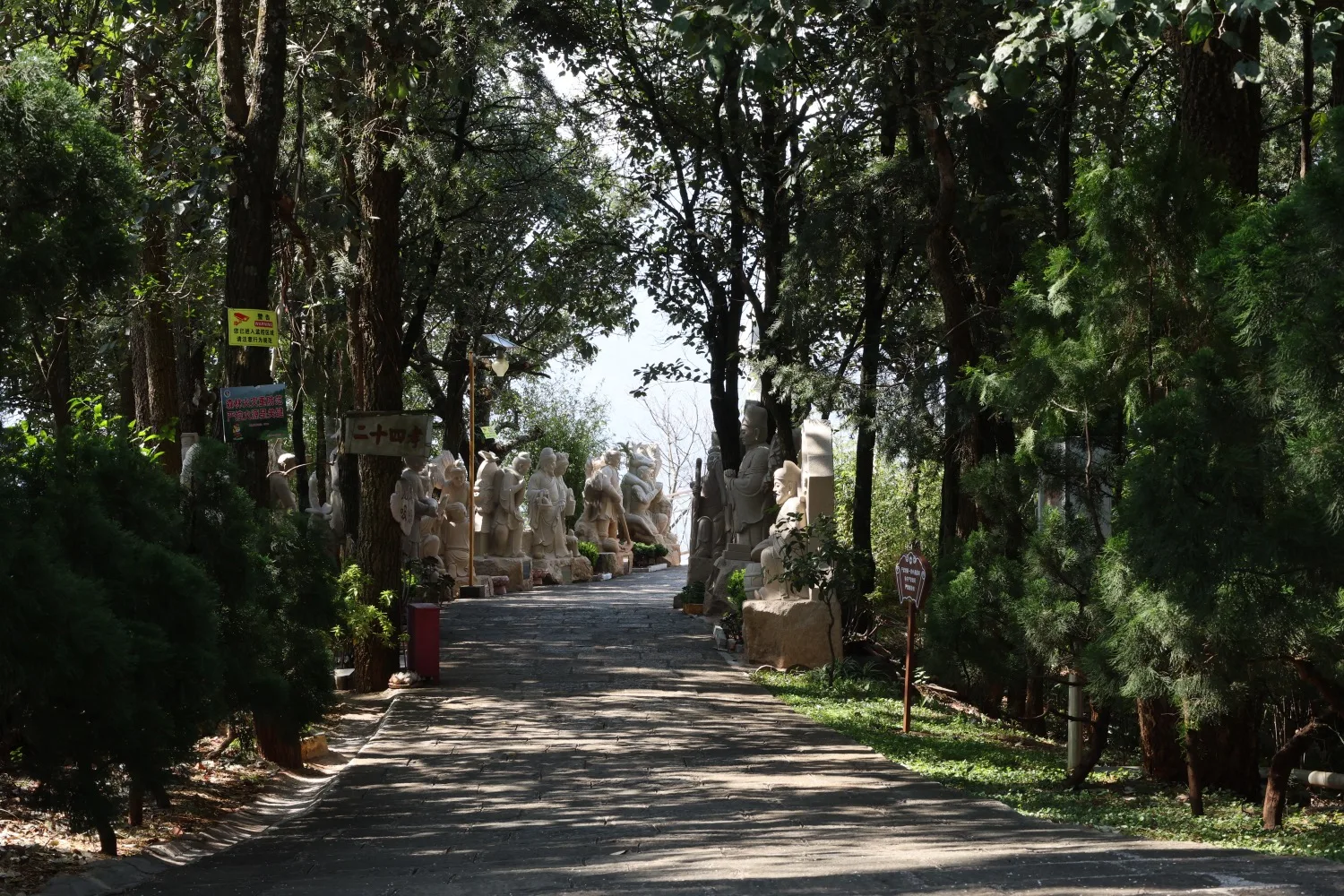
From the small path on the right side when facing the temple entrance, you will see a series of stone carvings depicting the Twenty-Four Stories of Filial Piety.
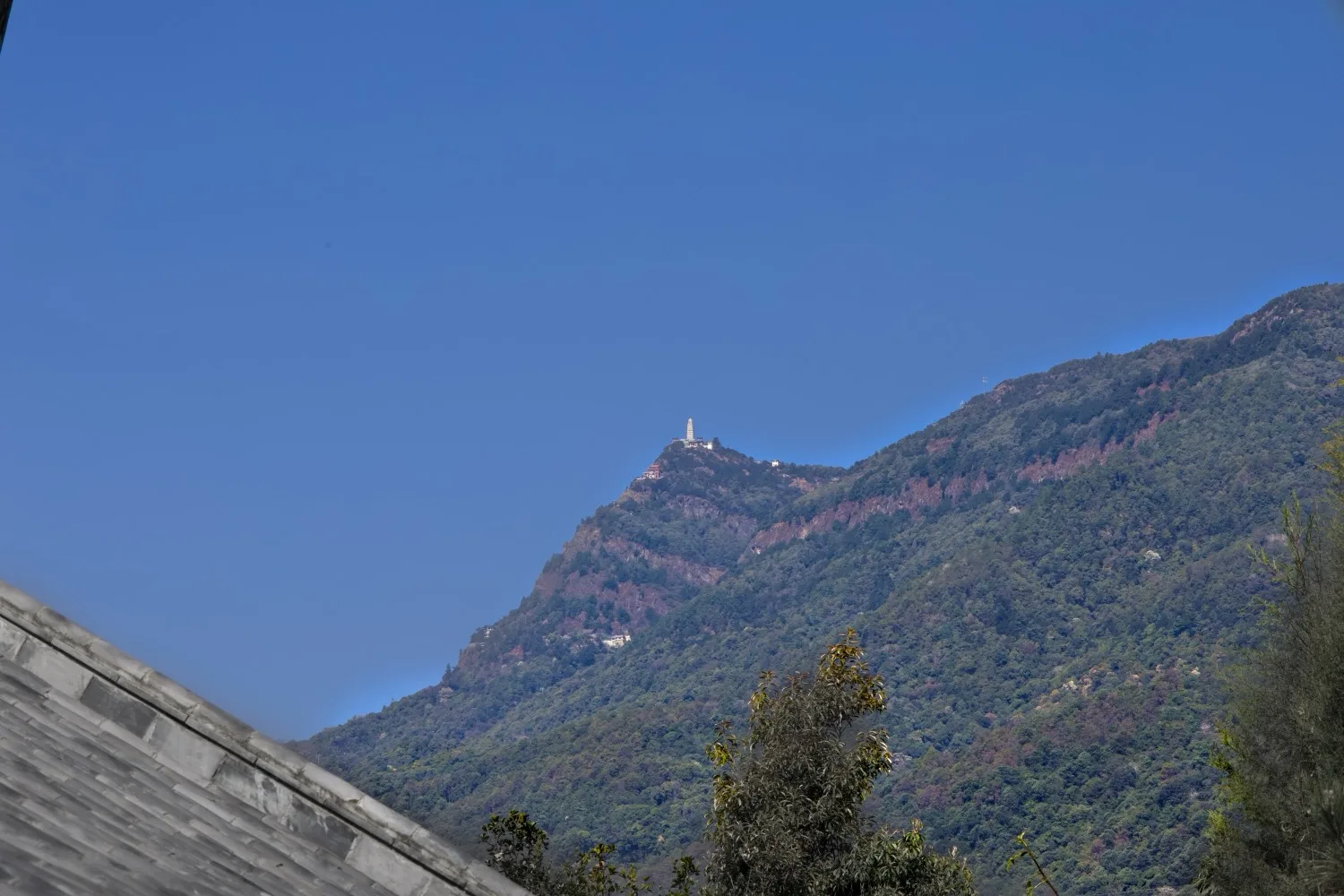
These are ancient Chinese tales that teach deep respect, kindness, and care for parents and elders.

A little farther inside, there is a wonderful viewpoint where you can look down over the entire town of Jizu Mountain below.
The town has been carefully designed and built in the shape of a nearly perfect circle — a very special and harmonious layout.
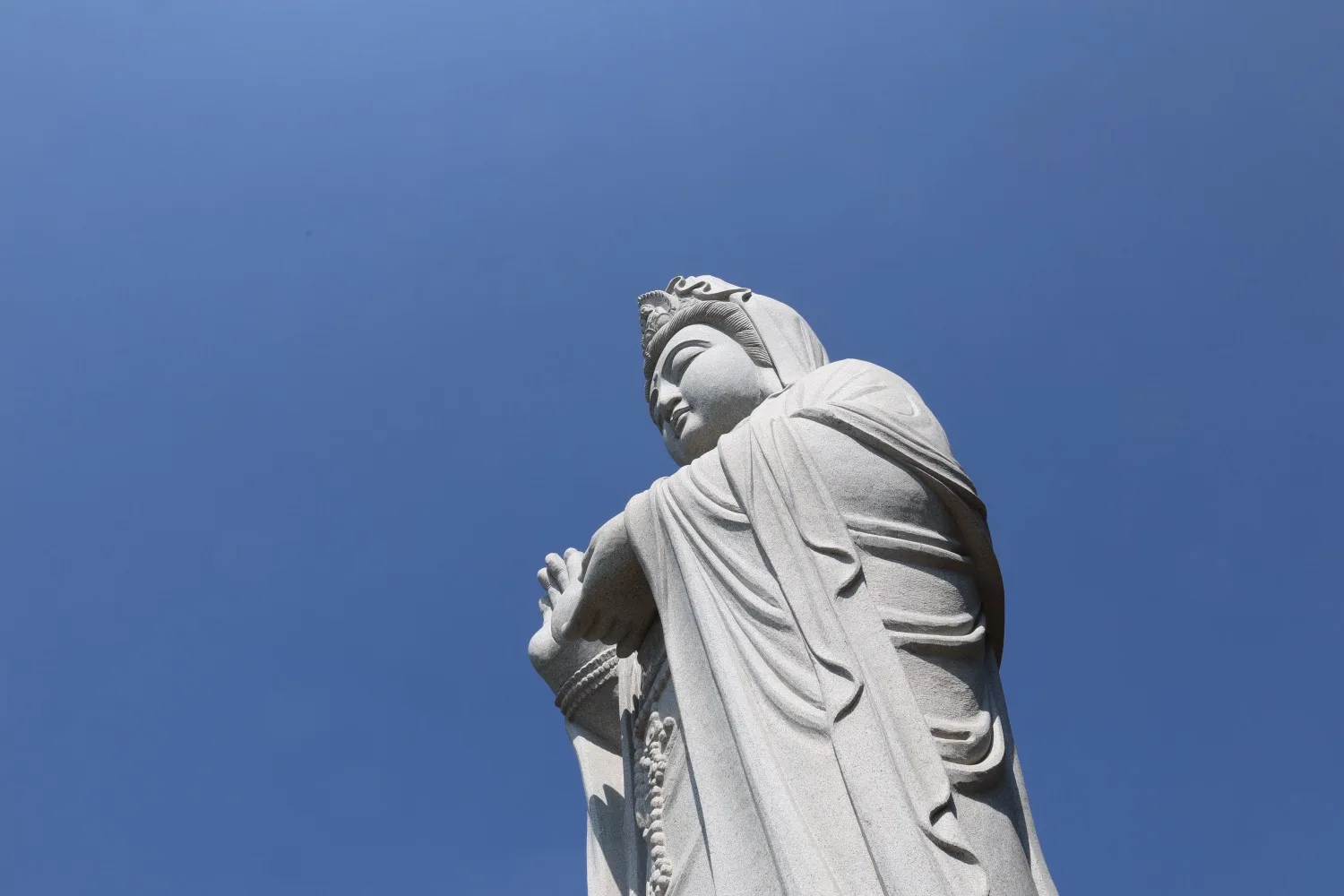
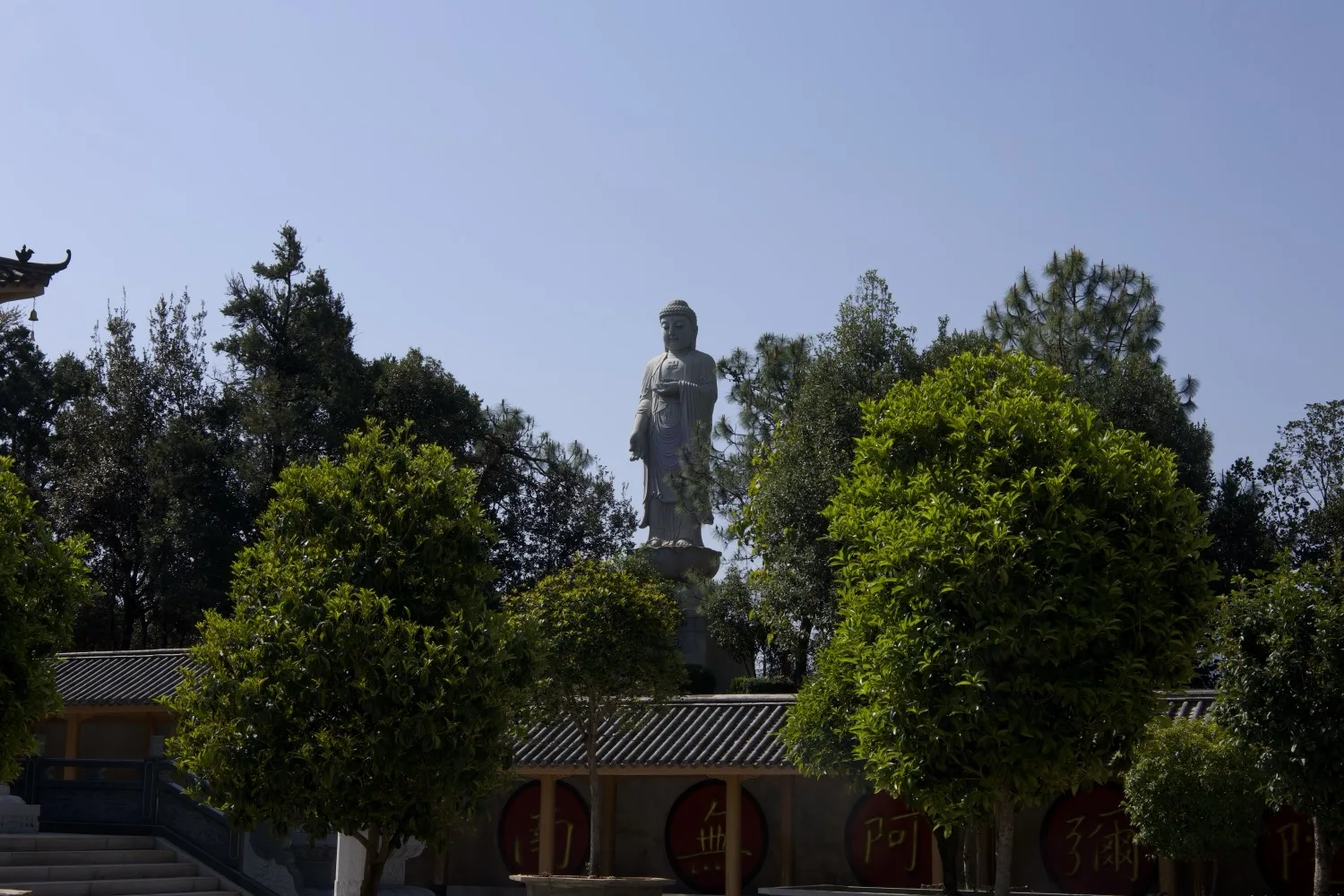
At this same viewpoint stands a graceful statue of Guanyin Bodhisattva (the Bodhisattva of Great Compassion). The statue gazes gently downward over the whole town, symbolizing Guanyin’s loving protection and blessings for all the people living in Jizu Mountain town.
At night, if you stand at the bottom of the hill and look up toward the mountain, you can still clearly see the illuminated Guanyin statue watching over everything — a peaceful and beautiful sight.
Buddhist Pagoda Temple is a living Buddhist place. During the daytime, monks, nuns, or students may be studying, meditating, or holding ceremonies, so some indoor areas might be closed to the public. However, the outer square, open courtyards, and most outdoor spaces are freely open for quiet walking and enjoyment.
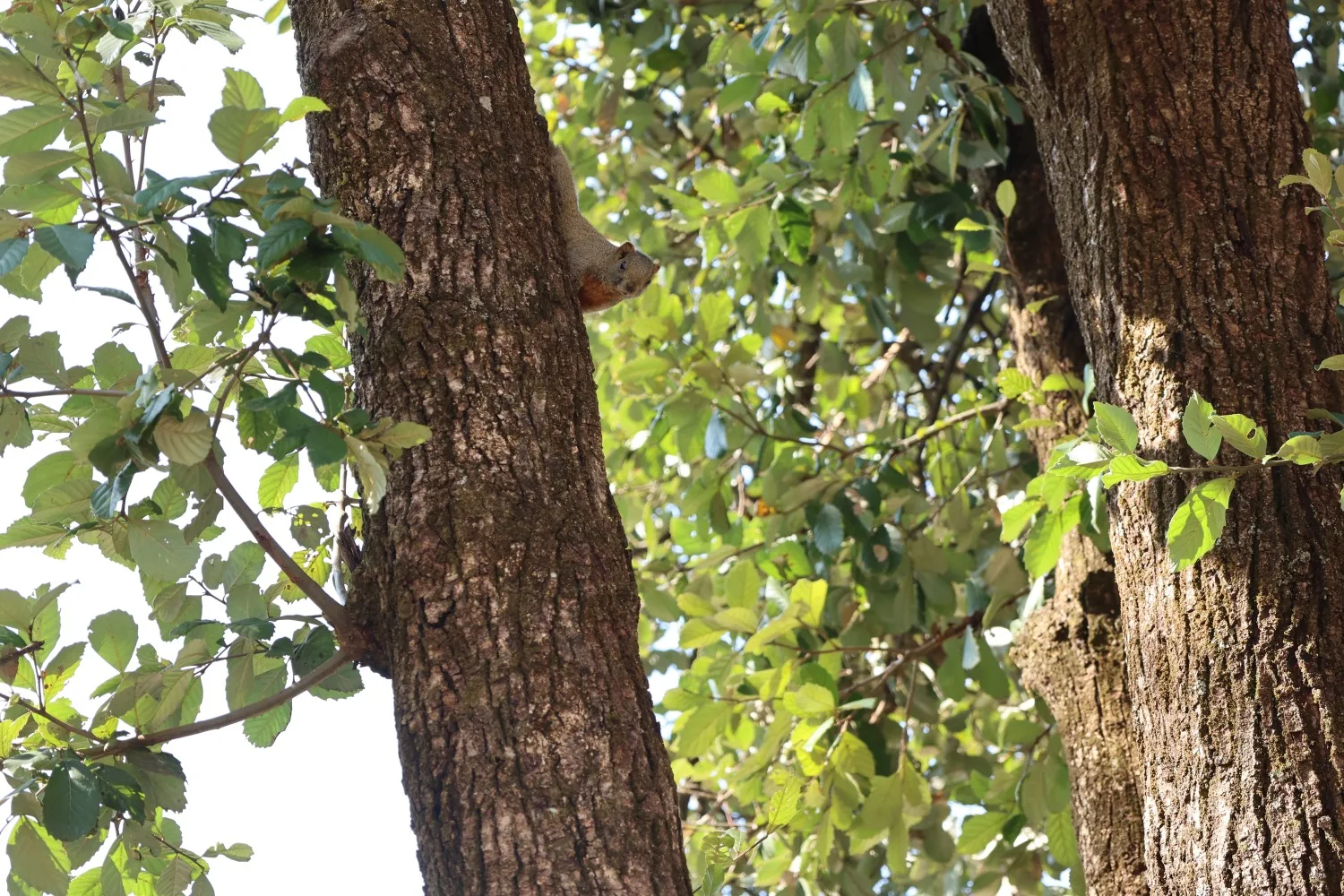
One charming thing you’ll notice here: there are lots and lots of squirrels!
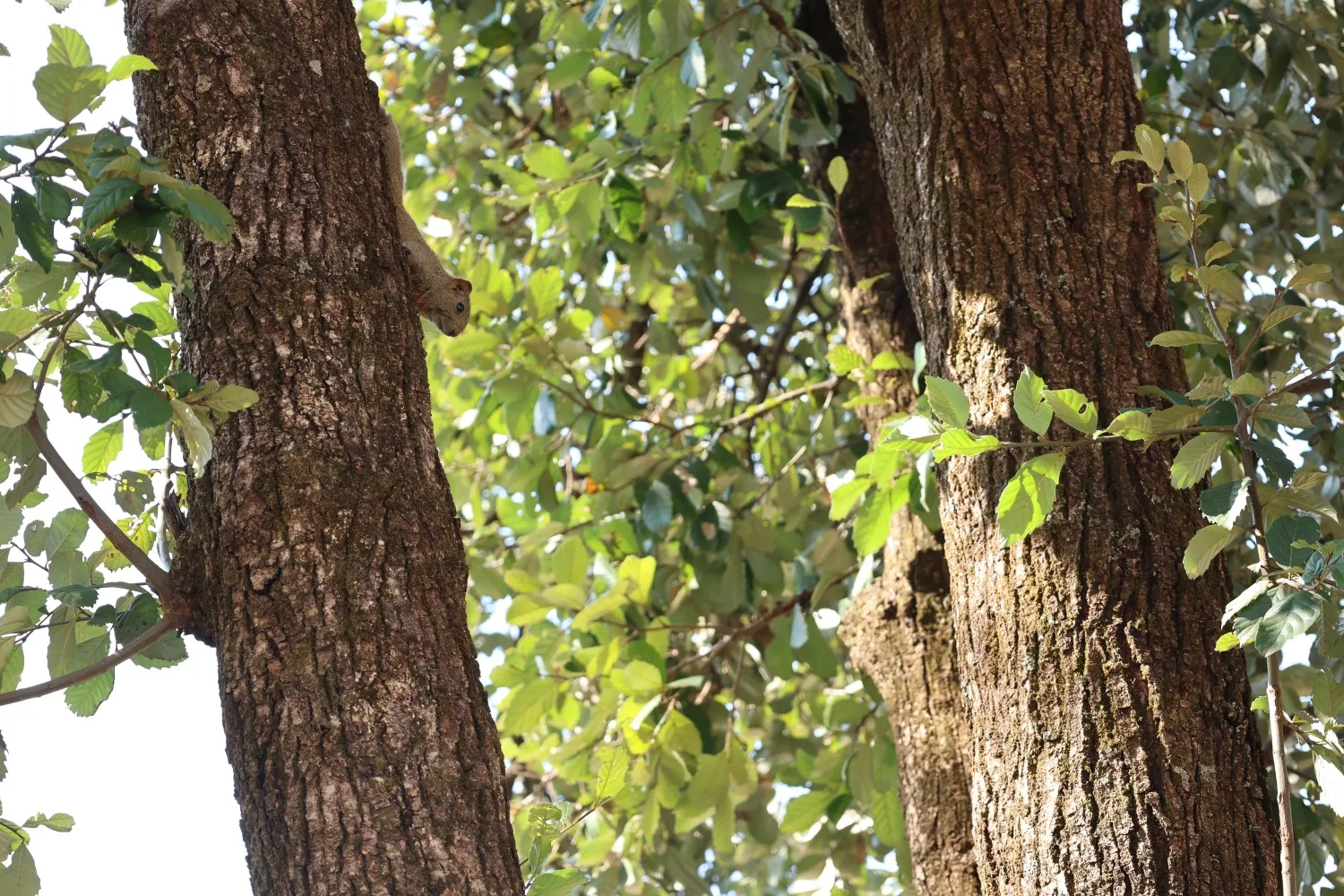
They run and play all around the grounds, adding a lively and joyful feeling to this calm and sacred spot.
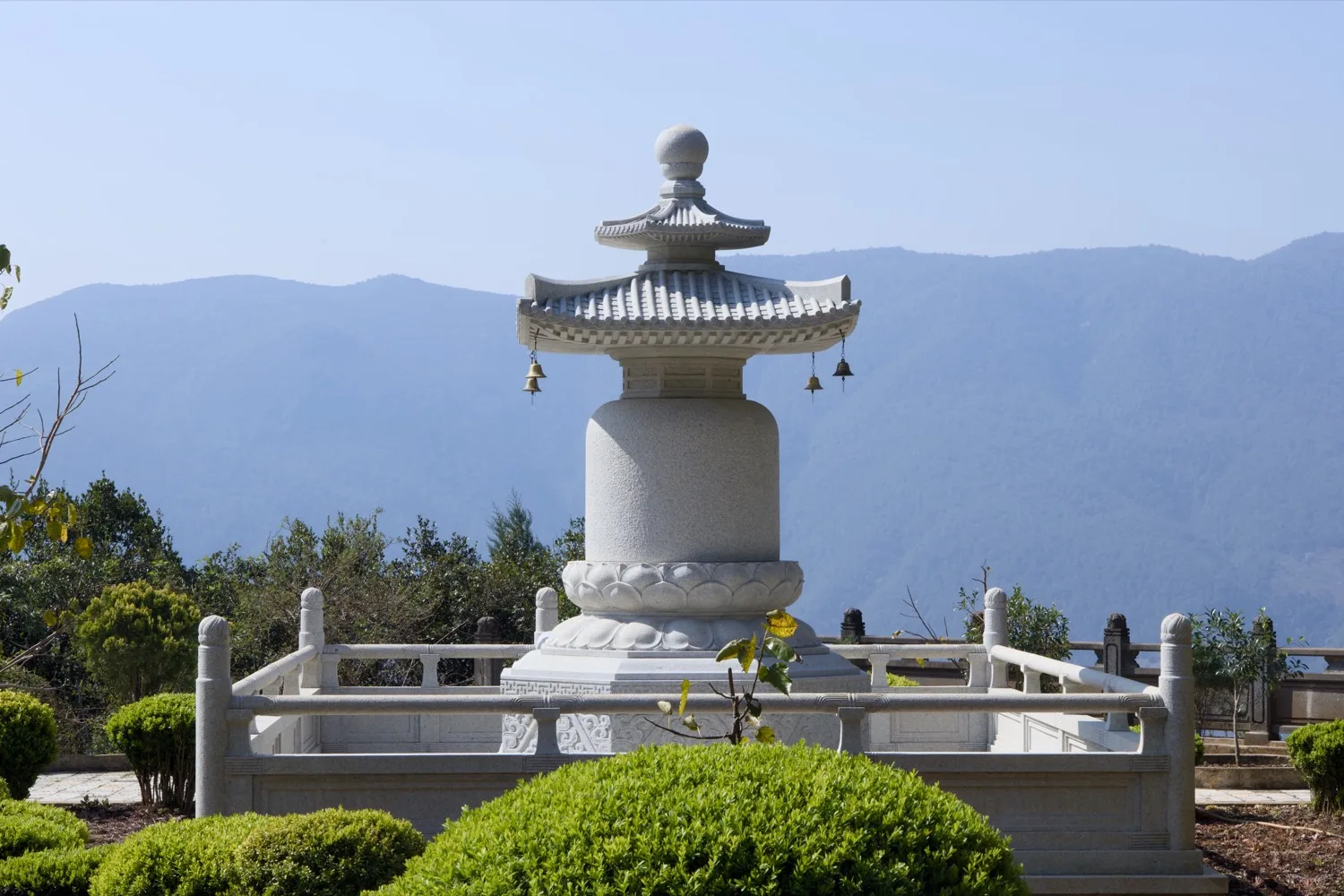
This temple offers a quiet, beautiful experience — perfect for reflection, prayer, and enjoying the mountain’s peaceful energy.
Jizu Mountain Monkeys
Jizu Mountain is home to many macaques (also called rhesus monkeys or 猕猴 in Chinese).
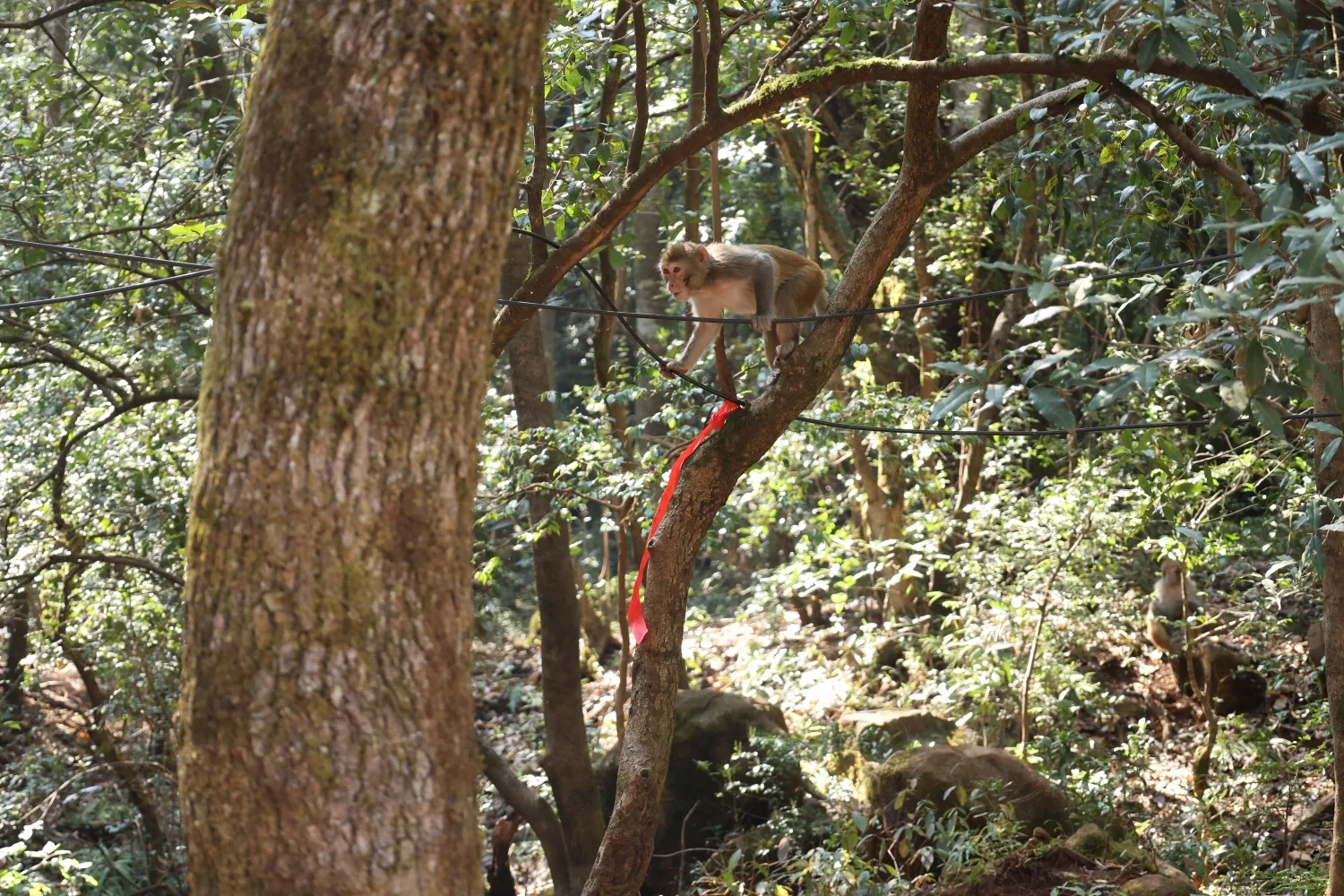
These clever and lively monkeys add a fun, natural touch to the mountain’s peaceful temples and trails.

Here are their main features in simple words:
- They have short, strong bodies.
- On average, their body length is about 50 cm (around 20 inches), not counting the tail.
- Their front legs (arms) and back legs are roughly the same length.
- They have thumbs that work like ours — they can grab and hold things very well with their hands and feet.
- Their face has a raised area on the forehead.
- The head is brown.
- The back is often brownish-gray or yellowish-brown in the middle.
- The lower part (belly and sides) is yellow or orange-red.
- The underside is light grayish-yellow.
These monkeys live mostly in rocky mountains, steep cliffs, narrow valleys, riverbanks, and thick forests. They like places with lots of trees and rocks where they can climb and hide.
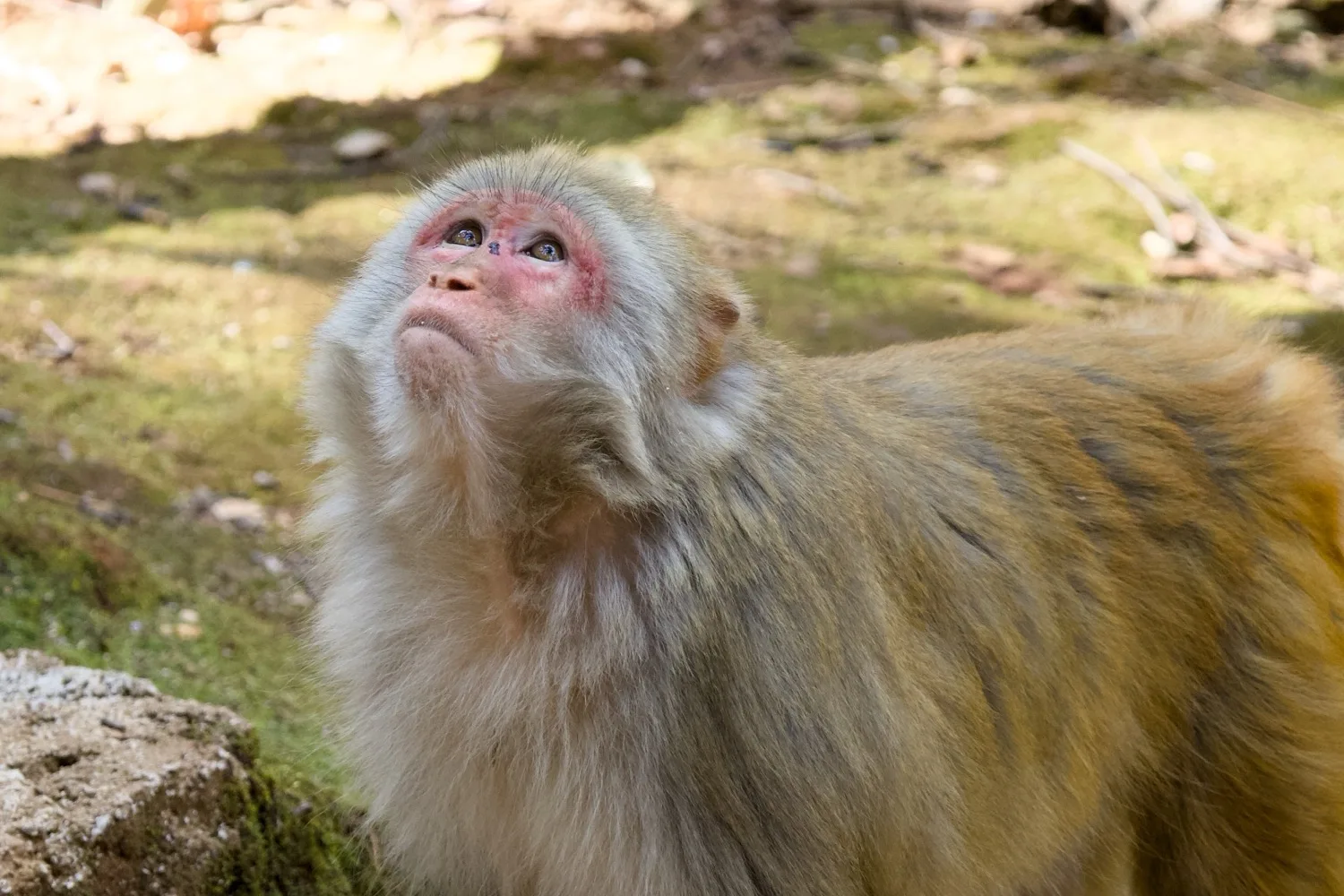
They usually live in groups of hundreds of monkeys together. Jizu Mountain has a very good natural environment — clean air, plenty of trees, water, and food — which makes it perfect for the macaques to live and raise their babies. Right now, there are more than 2,000 macaques living on the mountain.
You may see them jumping on trees, rocks, or even near paths. They are curious and sometimes come close to people.
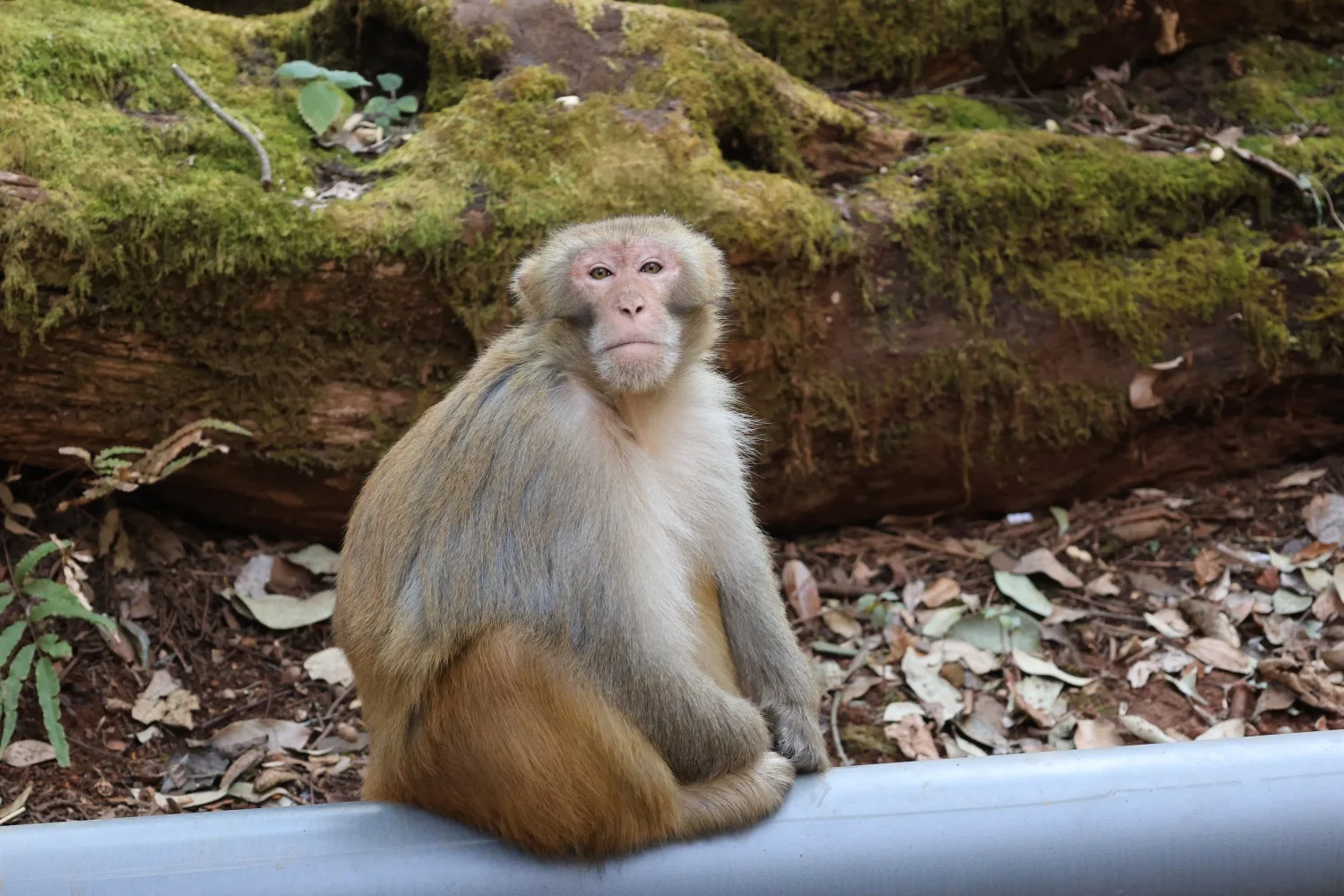
Do not feed the monkeys. Human food hurts animals.
Keep a safe distance when viewing them.
Do not open your backpack to them, especially when food is in there. Keep your valueable items safe and tidy.
Enjoy watching them from afar — they are wild animals and part of the mountain’s special beauty.
Seeing these macaques is one of the joyful surprises of a trip to Jizu Mountain! They make the hike feel more alive and remind us how rich and balanced nature is here.
Zhusheng Zen Temple
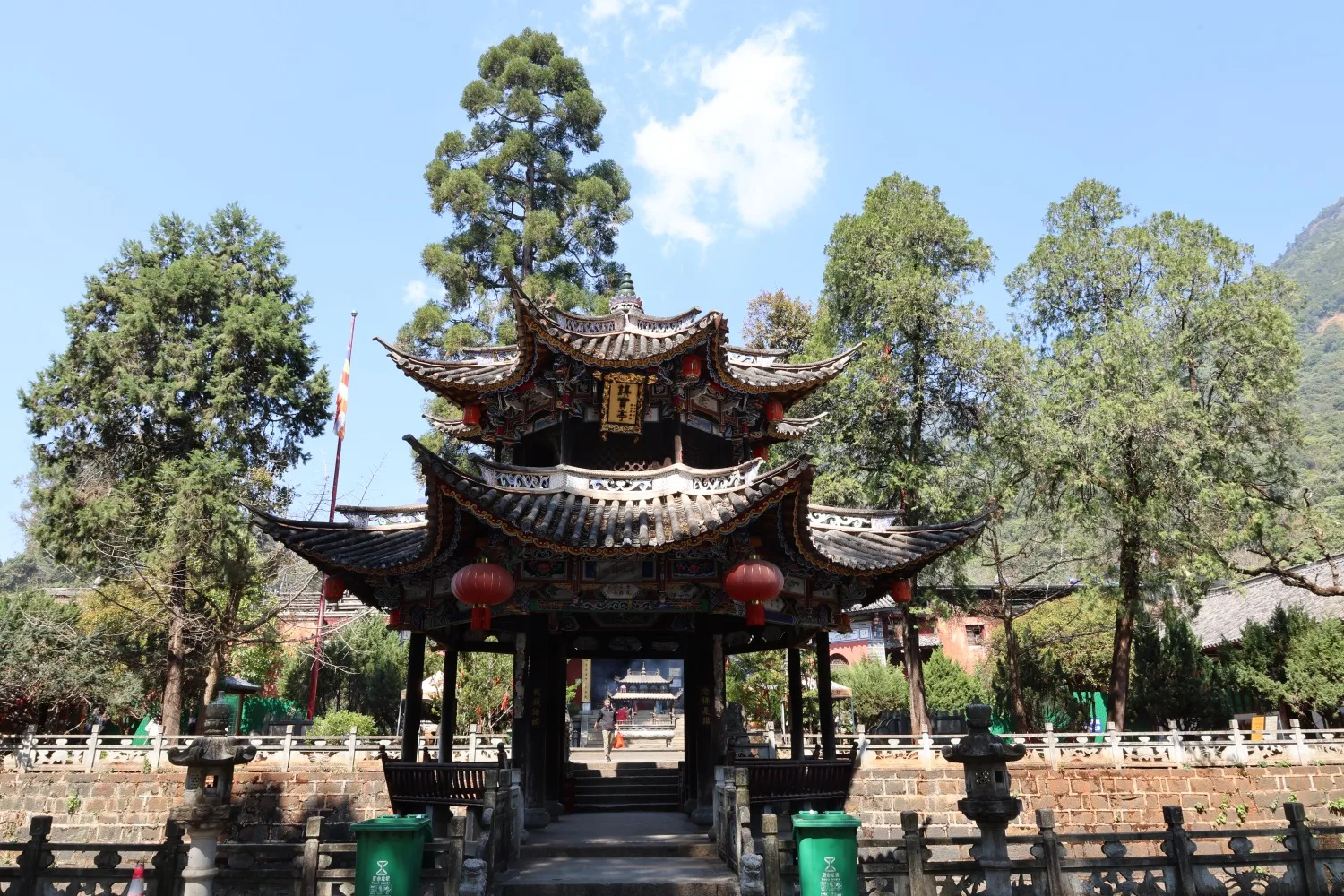
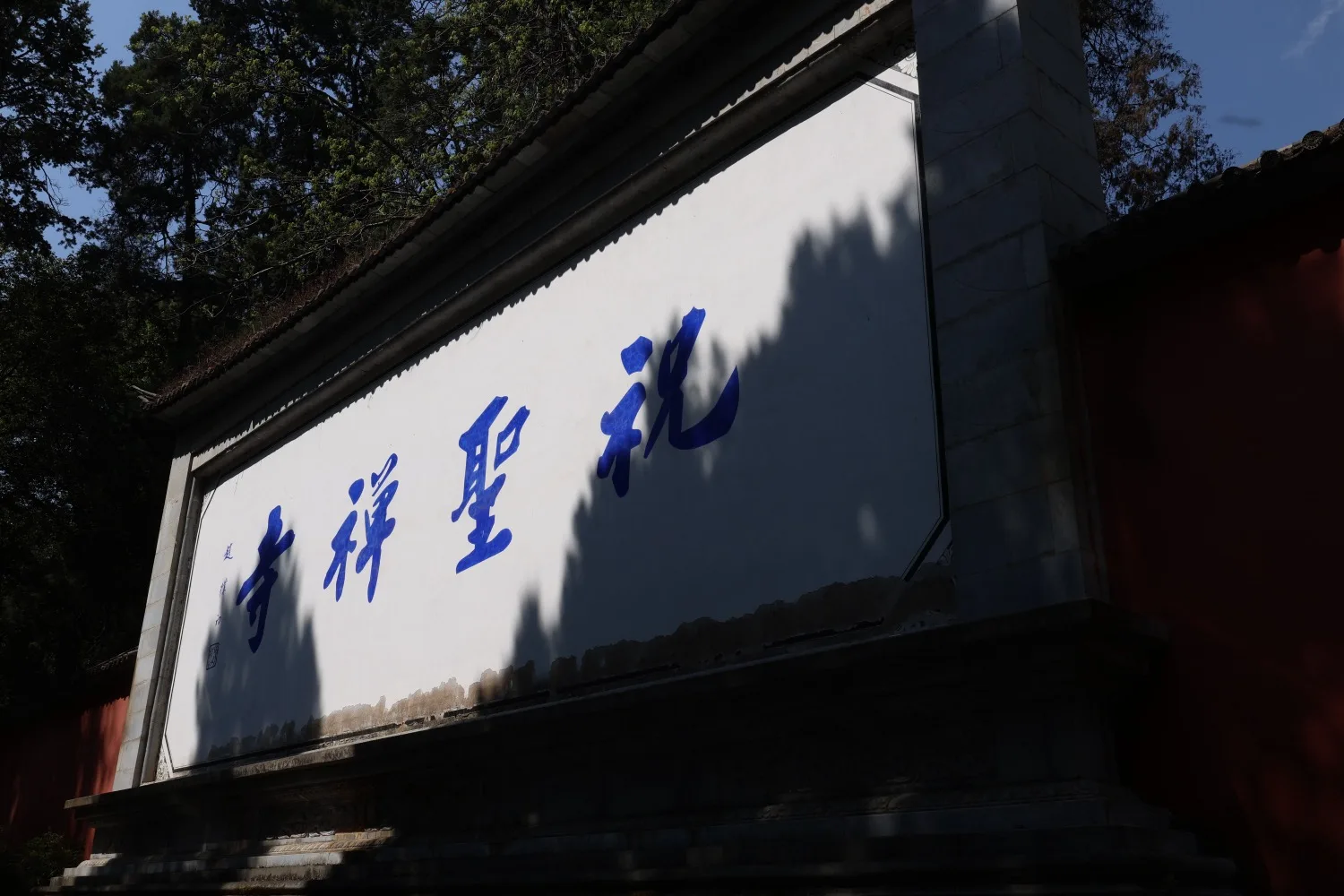
Zhusheng chan temple is the first Zen (Chan) temple established by the great Master Xuyun on Jizu Mountain.
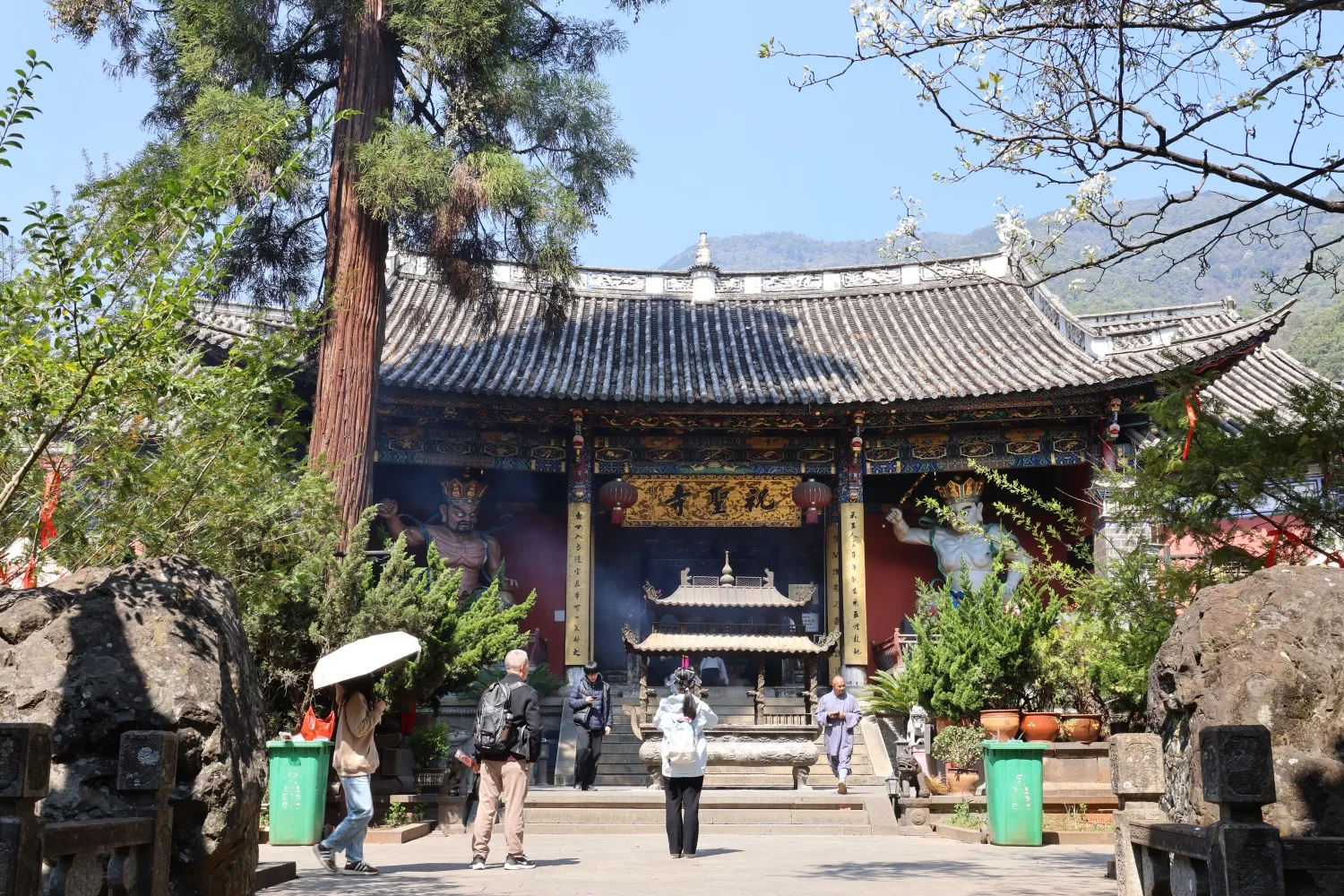
Master Xuyun (also known as Hsu Yun or Empty Cloud) was one of the most important Chinese Zen Buddhist masters of the 19th and 20th centuries.
Born around 1840 (some records say between 1840 and 1873) in Fujian Province (with family roots in Hunan), he lived to the remarkable age of about 120 years, passing away in 1959. He was a true revivalist of Chinese Buddhism during a difficult time. He practiced strict Chan meditation, revived many ancient temples (including famous ones like Nanhua Temple, Gushan Yongquan Temple, and Yunju Shan Zhenru Temple), and carried forward the Dharma lineages of five major Chan schools (Caodong, Linji, Yunmen, Fayan, and Guiyang) in one person.
Known for his deep meditation, hard training, and compassion, he faced many hardships — from long pilgrimages (like walking to India) to rebuilding temples after wars and troubles — yet he always worked to protect and spread Buddhism. He became the honorary president of the Buddhist Association of China and is remembered as a modern “patriarch” who kept Zen alive.
The temple’s Great Hero Hall is especially impressive. It has a full circle of Bodhisattva statues surrounding the walls — the sight is truly powerful and moving. It is one of the highlights of the mountain that everyone should see.
When viewing the hall, please walk around it in a clockwise direction. This is the respectful Buddhist custom to honor the sacred space and create positive energy.
To respect the temple’s culture, faith, and the monks’ practice, no photos are taken inside the hall. The real beauty and spiritual feeling can only be fully experienced by coming here in person — it is worth the visit to see this awe-inspiring place with your own eyes.
This temple, rebuilt and expanded by Master Xuyun in the early 1900s (originally an older site called Boyu’an or Yingxiang Temple), became the largest and most important on Jizu Mountain. It carries a deep sense of peace and Zen tradition. If you climb the mountain, make sure to stop here for quiet reflection and to feel the strong energy of true Chan practice.
The Ancient Static Zen Tree
The static zen tree is one of the most remarkable natural and spiritual sights on Jizu Mountain. This giant tree is more than 1,700 years old — it has stood here since long before many of the temples were built.
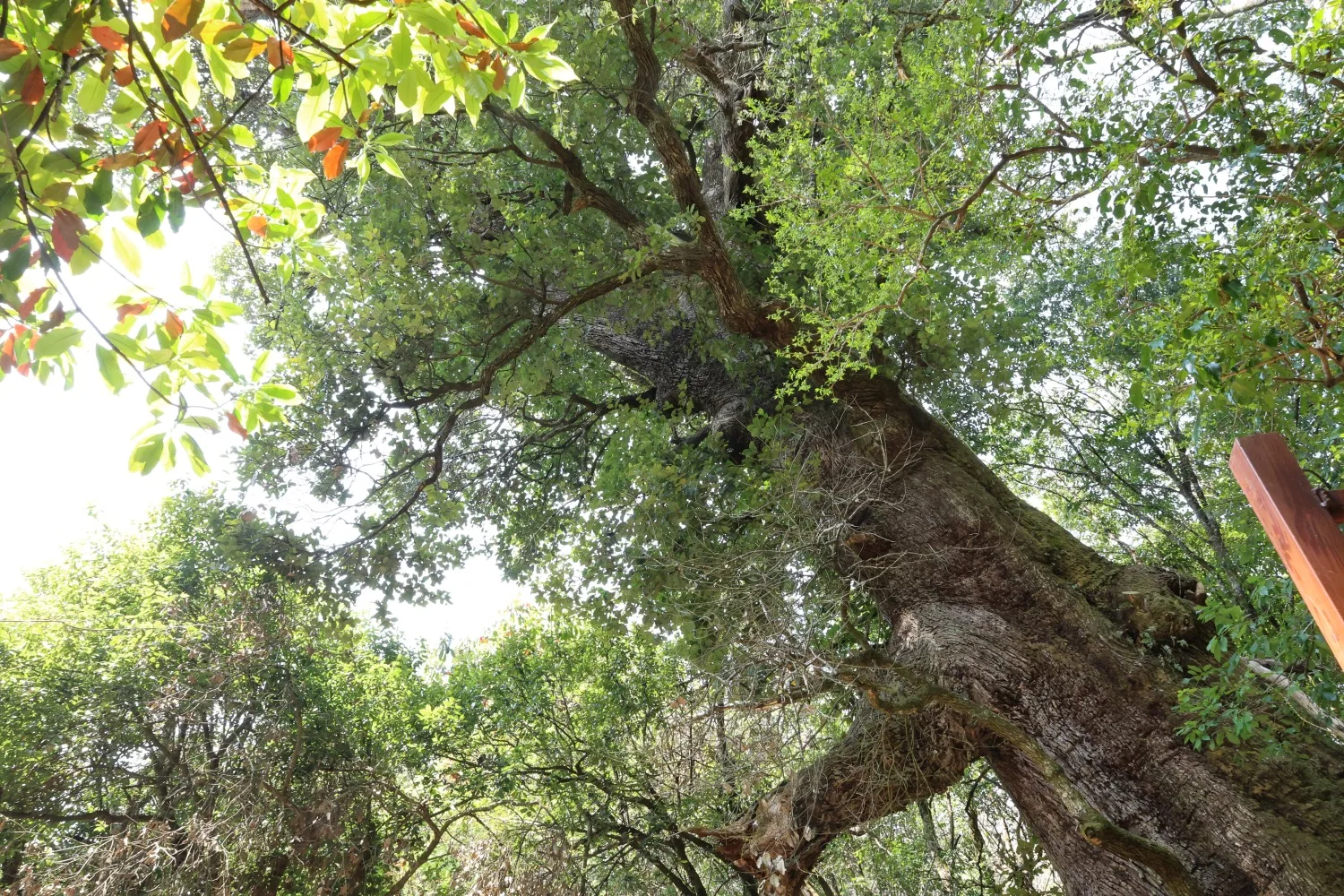
During the Ming Dynasty, a high monk from Guangxi Province came to this very spot. He practiced intense meditation and ascetic training under the tree for 40 full years. Through his deep practice, he reached enlightenment.
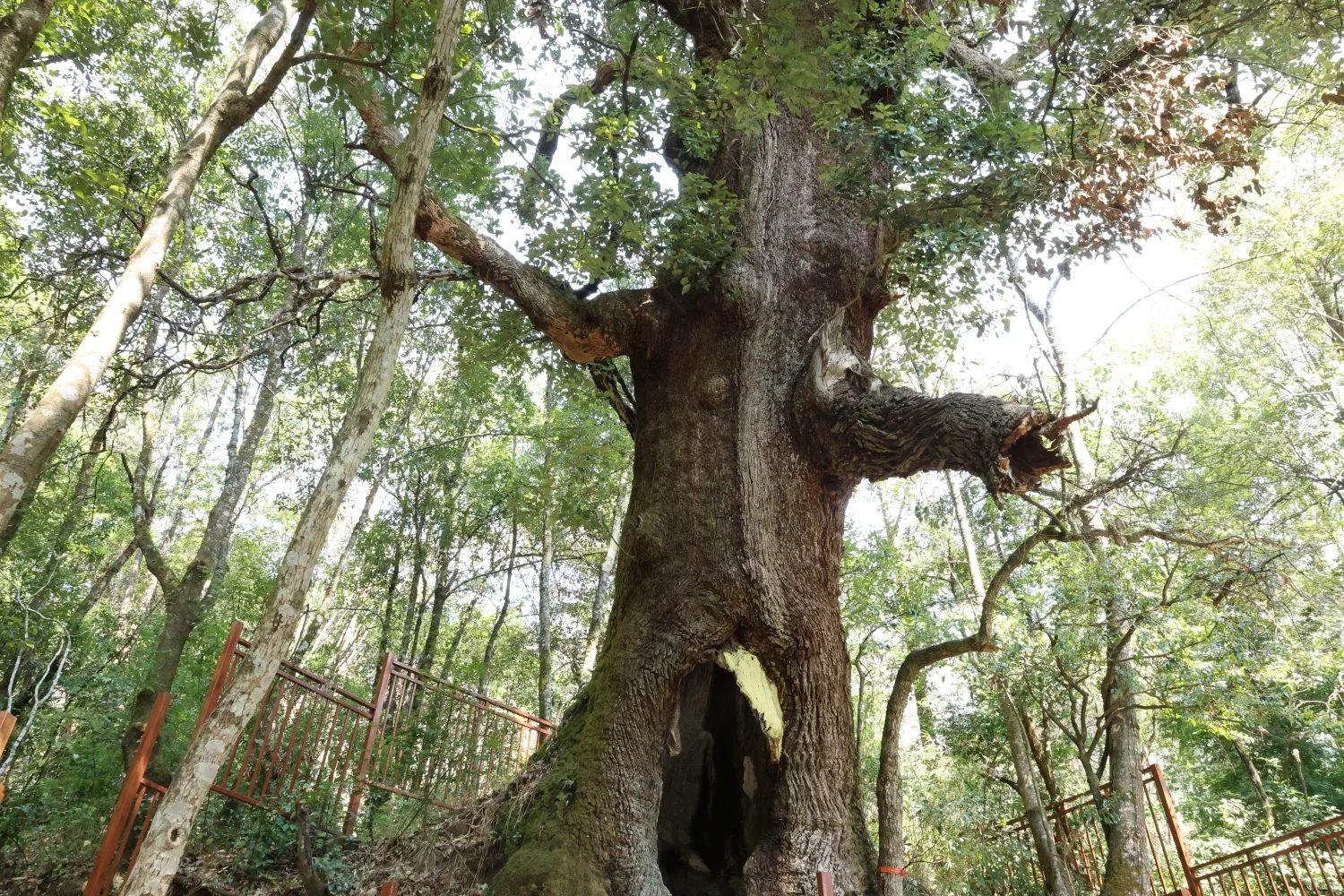
After that, legend says he was able to tame a huge python that lived nearby. The giant snake became gentle, accepted Buddhism, and followed the teachings — a famous story that shows the power of compassion and spiritual strength.
Here are the tree’s impressive details:
- Height: about 18 meters (around 59 feet)
- Diameter (measured across the slanted side): 4.5 meters (about 14.8 feet)
- The hollow tree cave is 3.5 meters high
- Inside the hollow part, the opening measures 2.7 meters across
This makes it a truly massive and ancient camphor tree, with a huge open hollow that you can even walk near or look into.
The Static Zen Tree is located right next to the Jizu Mountain Hotel (鸡足山宾馆). From the hotel, follow the small path beside it. Walk inward until you reach a fork in the road, then turn right. The ancient tree is easy to spot there — it stands tall and majestic.
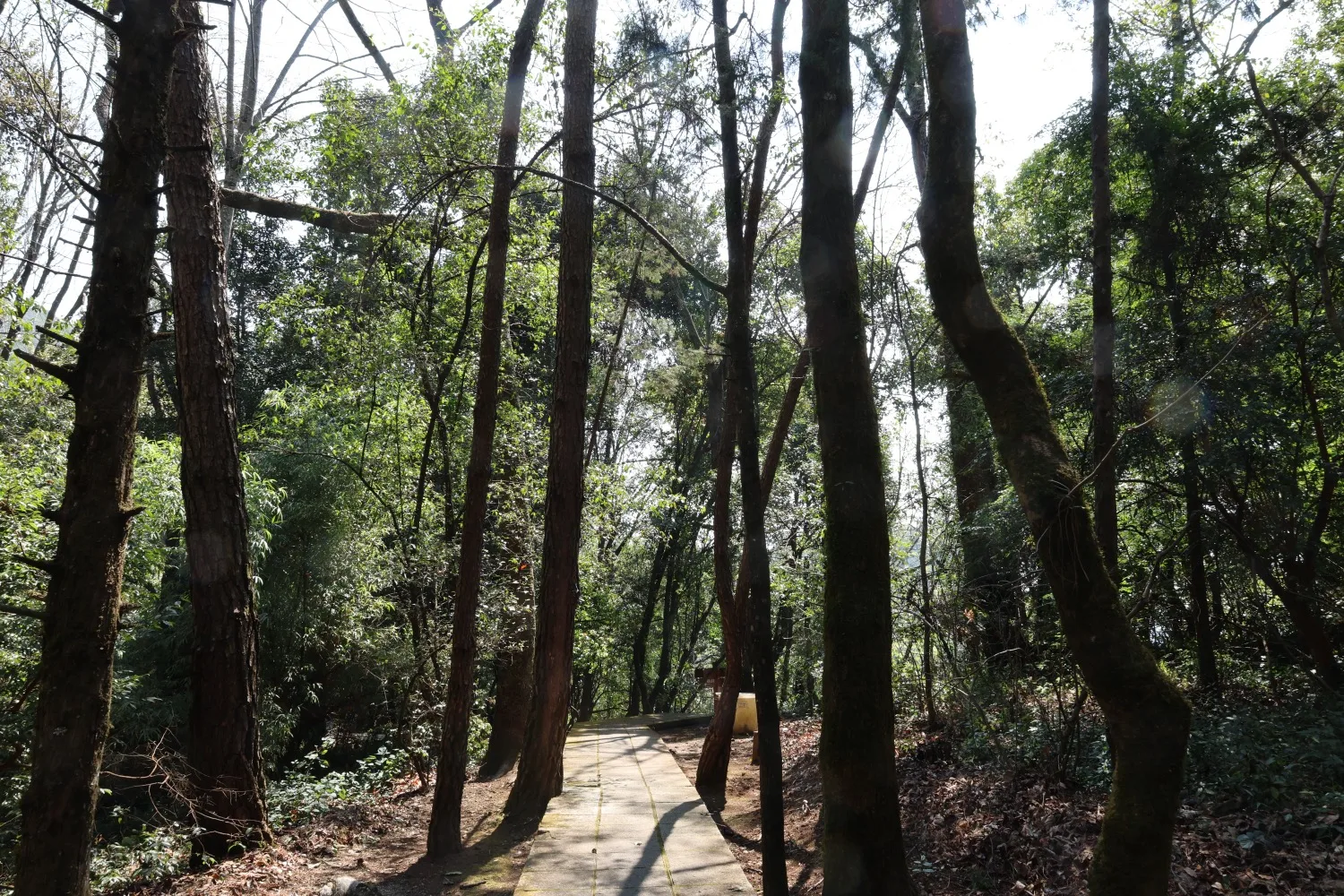
Today, this tree is protected as a national first-class protected ancient tree in China. It is carefully cared for to keep it healthy for future generations.
Visiting this tree feels very special. Standing under its huge branches and looking at its ancient trunk, you can sense the long history of meditation and quiet practice that has happened here. It’s a perfect place for a moment of calm reflection, away from the busier temple paths.
Shizhong Temple
Shizhong temple (Stone Bell Temple) has a long history. It was first built during the Tang Dynasty (over 1,000 years ago). Later, it was destroyed and rebuilt in the early years of the Ming Dynasty’s Hongwu reign (around 1368). It was destroyed again during the Cultural Revolution in the 20th century. The temple we see today was restored and reopened in 1994.
For most visitors today, Shizhong Temple can be skipped.
The temple buildings are still under repair or not fully restored, so the inside may not look complete or impressive yet. There is not much to see indoors right now. However, this area is very useful because it has a large parking lot.
This is the farthest point where private cars are allowed on the mountain road.
How to continue from here:
- If you drive your own car, you must stop at Shizhong Temple. From the parking area, you cannot drive any farther up the mountain.
- Walk about 500 meters (around 5–10 minutes on a gentle path) from the parking lot to the nearest sightseeing bus station.
- Take the sightseeing bus from there to go higher up toward the cable car station.The bus costs ¥15 one way or ¥30 round trip, and the ride is about 5 km.
This spot is basically the “transfer point” for anyone coming by car. Park your car, enjoy a short easy walk through the trees, and hop on the bus. Many people pass through quickly and head straight to the higher parts of the mountain for the better views and temples.
Yufo Temple
Yufo temple, also known as the Jade Buddha Temple, is the first temple seating on the left side of the main path, located at the foot of Tianzhu Peak. It sits in a misty, pine-filled area, offering a quiet spot for reflection amid the mountain’s natural beauty.
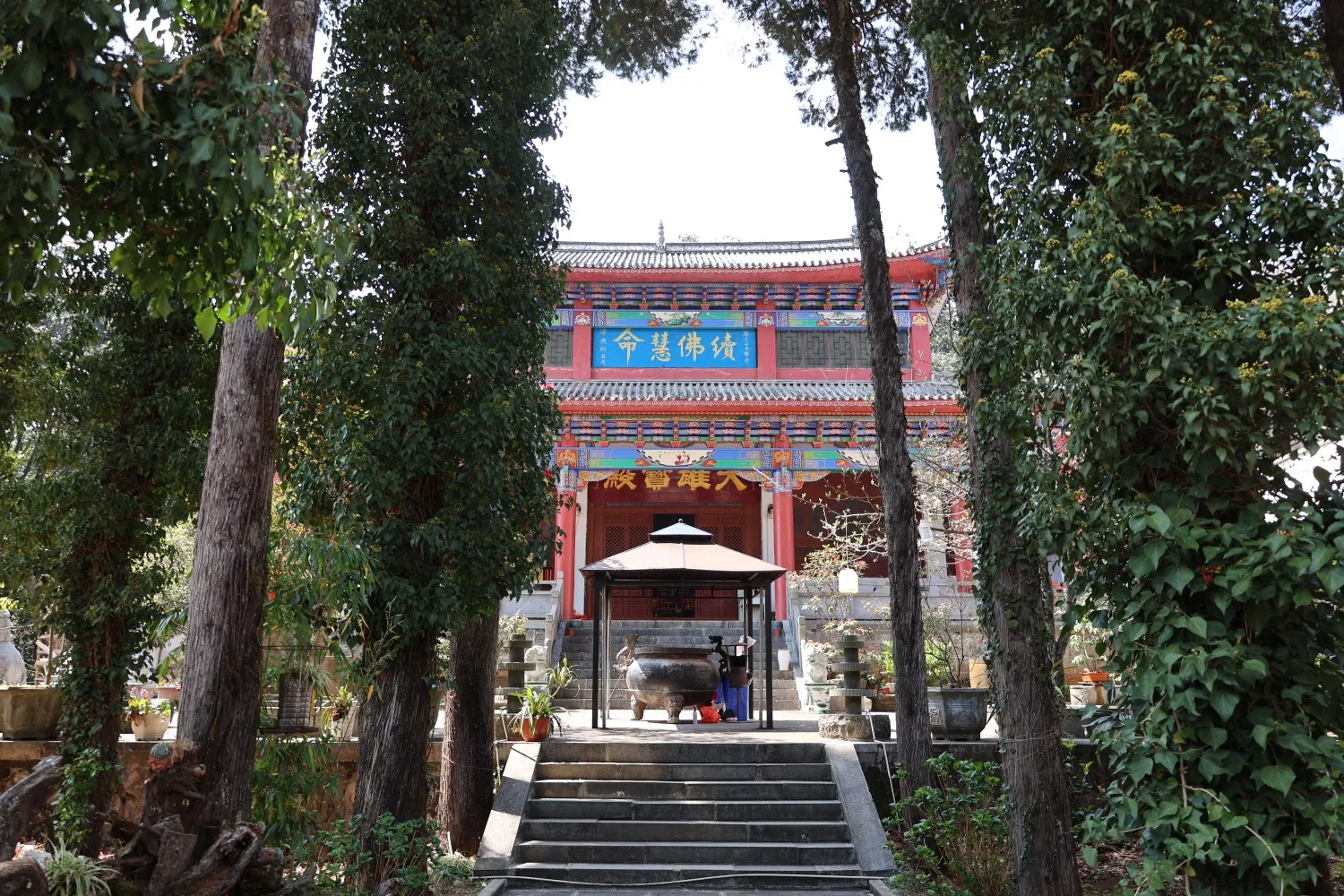
For most visitors, you can skip Yufo Temple, as during day times, this is a study place and there isn’t much to see.
The Peak Cable Car
The cable car is the fastest and easiest way to get from the mid-mountain area up to the summit near Tianzhu Peak and Golden Summit Temple. It saves a long, steep hike and offers beautiful views of the forests, cliffs, and valleys below.
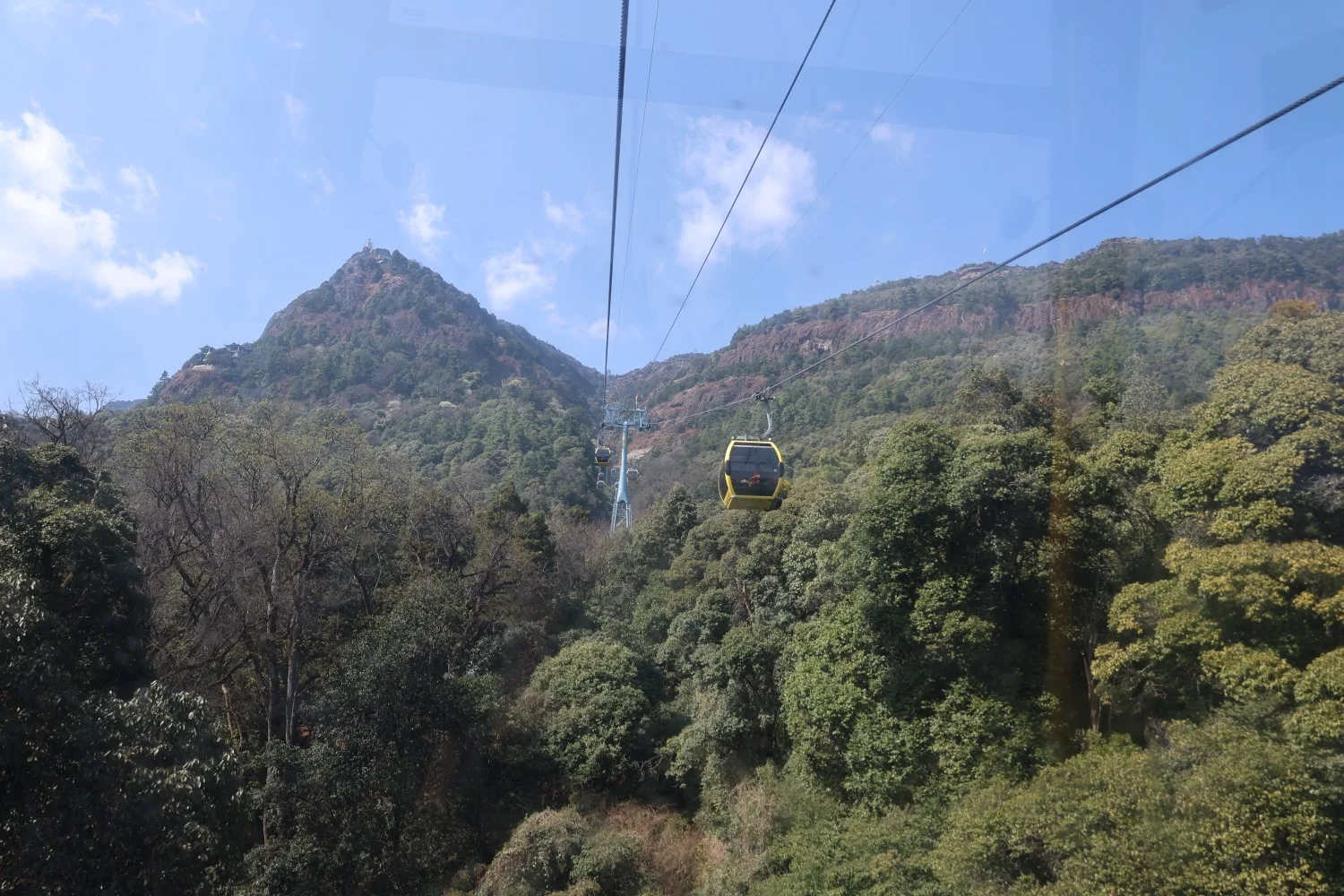
Cable Car Prices
- One way up: ¥45
- One way down: ¥30
- Round trip: ¥75
The ride takes about 10 minutes. It’s smooth, safe, and gives you great panoramic views of the mountain scenery.

Operating Hours
The cable car runs until 5:30 p.m. every day.
[/info]
After 5:30 p.m., it closes for the night and does not operate again until the next morning.
This means:
- If you arrive too late in the afternoon, you cannot use the cable car to go up or down.
- You cannot see sunrise or sunset from the summit if you rely only on the cable car during operating hours. Sunrise and sunset happen outside the cable car’s schedule.
To Watch Sunrise or Sunset, you must stay overnight at the top of the mountain.
There are two main options:
- Temple lodging (inside monasteries like Golden Summit Temple or nearby ones): Around ¥268 per person (basic shared rooms, simple facilities, very peaceful and spiritual).
- Private guesthouses or small inns near the summit: Usually around ¥100+ per person (may be more comfortable, with private rooms in some cases).
Golden Summit Temple
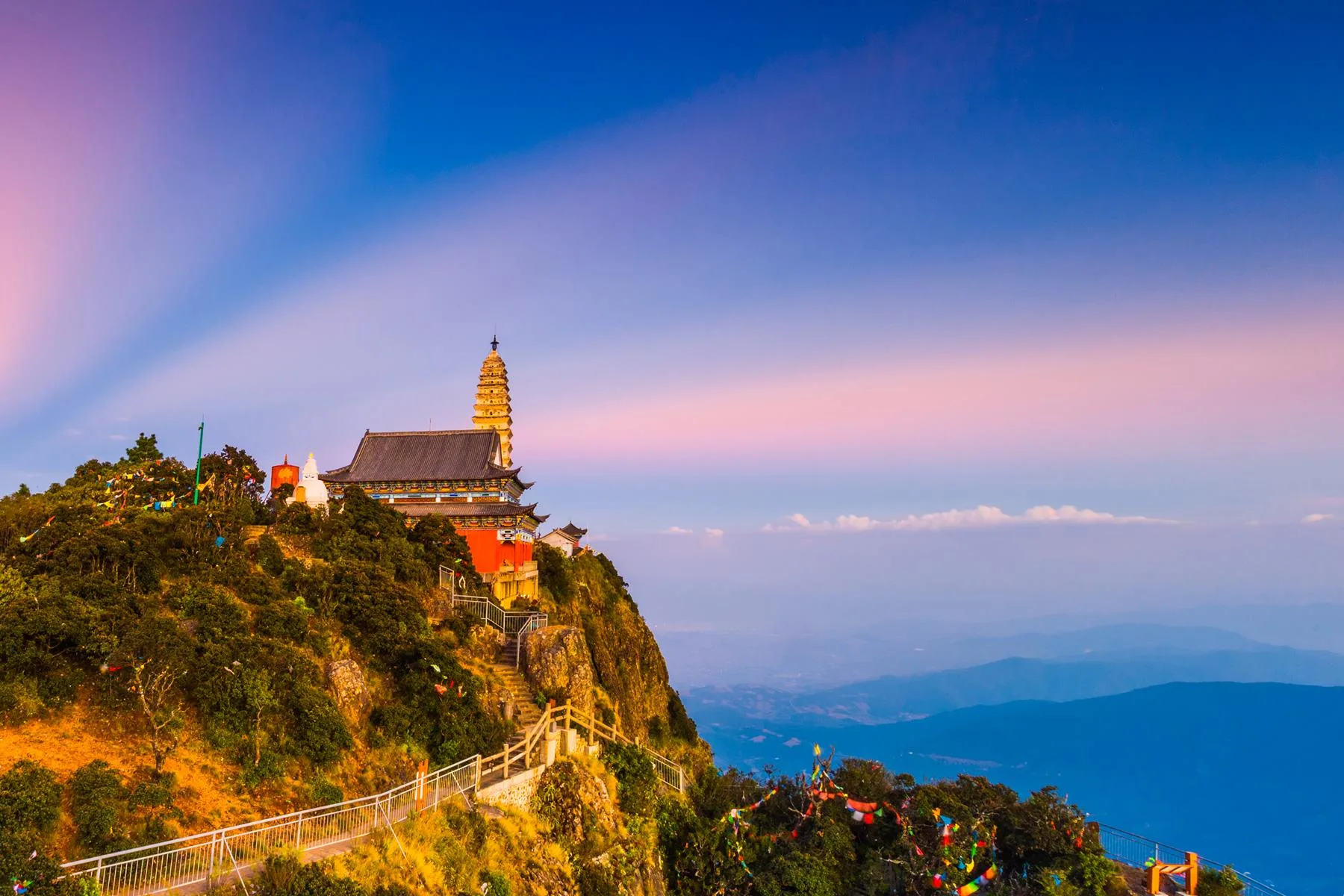
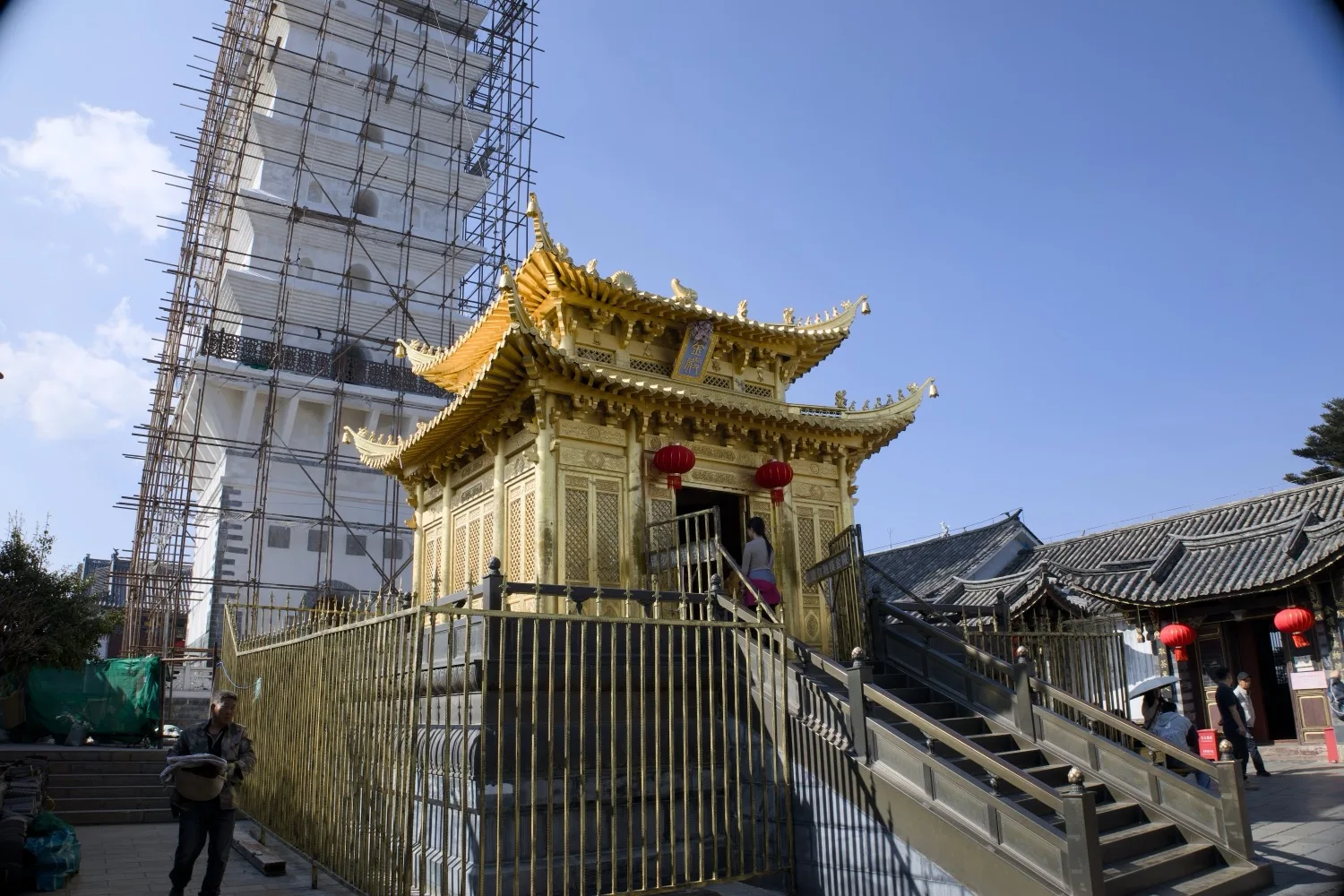
Golden summit temple sits at the very top of Tianzhu Peak, the highest point of Jizu Mountain at 3,248 meters. It is the most famous and important temple on the mountain, offering breathtaking views and a deep sense of peace.
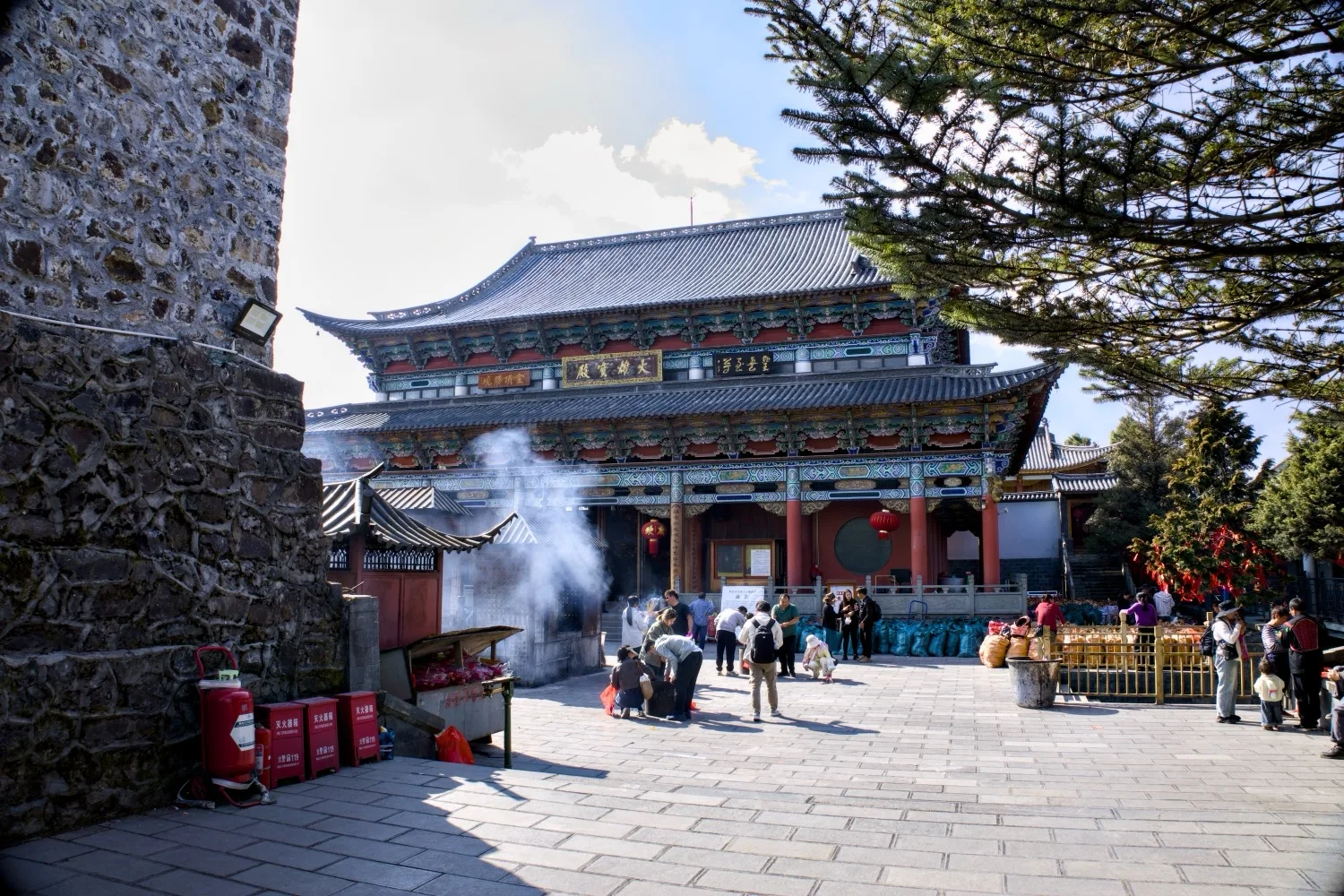
The temple has a rich history:
- It was first built during the Ming Dynasty’s Hongzhi reign (between 1488 and 1505) by the monk Laixiu Chan Master.
- Over the years, it was repaired and expanded several times until it became a large and grand temple.
In the 14th year of the Chongzhen reign (1641), Mu Tianbo, a noble from the former Ming royal family, moved the famous Golden Hall from Taihe Palace on Yingwu Mountain in Kunming to this spot on Jizu Mountain. - During the Cultural Revolution in the 20th century, most of the temple was badly damaged or destroyed. Only the Lengyan Pagoda survived unharmed.
- In modern times, Venerable Weisheng, a respected monk, led two major restoration projects — one starting in 2004 and another around 2014. Thanks to his efforts and support from many donors, the temple was rebuilt to its current grand scale.
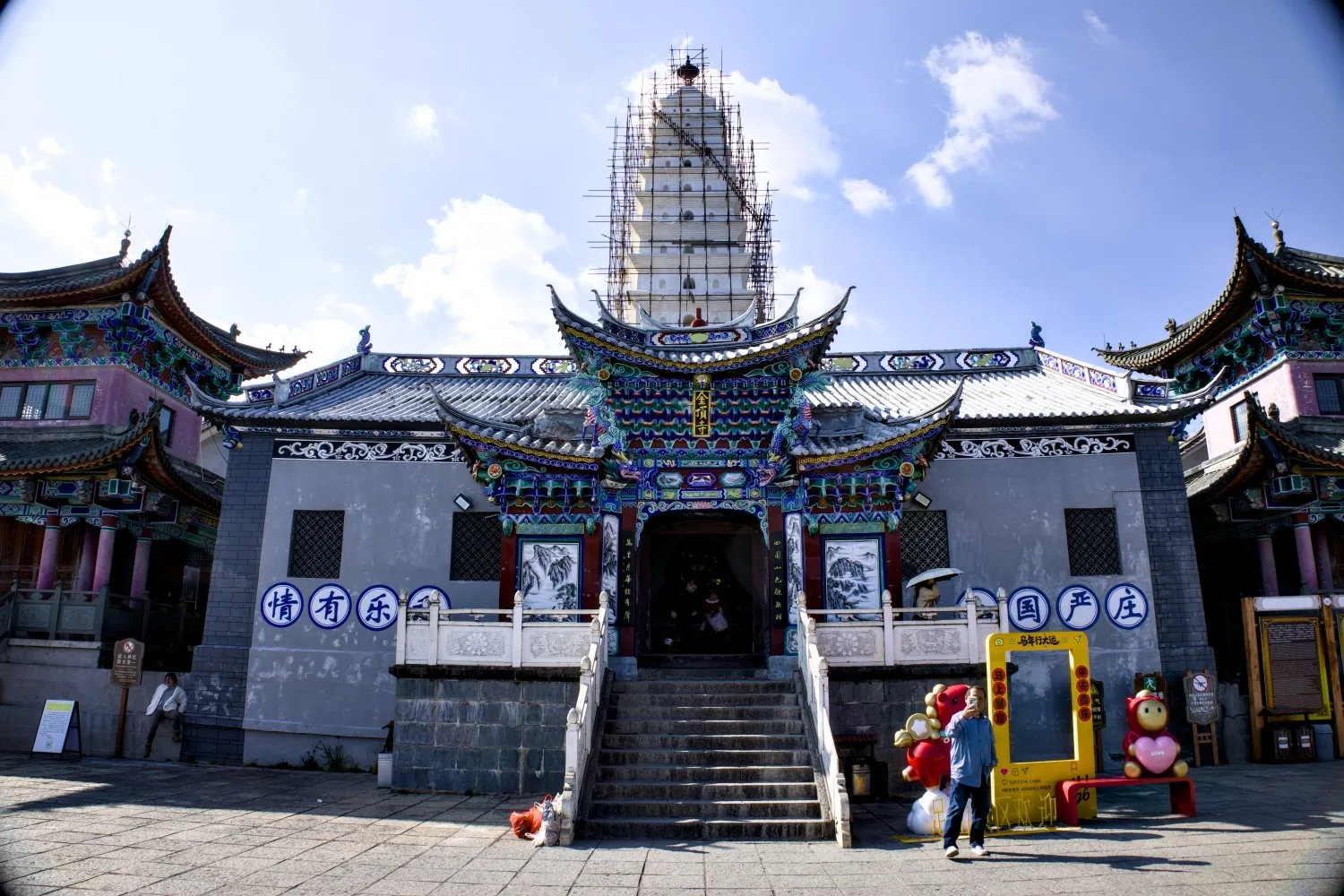
Today, the restored Golden Summit Temple is huge and impressive. The halls are tall and solemn, with shining golden roofs that catch the sunlight. The main halls feel very dignified and peaceful, filled with beautiful Buddhist statues and artwork.
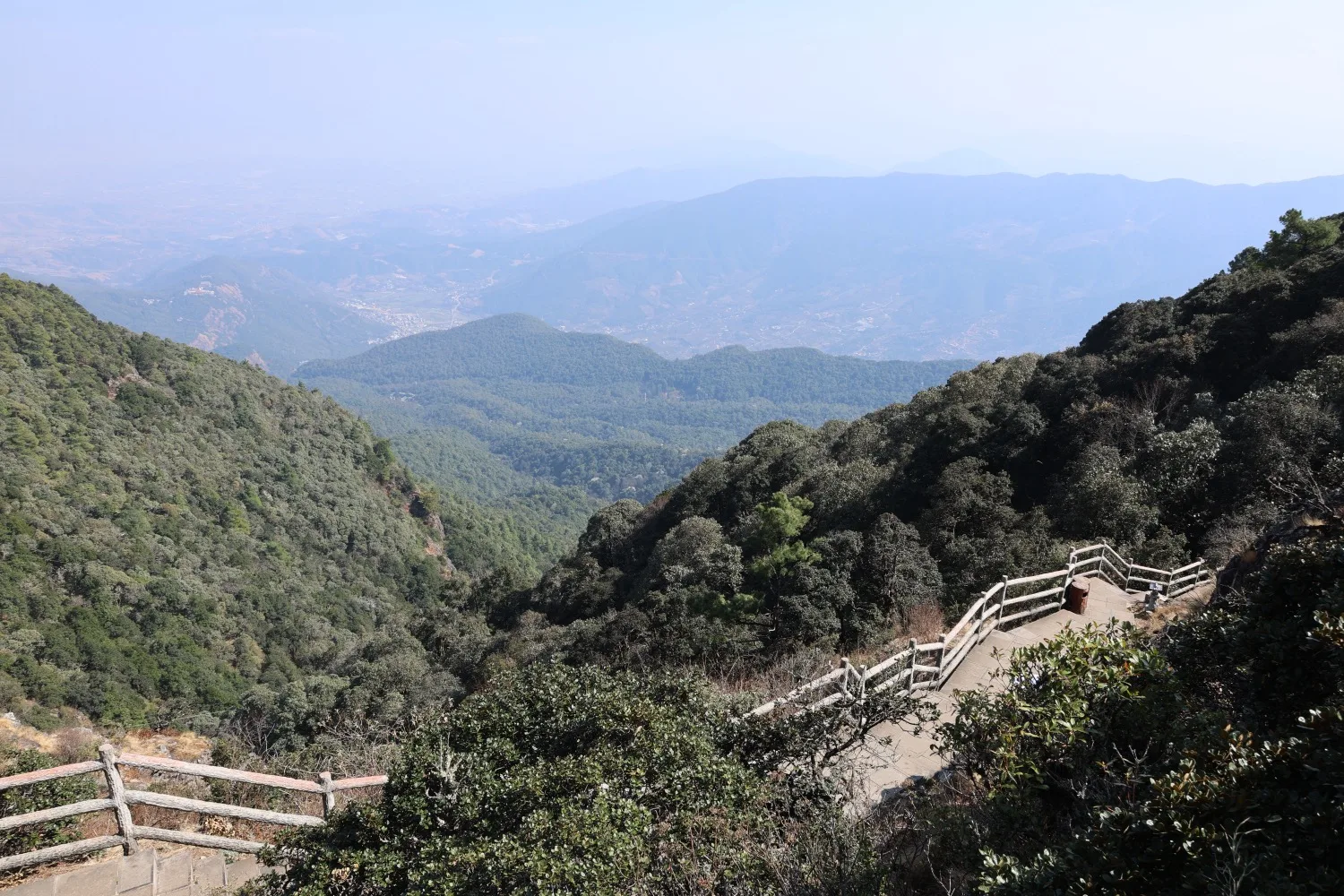
From the temple grounds, you get the famous “Four Views” of Jizu Mountain:
- Sunrise in the east
- Auspicious clouds in the south
- Views of Cangshan and Erhai Lake in the west
- Snowy mountains in the north
On clear mornings, you might even see the magical “Buddha’s Light” — a glowing halo around the peak that many pilgrims consider a blessing.
Dress warmly — it’s cold and windy at this height, even in summer.
Walk quietly and respectfully, as this is an active place of worship.
Golden Summit Temple is not just a building — it’s the spiritual heart of Jizu Mountain. Standing here, surrounded by clouds and distant peaks, many people feel a deep sense of calm and wonder.
It’s often the highlight of any trip to this sacred place.

Discover Chongqing with WelcomeCQ!
From mountains to grasslands, Chongqing has something to offer for everyone.
Start planning, find an inspiration, or search for a place.
Or follow us on social media.