Explore Pu’er in Yunnan: A Complete Visitor Guide
While most of our guides are Chongqing-centred, we’re venturing a bit further south this time with a Pu’Er visitor guide.
For the past two years, my parents have traded the city lights for the misty mountains of Pu’er in Yunnan Province to celebrate the Chinese New Year. This hidden gem might not have the name recognition of its neighbours, but it offers a profound, authentic glimpse into traditional Chinese life.
From the sprawling tea plantations to the rich heritage of its ethnic borderlands, Pu’er is a destination that deserves a spot on your bucket list.
Where is Pu’Er?
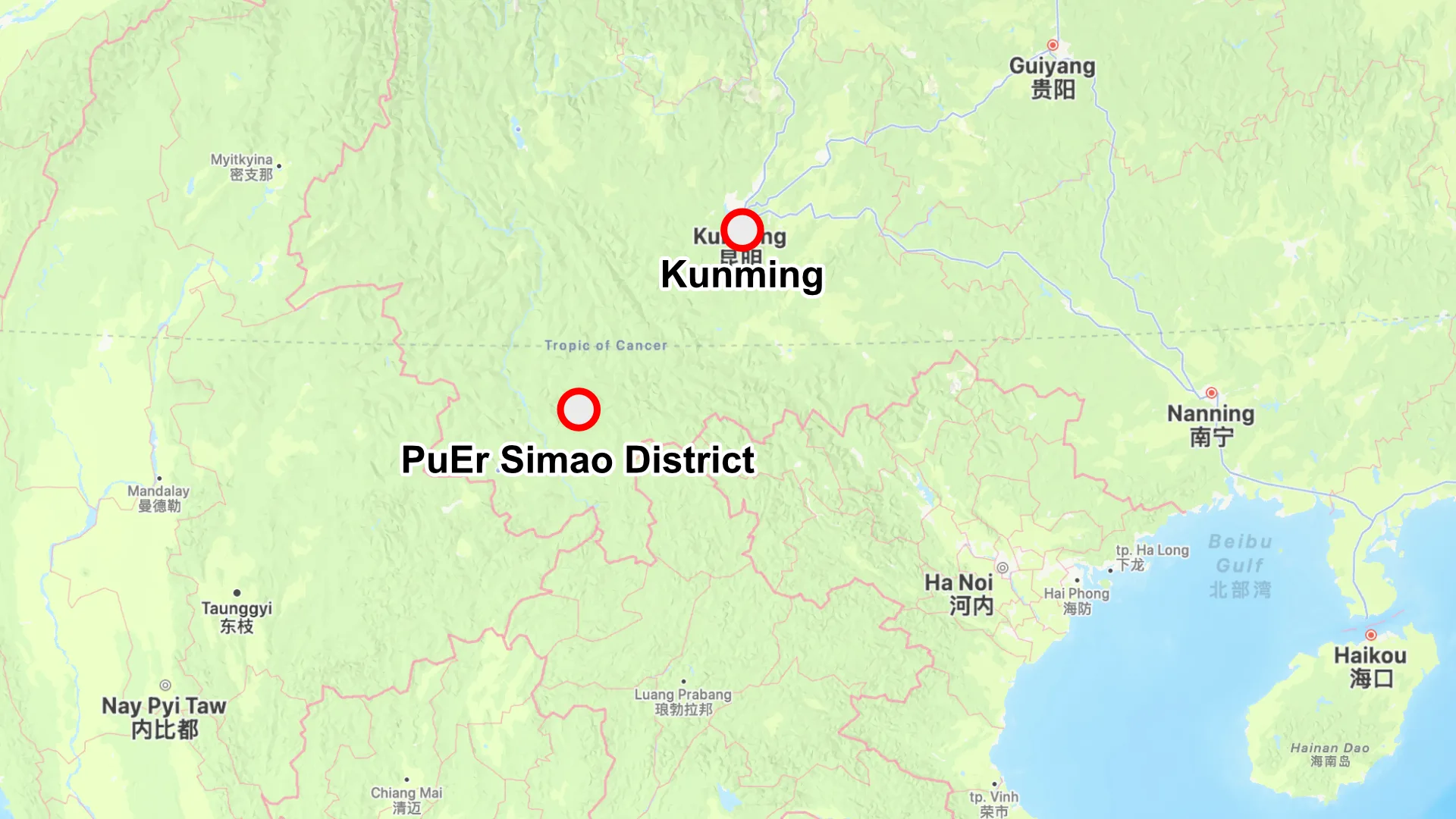
Pu’er is located in the southwest of Yunnan Province. It is a massive prefecture that borders three different countries: Myanmar, Laos, and Vietnam.
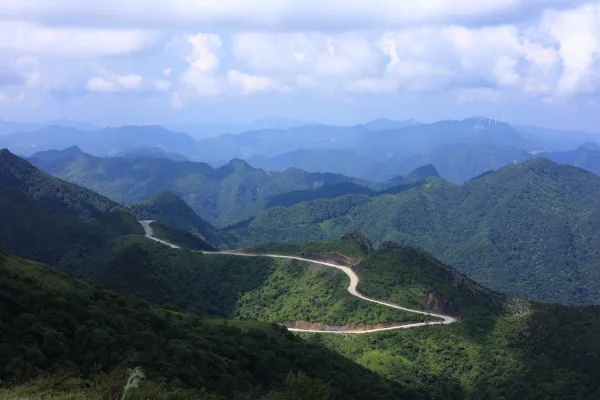
It sits on the edge of the Yunnan-Guizhou Plateau, characterized by lush, rolling hills and a subtropical climate that stays spring-like nearly year-round.
It’s now much easier to reach thanks to the China-Laos Railway, making it a convenient stop between Kunming and Xishuangbanna.
What is Pu’Er Best Known For?
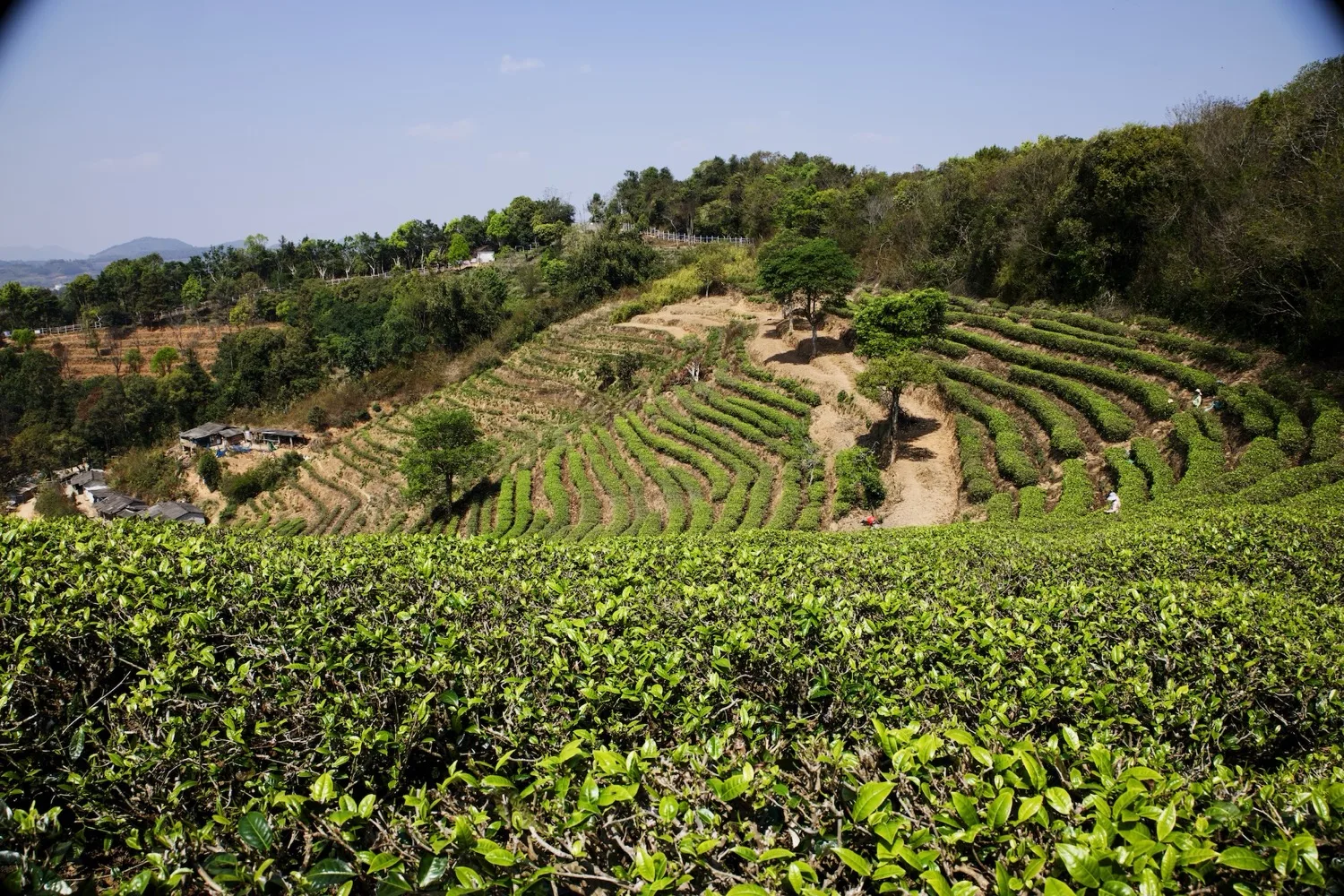
The “Tea Capital”: As the name suggests, it is the birthplace of Pu’er Tea. The ancient tea-horse road started here, and the area is home to “King of Tea Trees” that are over a thousand years old.
Coffee Hub: In a twist for traditional China, Pu’er has recently become the “Coffee Capital of China.” It produces over half of the country’s coffee beans, blending a trendy cafe culture with old-school tea traditions.
The Slower Pace: Unlike the high-energy vibe of Chongqing, Pu’er is known for yangsheng (wellness) and a relaxed, quiet lifestyle.
A “Retirement Paradise”: Pu’er has become a sanctuary for retirees from the Sichuan-Chongqing region and Northeast China due to its climate draw, with an average annual temperature of around 18°C – 20°C year-round.
Administrative Regions of Pu’Er
The urban core of the Pu’Er administrative region is Simao District.
The surrounding regions are divided into distinct cultural zones:
- The northern “Gateway” counties: Mojiang (the “Twin Capital” on the Tropic of Cancer) and Ning’er (the historic tea-trade center)
- The central “Green Lung” mountain ranges: Jinggu and Jingdong
- Exotic southwestern borderlands: Lancang, Menglian, and Ximeng, where UNESCO-listed tea plantations meet the rich heritage of the Lahu, Dai, and Wa peoples along the frontiers of Myanmar and Laos
This guide will cover tips and gems on Simao district.
Pu’Er Ethnic Minority Groups
Pu’er is a cultural mosaic. About 60% of the population belongs to ethnic minority groups. The most prominent include:
- Hani: Famous for their terrace farming and the “Long Table Banquet.”
- Yi: Known for their vibrant embroidery and the Torch Festival.
- Lahu: Often called the “Tiger Hunters,” they have a unique musical culture centred around the lusheng (a reed instrument).
- Wa: Distinct for their drum dances and deep connection to the mountains.
Where to Stay in Pu’Er?
| 🛏️ $$$ | Weijing Wyndham Hotel |
| 🛏️ $$ | Ibis Styles Hotel |
| 🛏️ $ | Pu’Er Yining Hotel |
| 🛏️ | More options |
Local Culture and Atmosphere of Pu’Er
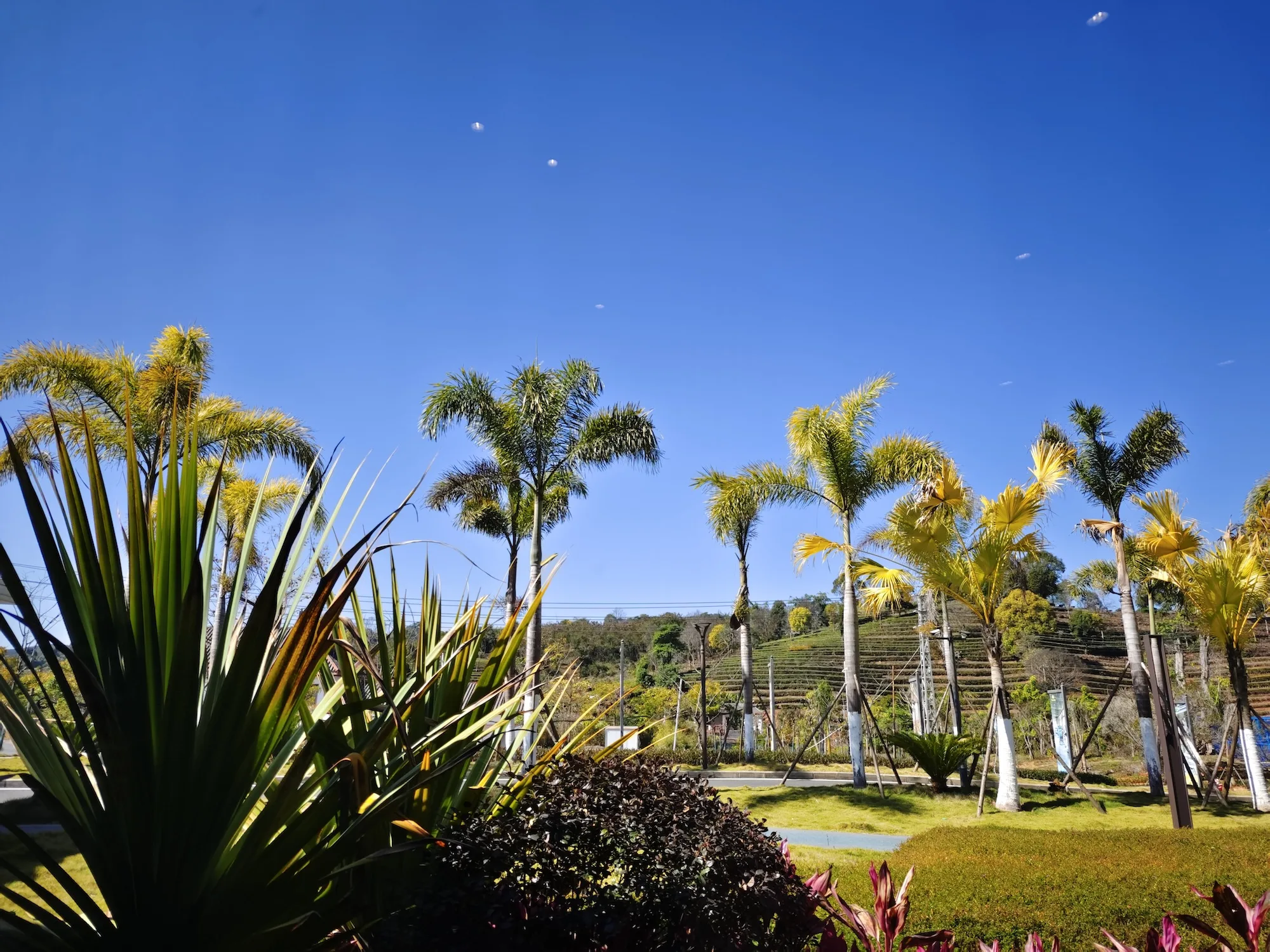
A “Living Museum”: The local culture is deeply tied to the land. You’ll find ancient villages like Nuoganshang or Wengji where houses are still built from wood and tile, and the rhythms of daily life revolve around the harvest.
Spiritual Syncretism: The culture is a mix of Southern Buddhism and indigenous animism. You’ll see Buddhist temples standing alongside sacred groves dedicated to mountain spirits.
Culinary Identity: The food is incredibly fresh. Think “Eating the Mountain”—wild mushrooms, edible flowers, and tea-infused dishes (like fried tea leaves).
Top Places to See in Simao District
Tea Horse Road Scenic Area
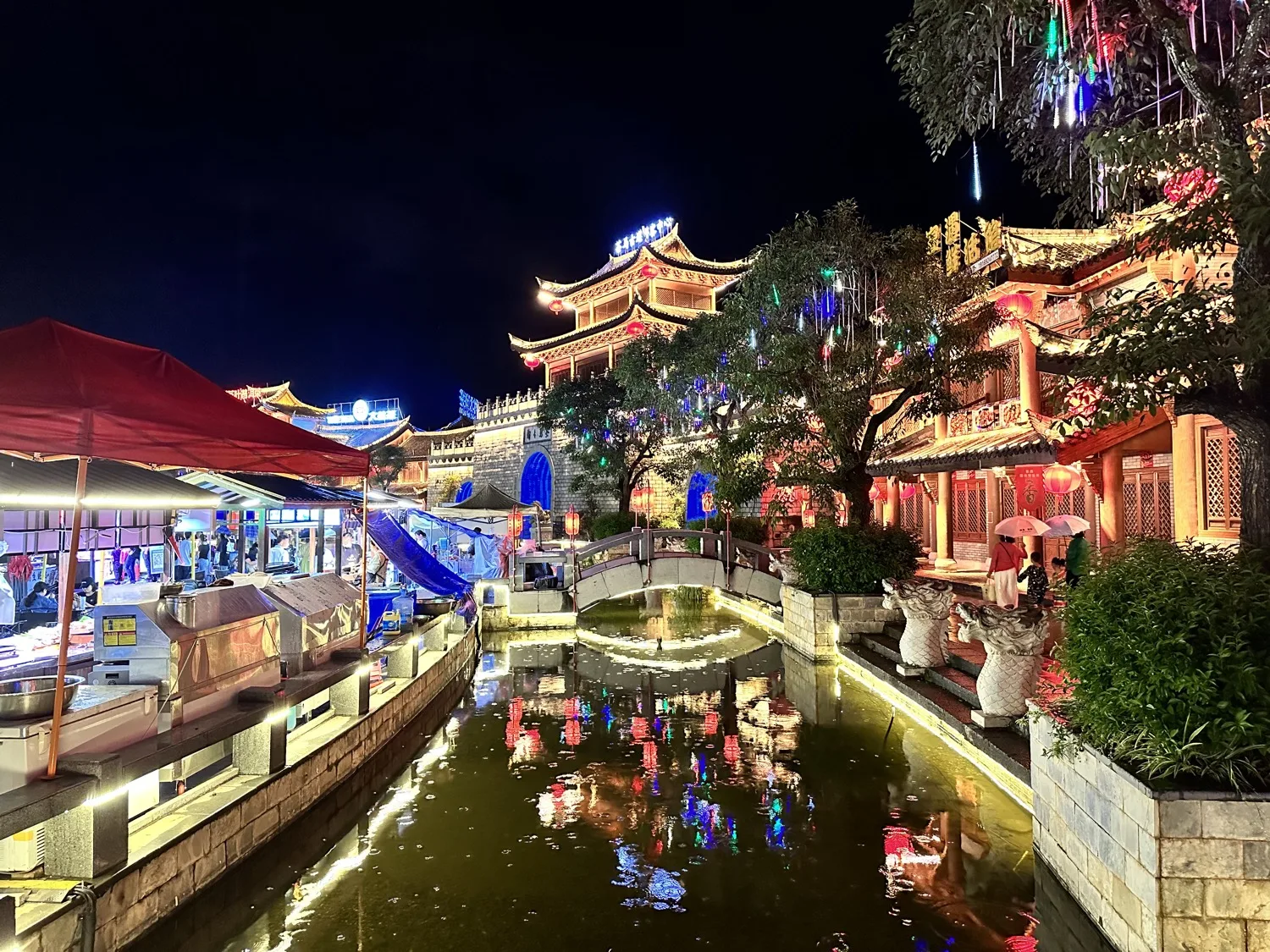
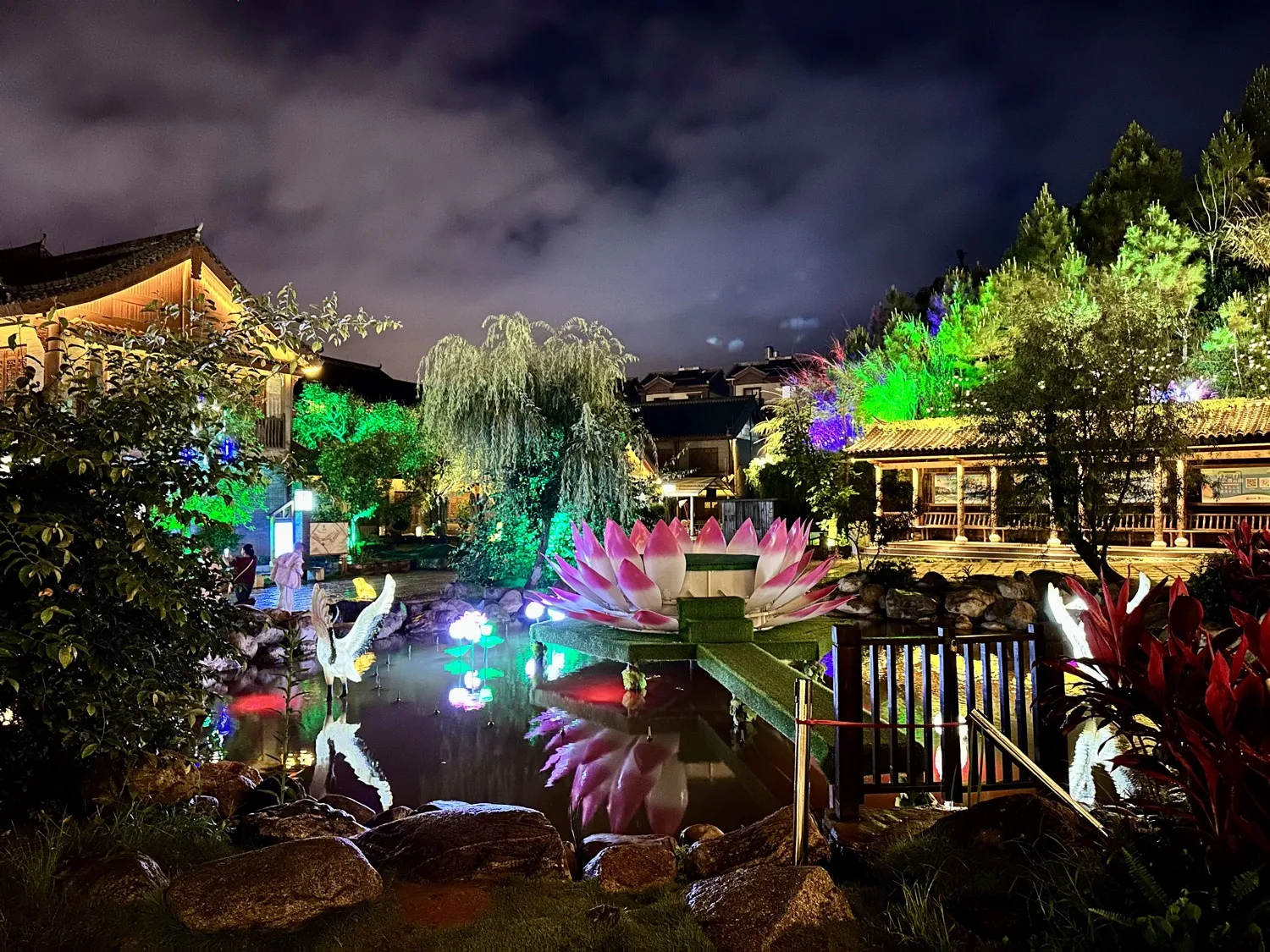
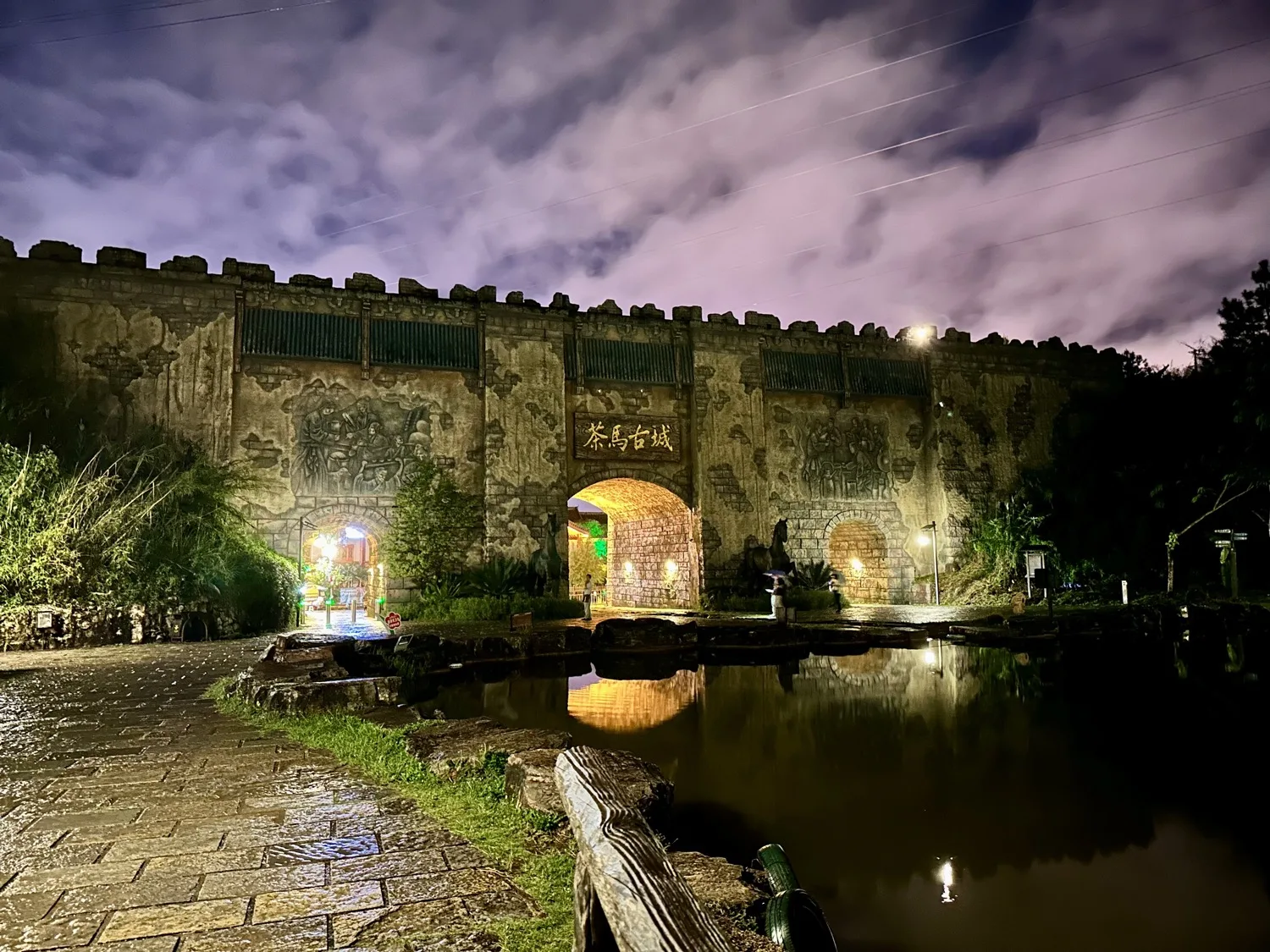
Although The tea hourse scenic area is a modern reconstruction, it is the beating heart of Pu’er’s nightlife and a paradise for foodies.
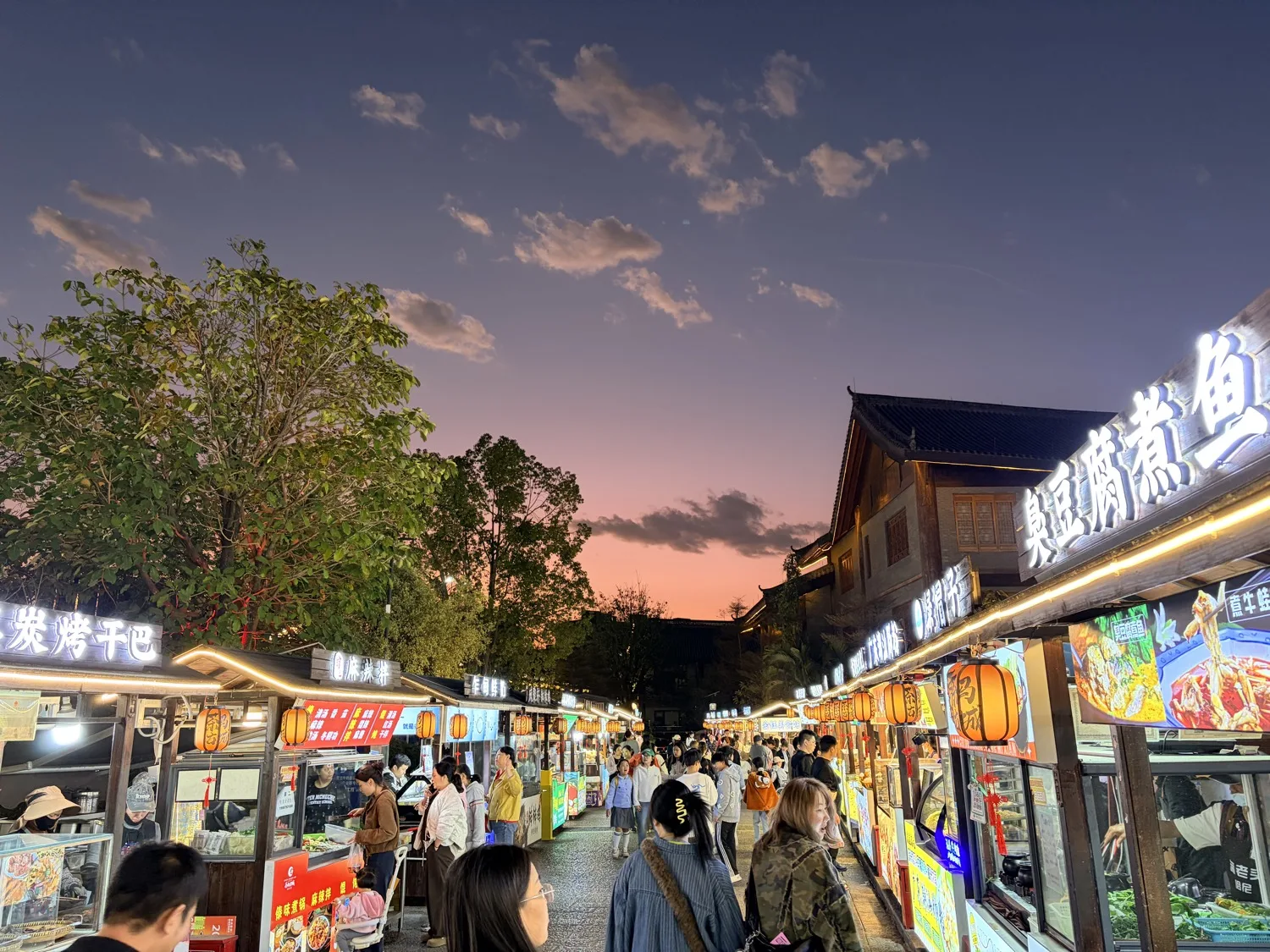
Come here in the evening to sample an endless variety of Yunnan street snacks, but stay for the nightly bonfire party.
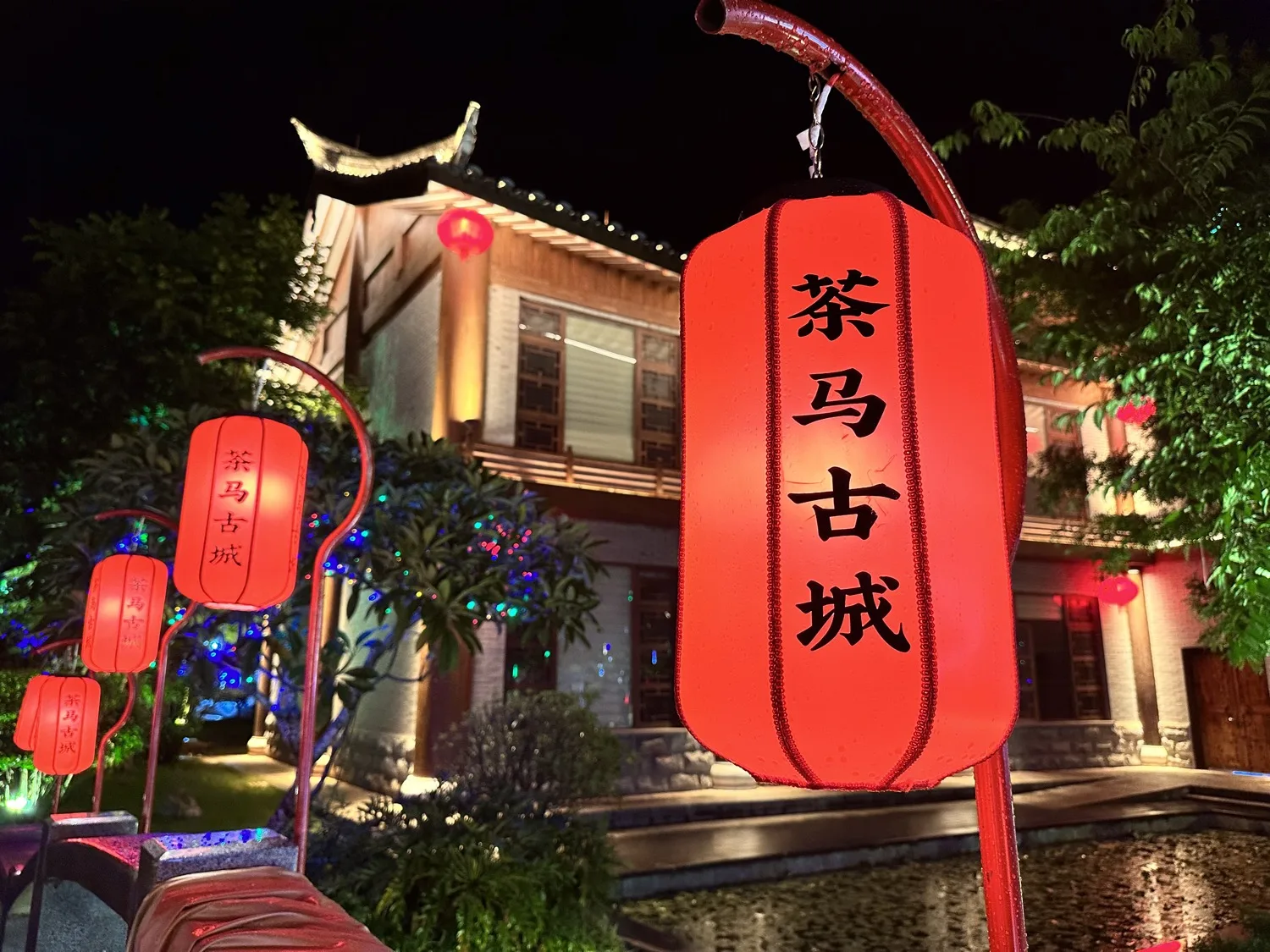
It’s a high-energy celebration where locals and travellers join hands to dance around the flames, creating a festive atmosphere that perfectly captures the city’s welcoming spirit.
Simao Old Street & Daijia Ally
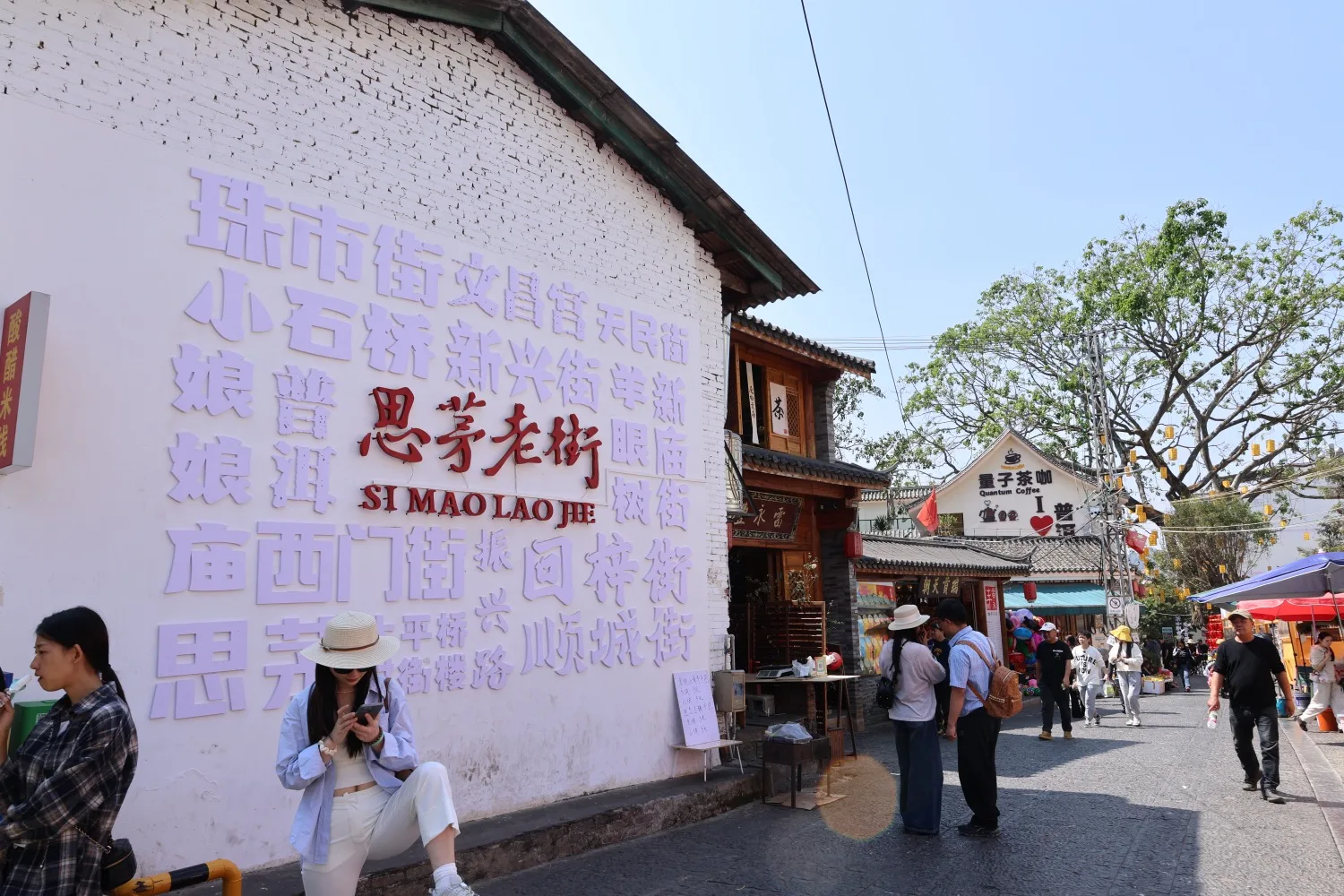
For those seeking a dose of nostalgia, Simao old street and Daijia ally are a living time capsule of old Simao.
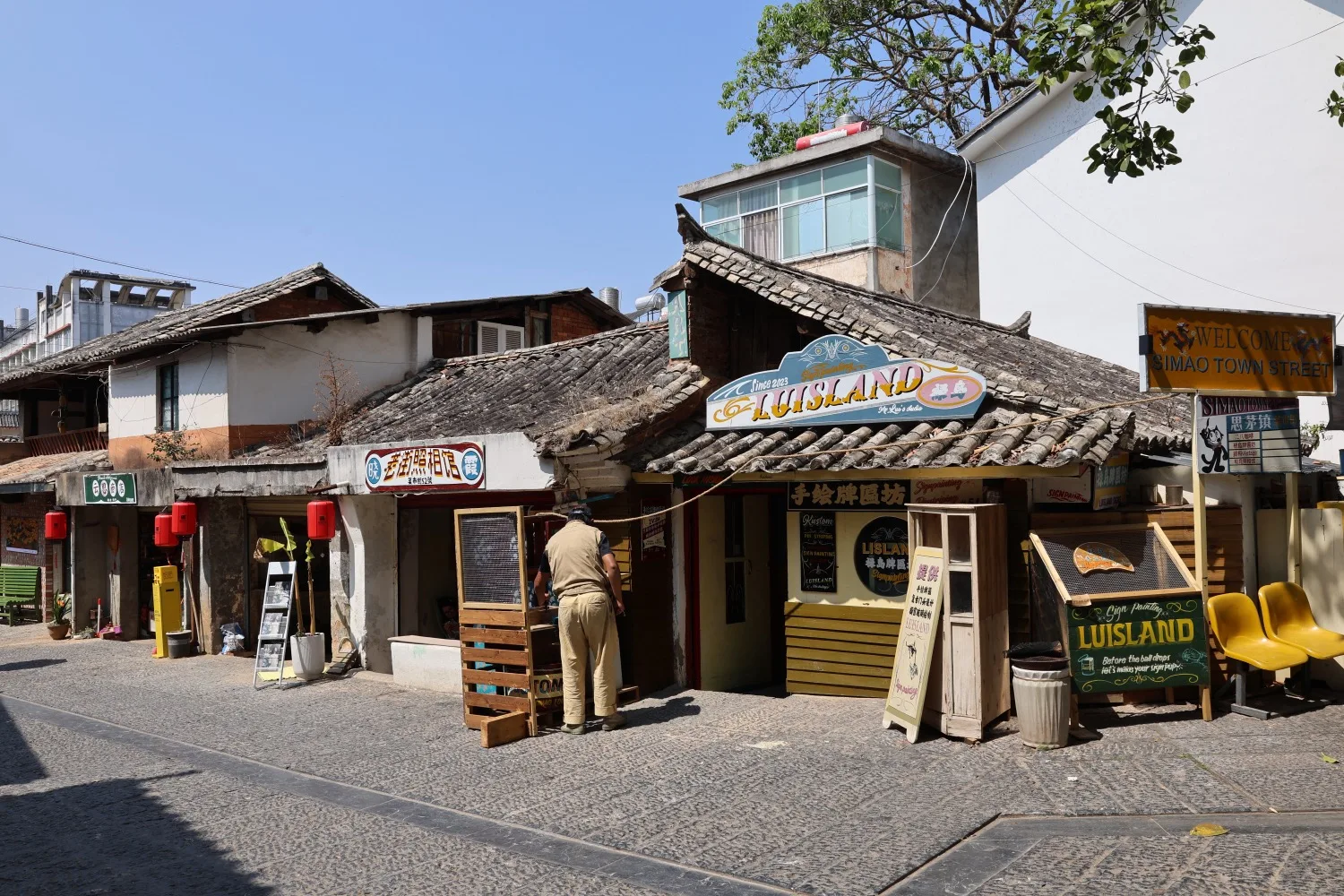
Daijia Ally is a quiet, atmospheric slice of history amid modern Pu’er. This narrow, east-west oriented ancient street preserves a charming cluster of Qing Dynasty buildings — a designated cultural heritage site — with a total original footprint around 2,500 square meters.
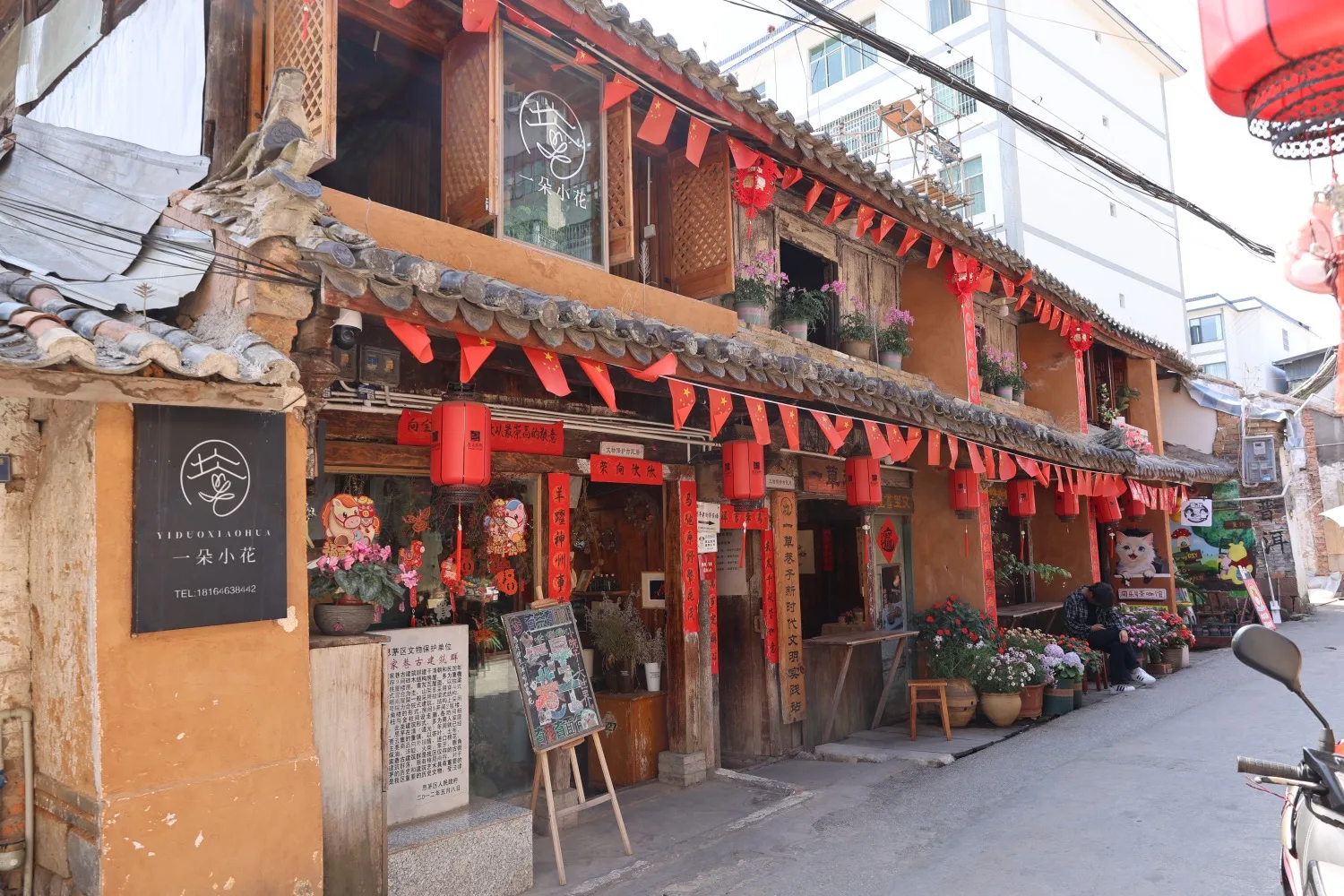
Only 9 brick-and-wood houses remain today, lined neatly along the lane in classic “front-shop, back-residence” style: street-facing storefronts for business, with living quarters hidden in the courtyards behind.
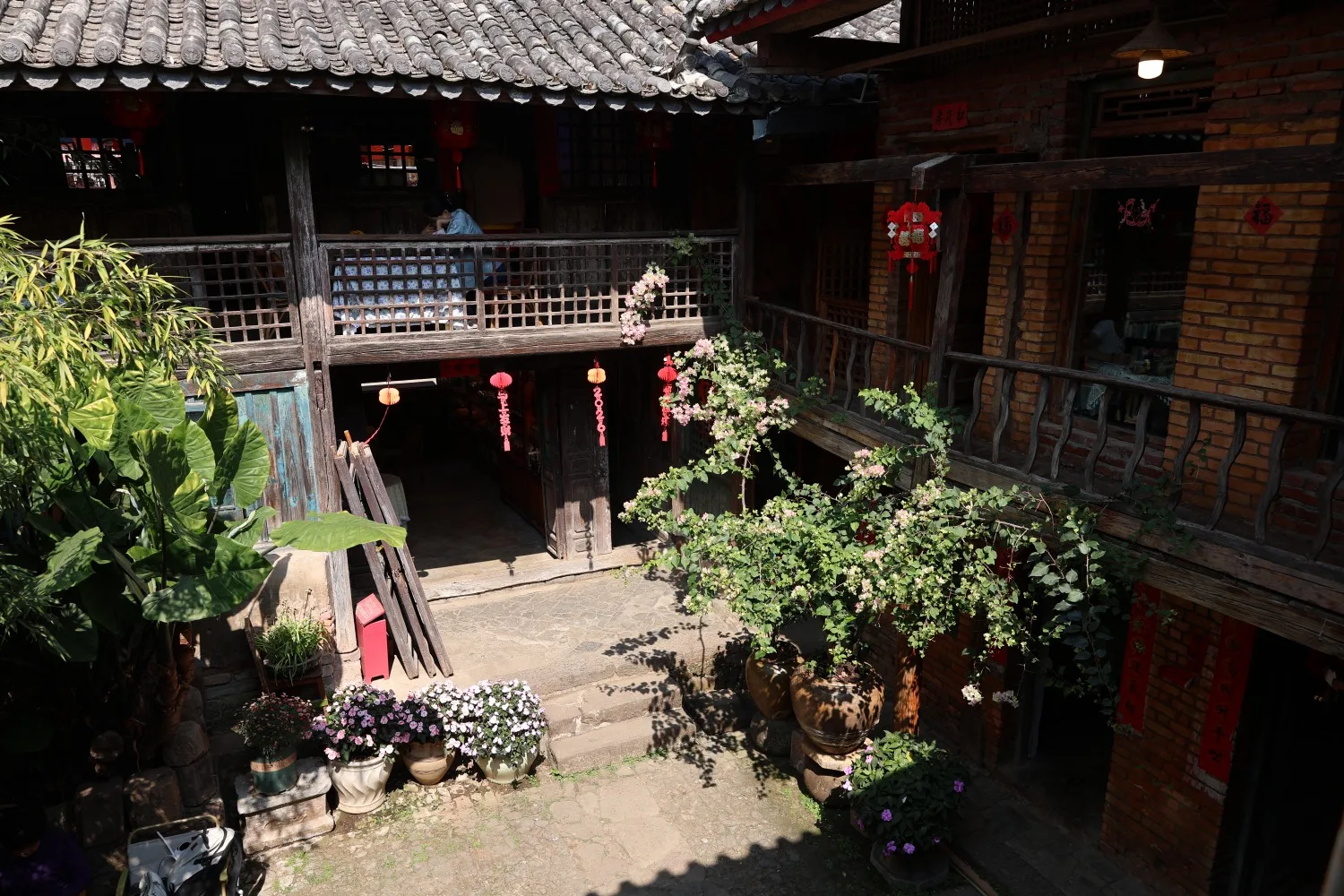
The structures feature the distinctive local chuan dou timber-framing technique — a lightweight yet earthquake-resistant method typical of Yunnan ethnic-minority-influenced architecture. You’ll spot gray-black tiled roofs, overhanging eaves, and in some cases, the elegant “horse-running verandah” design where upper-floor corridors connect the rooms, a practical touch favored by prosperous merchants.
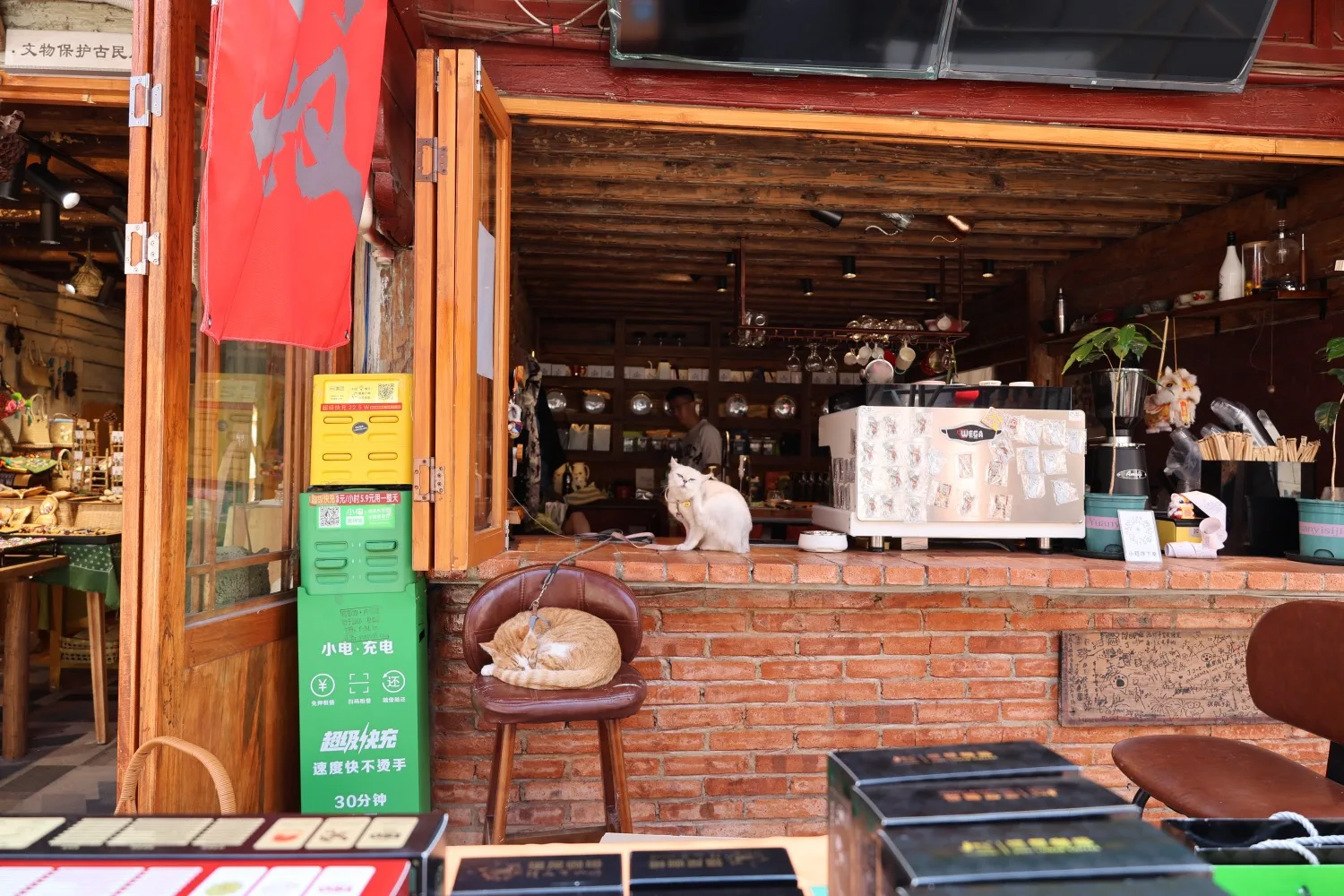
Long before Pu’er became famous for its tea plantations, Simao was already a bustling commercial hub as early as before the Daoguang era (1821–1850) of the Qing Dynasty. Caravans of horse and mule trains converged here along the ancient Tea Horse Road, trading Yunnan’s prized pu’er tea, homespun cloth, and salt outward, while bringing back cotton, medicinal herbs, kerosene, matches, ivory, antlers, and more exotic goods.
Daijia Ally was right at the center of this lively trade — tea shops, warehouses, and merchant homes once packed the street, with the constant jingle of bells and shouts of traders filling the air.
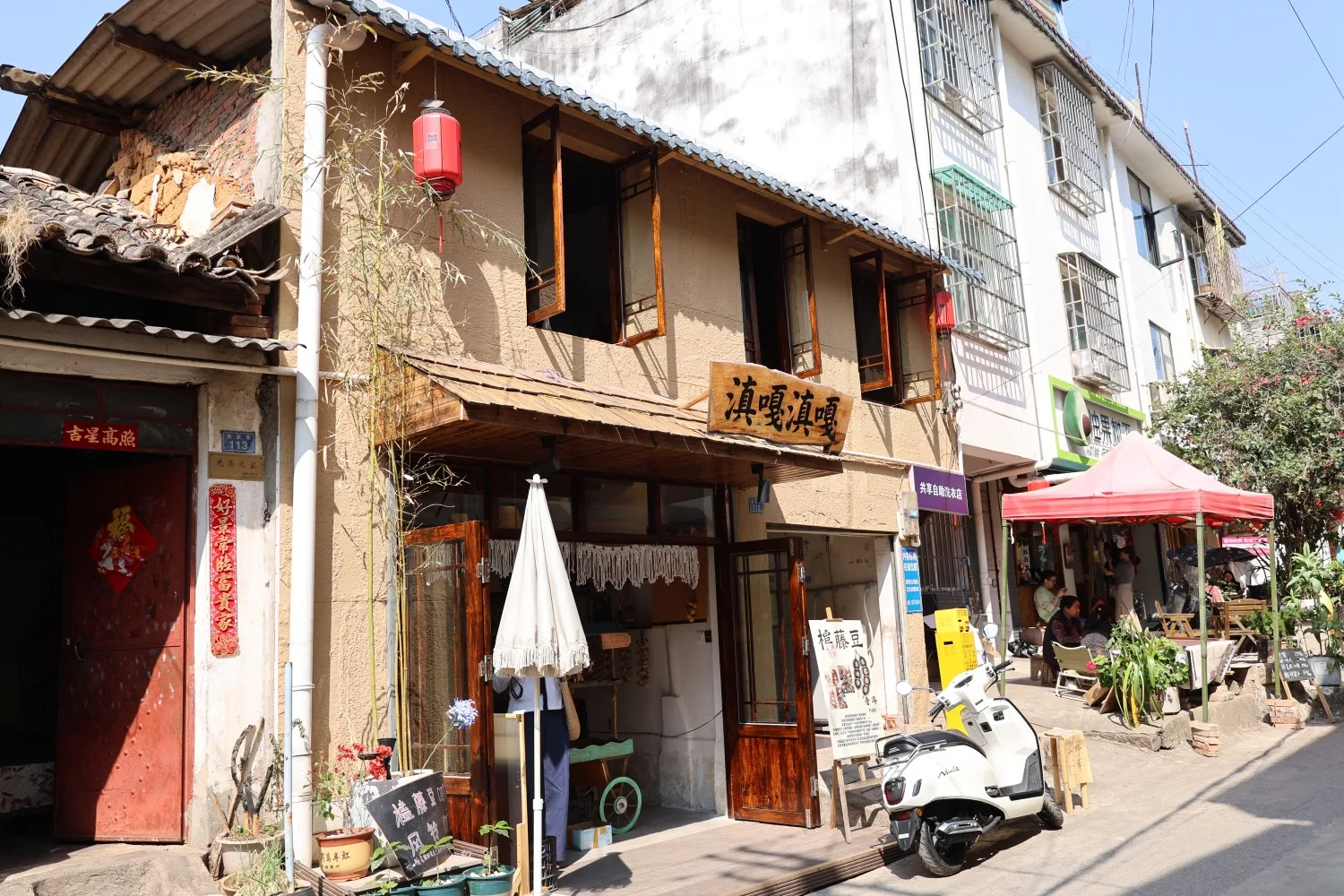
The weathered wooden facades and traditional courtyards offer a quiet, cinematic escape from the modern city. It is the best place to wander with a camera, capturing the slow-motion rhythm of local life that has remained unchanged for decades.
Meizihu Lake Park
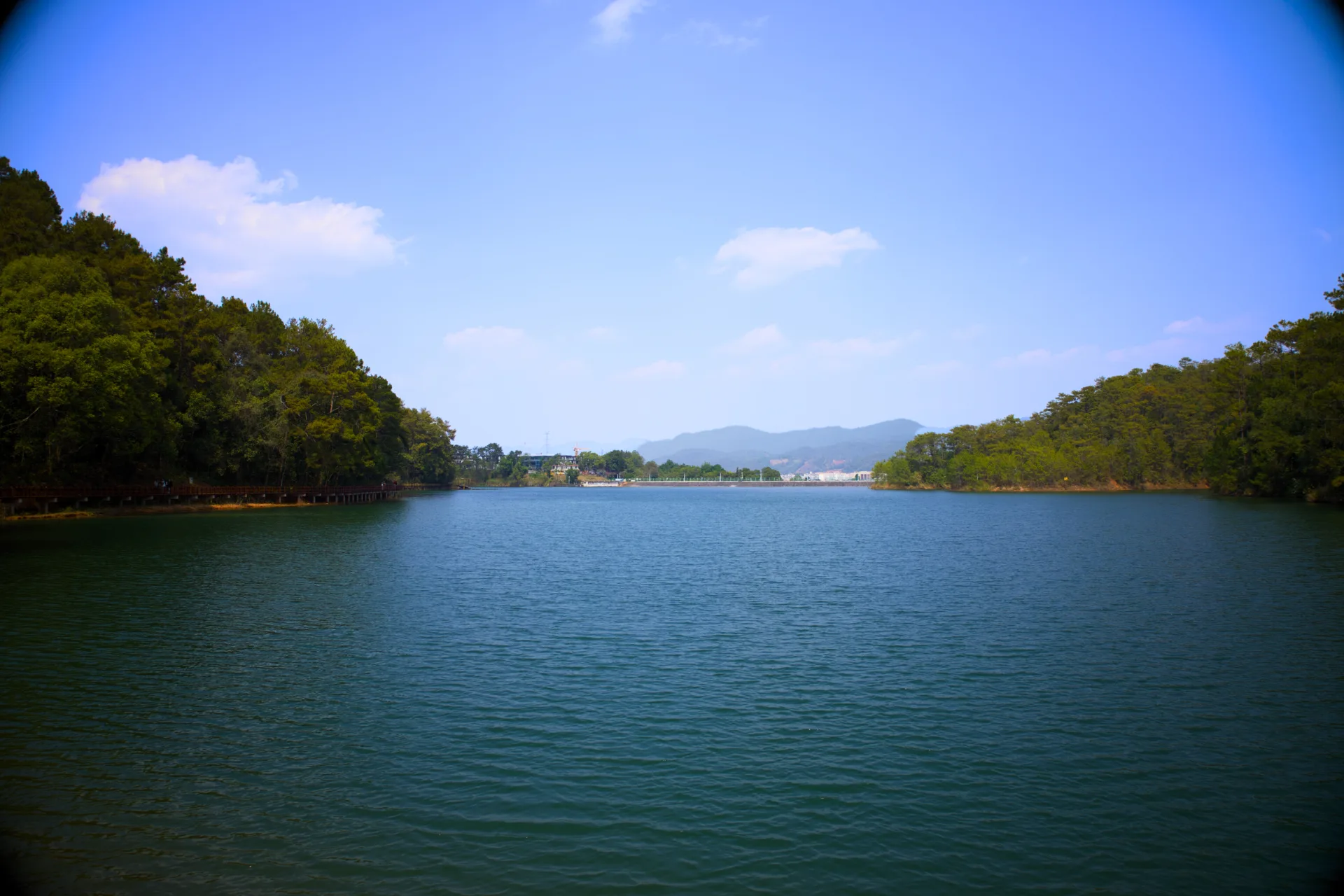
Often called the “Emerald of Simao,” Meizihu park is the city’s favourite nature retreat.
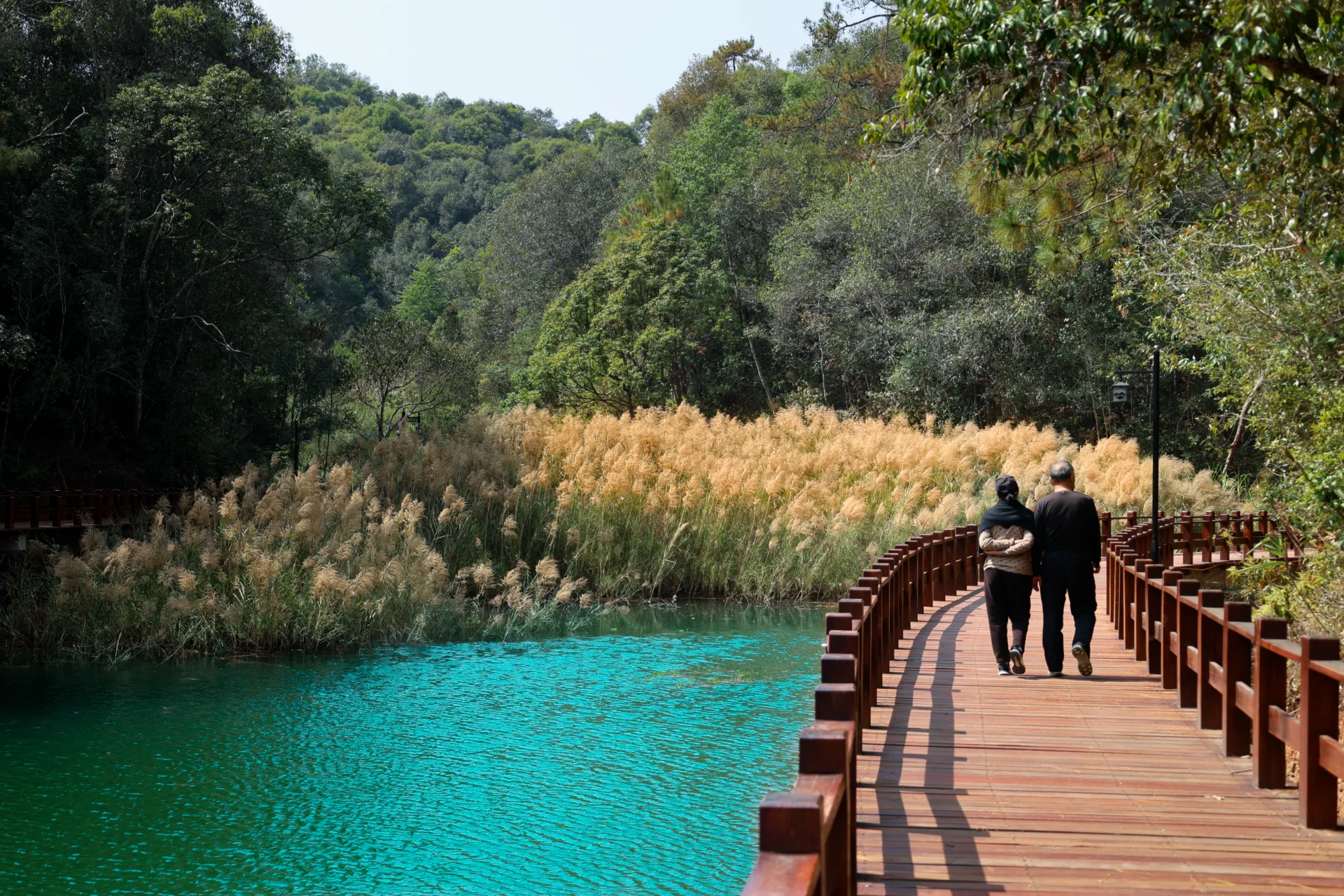
Whether you’re walking the scenic lakeside trails or taking a quiet boat ride, the lush forest and pristine water offer a serene “slow life” experience. It’s an ideal spot for a morning coffee or a peaceful afternoon away from the urban bustle.
Xima River Park
Ximahe park is the ultimate local hangout for catching a stunning sunset. As the golden hour hits, the reflection on the water creates a beautiful backdrop for a relaxed stroll.
It’s a popular spot for residents to exercise and socialize, making it the perfect place to sit on a bench and soak up the city’s authentic, laid-back vibe.
Ancient Tea Horse Road Relics Park & Dingbo Lake
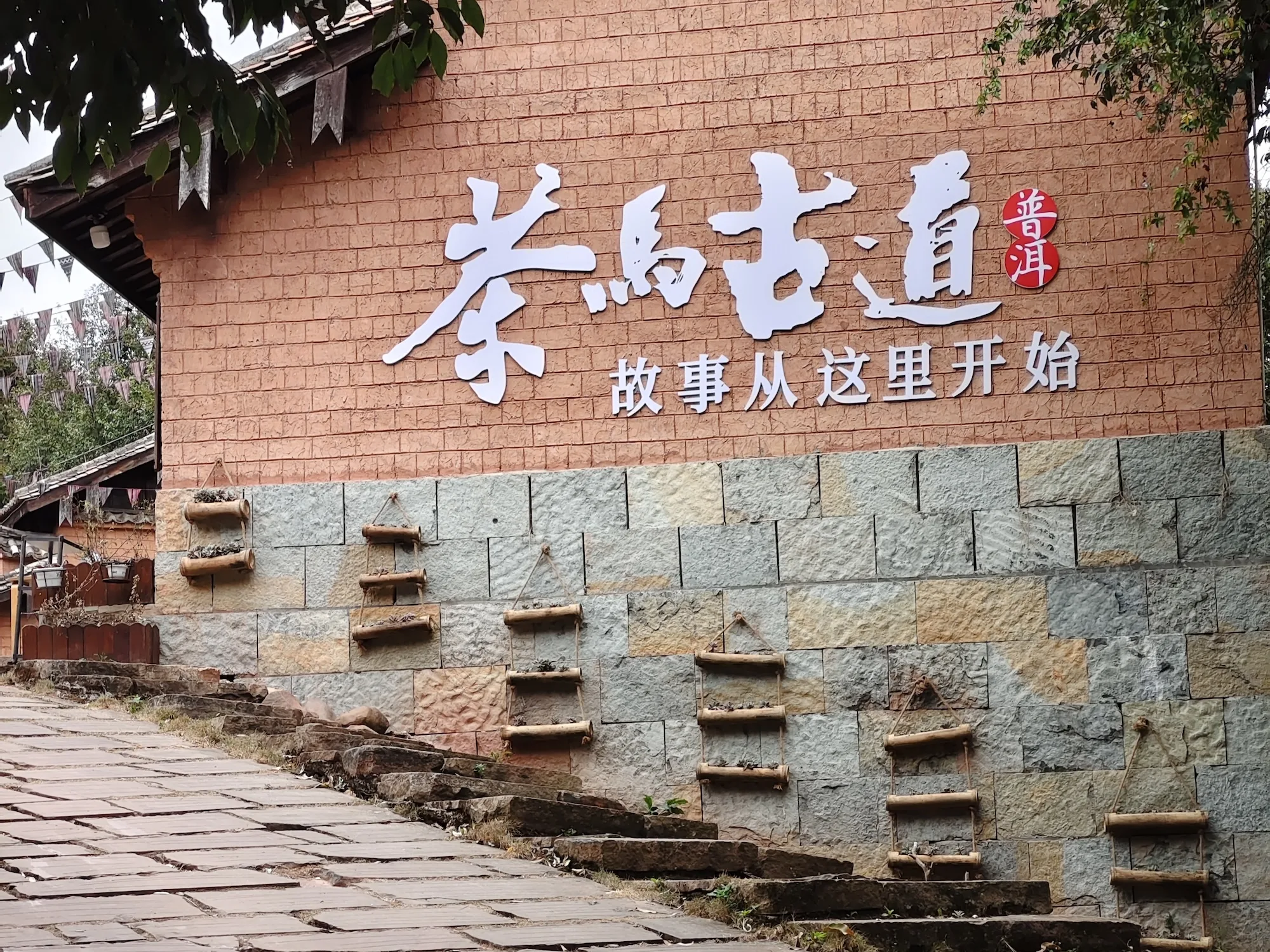
Step back in time by hiking a preserved section of the legendary Tea Horse Road — the ancient trade route that once carried Yunnan’s prized pu’er tea across mountains to Tibet, India, and beyond, exchanging it for horses, salt, and exotic goods.
The ancient tea house road relics park, a national 4A-rated scenic area immerses you in dense, fragrant subtropical greenery, stone-paved paths worn by centuries of mule caravans, and a profound sense of history.
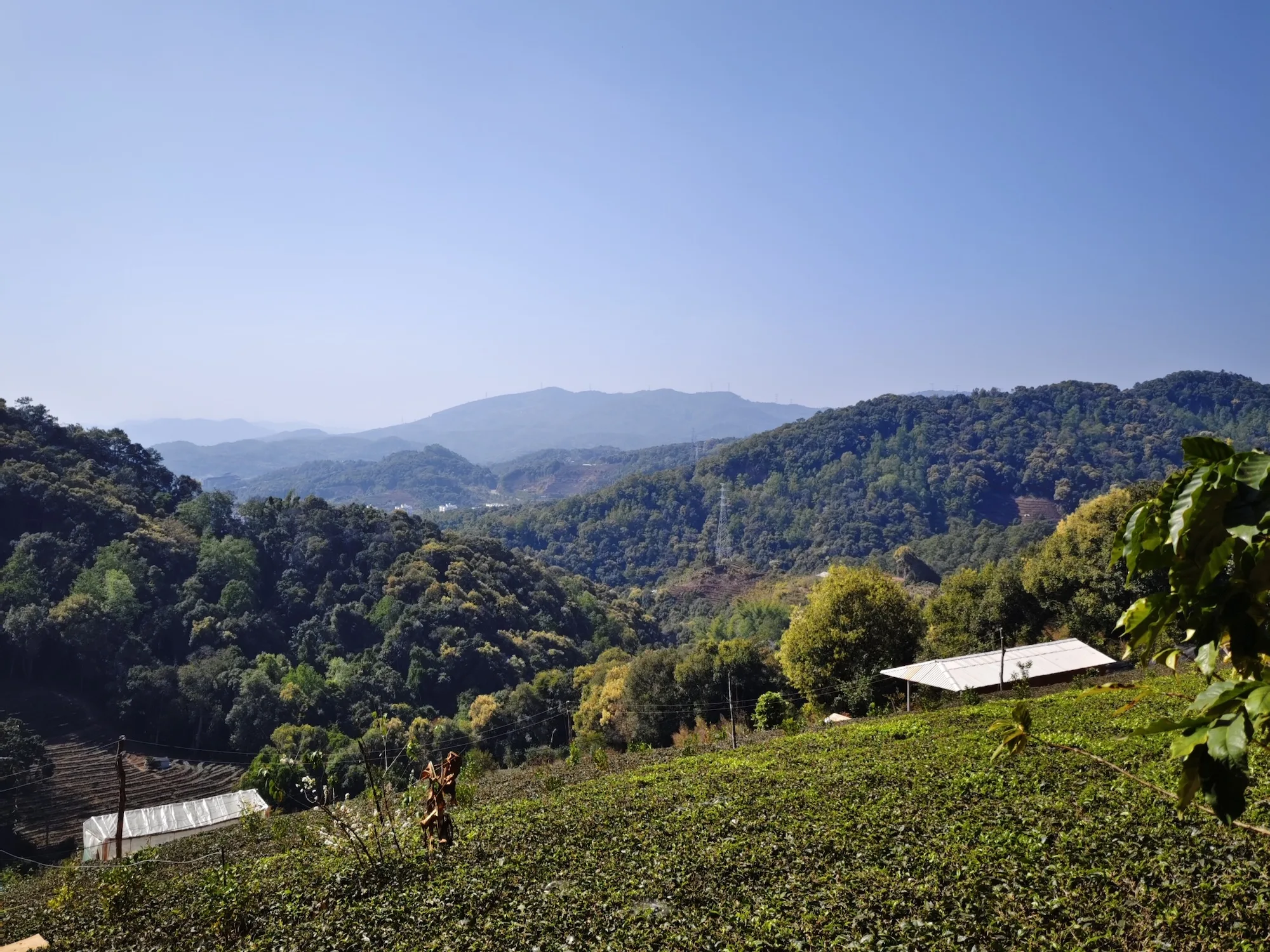
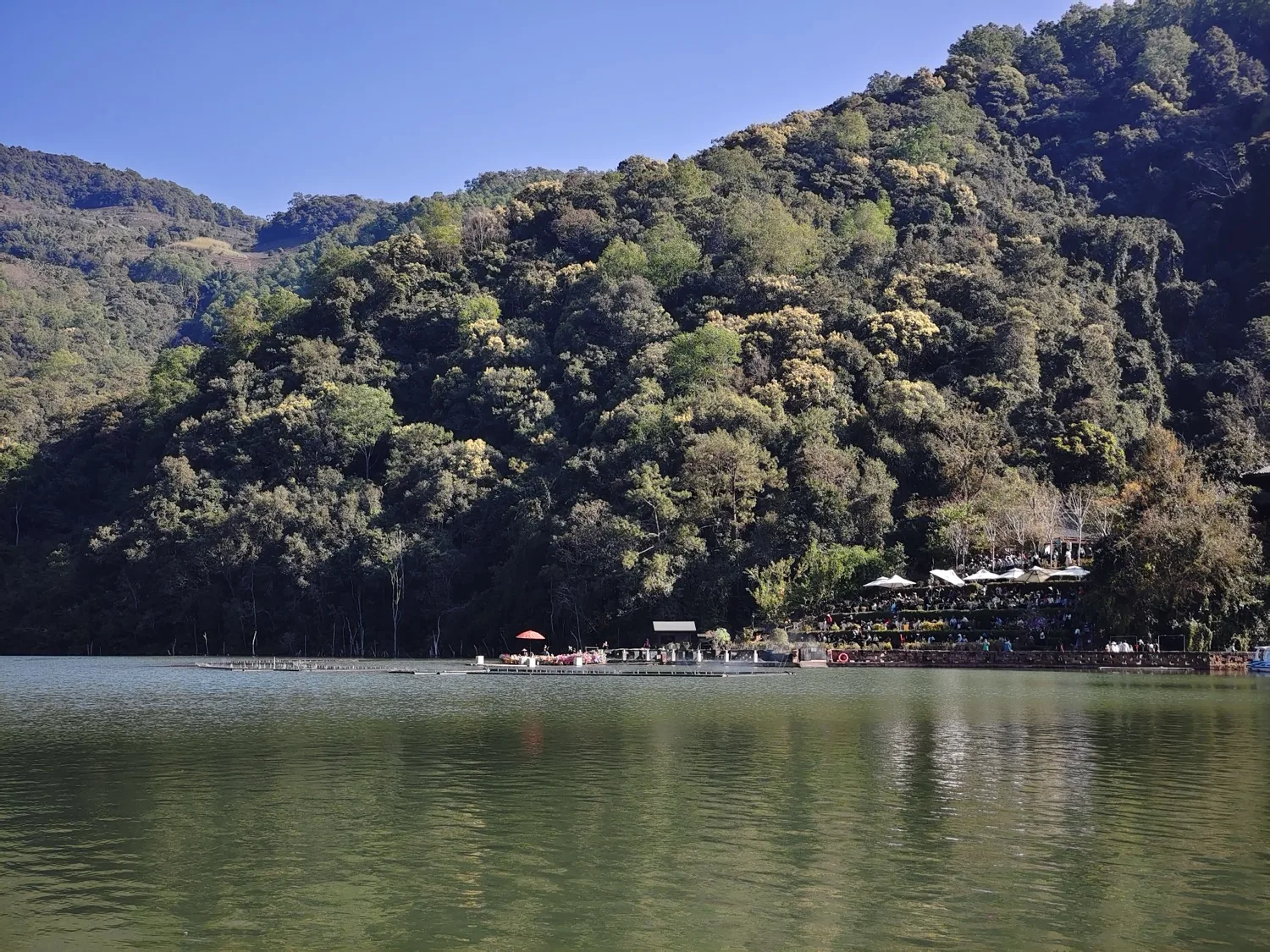
The trail winds upward through lush forest, leading to the hidden gem – Dingbo lake. Its still, mirror-like waters perfectly reflect the encircling mountains and tea-covered hills, creating a pocket of pure tranquility — ideal for pausing to feel the region’s trading soul and breathe in the fresh, oxygen-rich air.
Smart way to access (free entry hack): You don’t need to buy a ticket upfront! Enter for free by walking from behind Tea Hourse Scenic Area — follow the path for about 2 km on foot.
Once inside the relics park area, head uphill along the trail to reach the authentic preserved sections of the old Tea Horse Road. (Note: The full official entrance may charge for bundled experiences like cable cars or shows, but this backdoor walk lets you explore the core hiking paths without paying.)
The ancient road here also connects toward Nakeli, but hiking all the way there takes a very long time (full day or more) — best saved for dedicated trekkers.
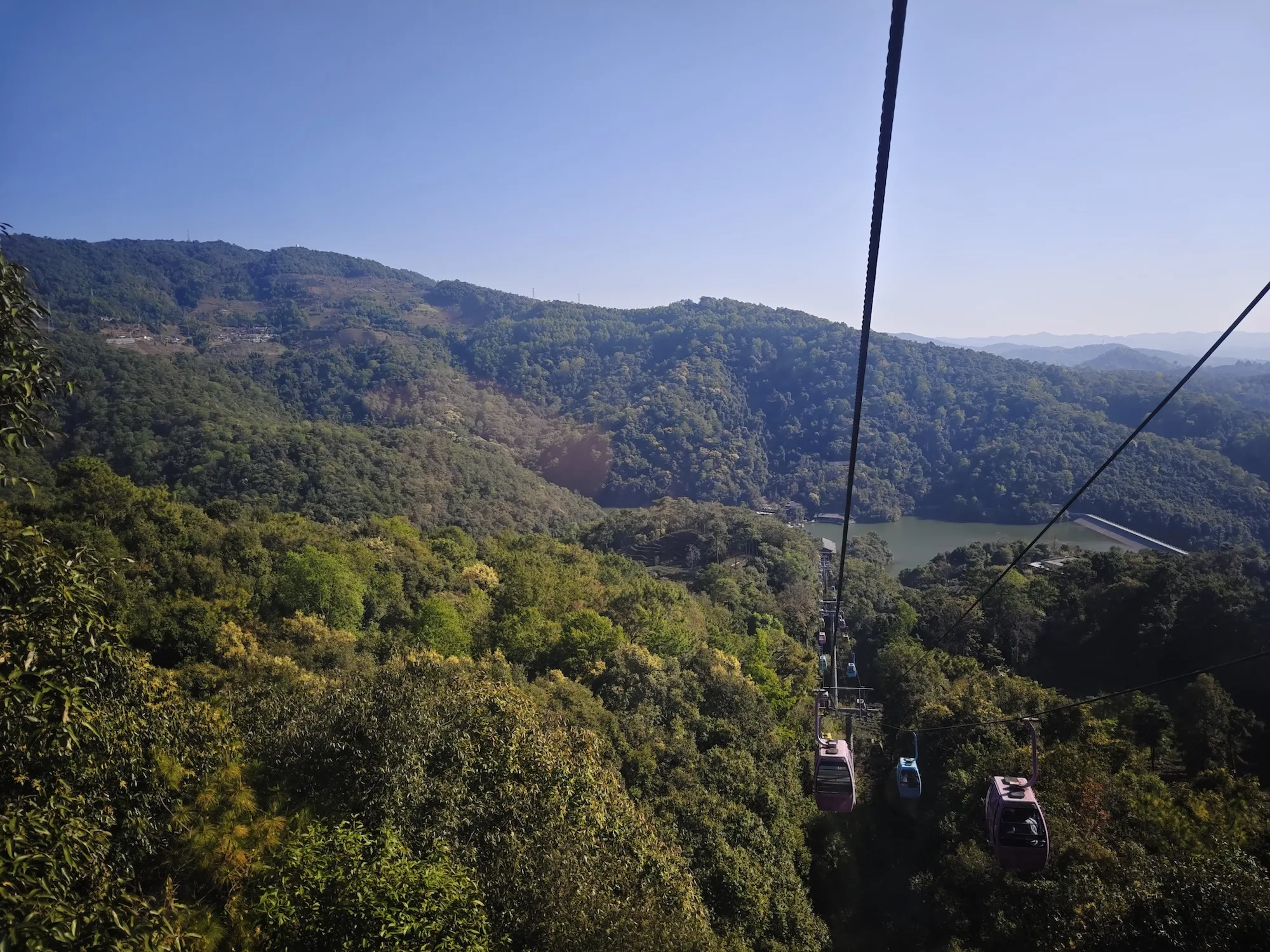
To reach Dingbo Lake, you’ll need to take the cable car — it offers stunning aerial views over endless tea plantations and misty hills.
At the lake (from 9:00 AM to 5:00 PM), catch the special every-15-minutes-or-so demonstrations of cormorant fishing — a thousand-year-old provincial intangible heritage technique!
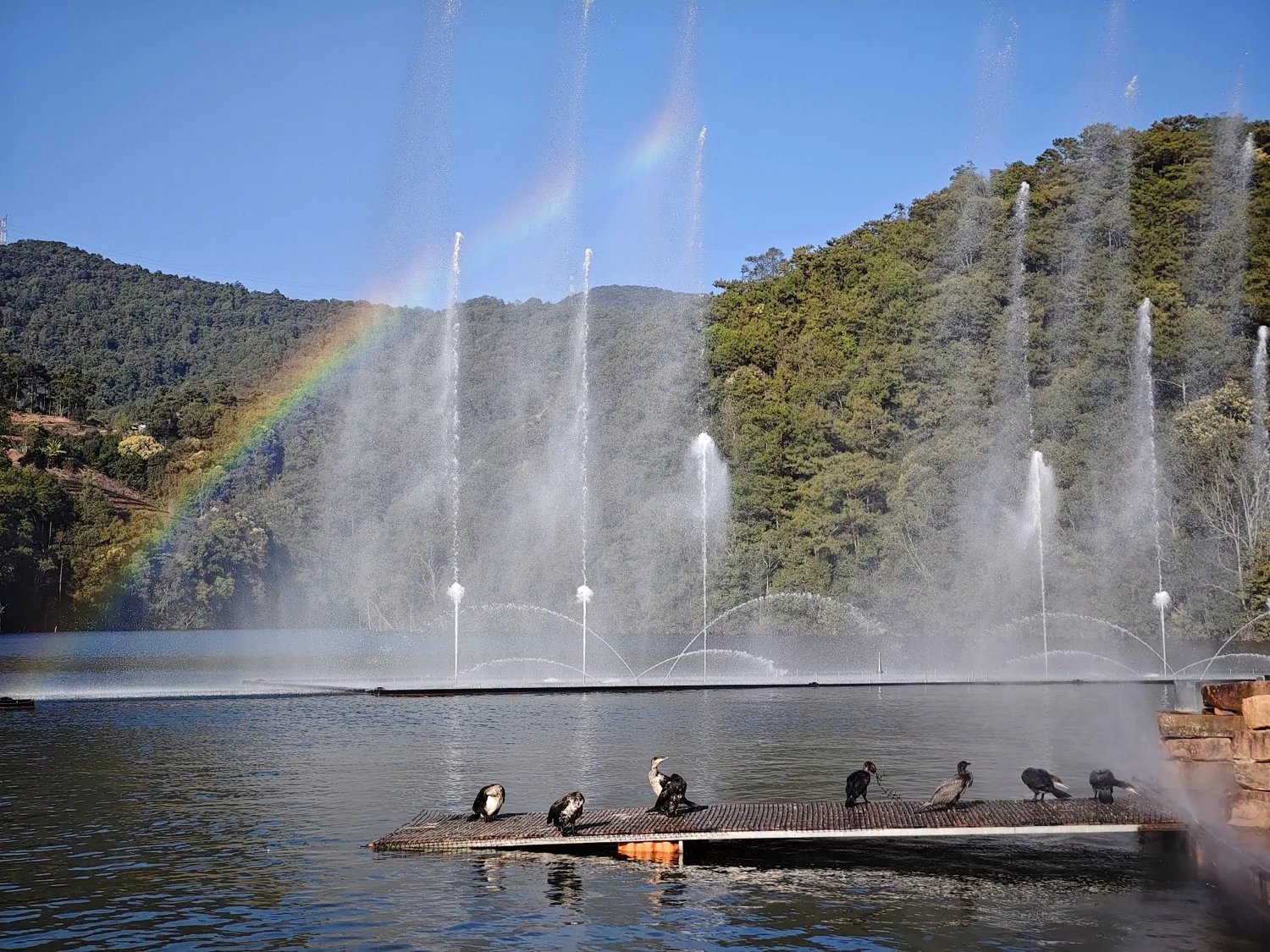
Watch skilled fishermen on bamboo rafts command trained cormorants to dive like arrows, catch fish, and return them (often with a dramatic neck ring to prevent swallowing).
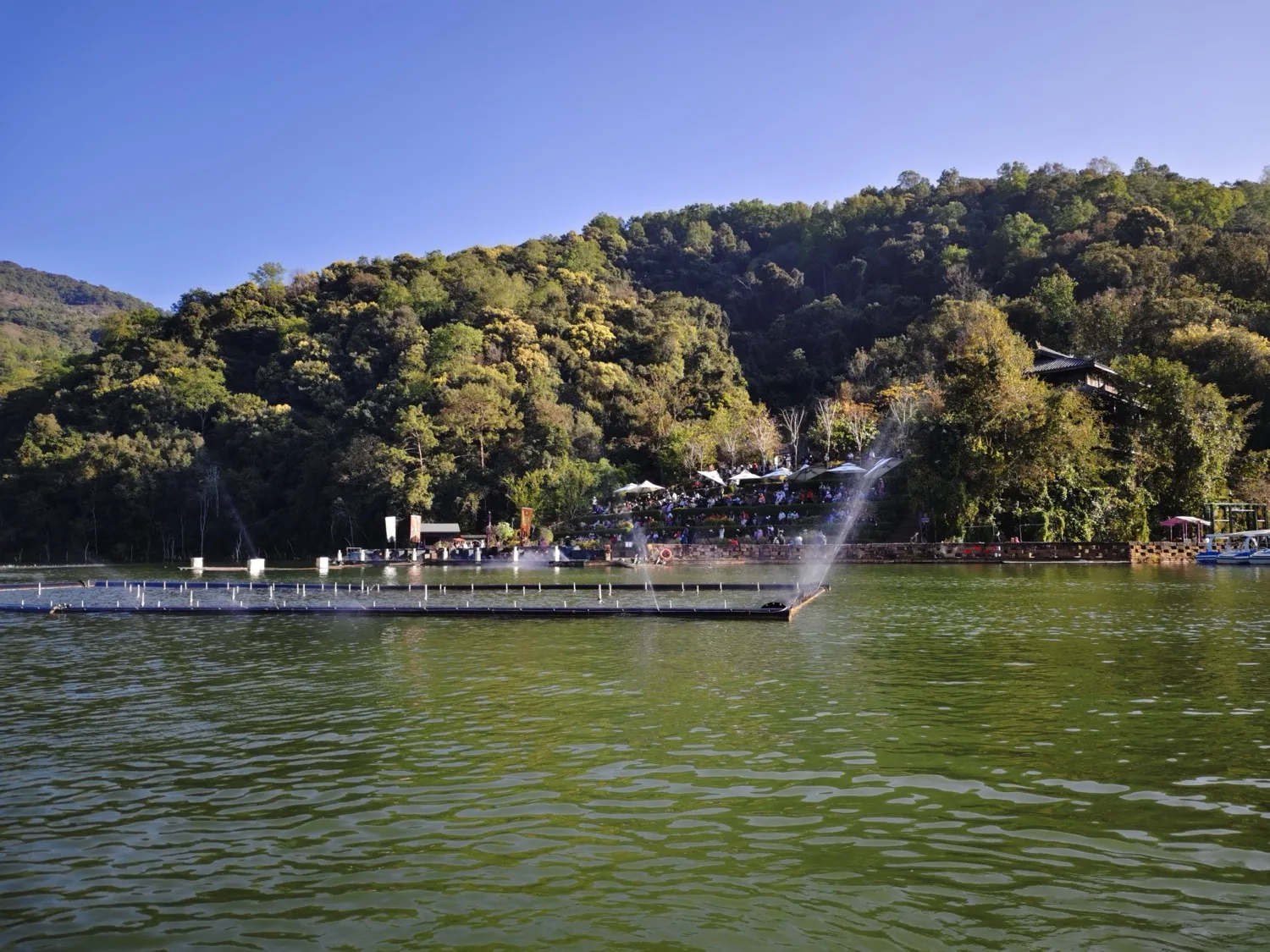
It’s mesmerizing, tied to old caravan provisioning traditions, and often paired with water shows like “马帮情歌” (Horse Caravan Love Songs) — fountains, music, ethnic performers, and boats creating a lively spectacle.
Nakeli Ancient Post Station
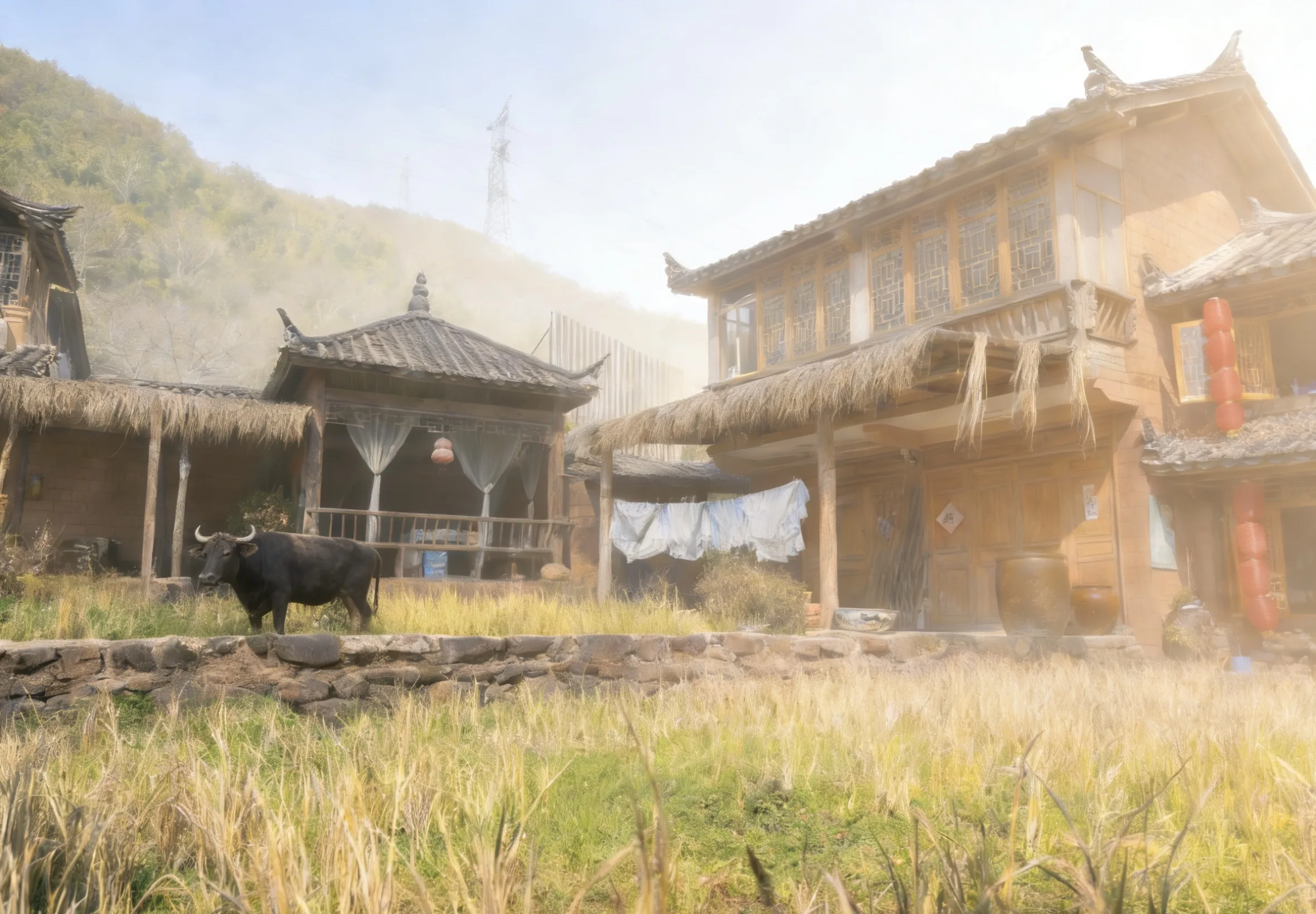
Nakeli village, Once a vital stop for exhausted tea caravans, this village has retained its rustic, roadside charm.
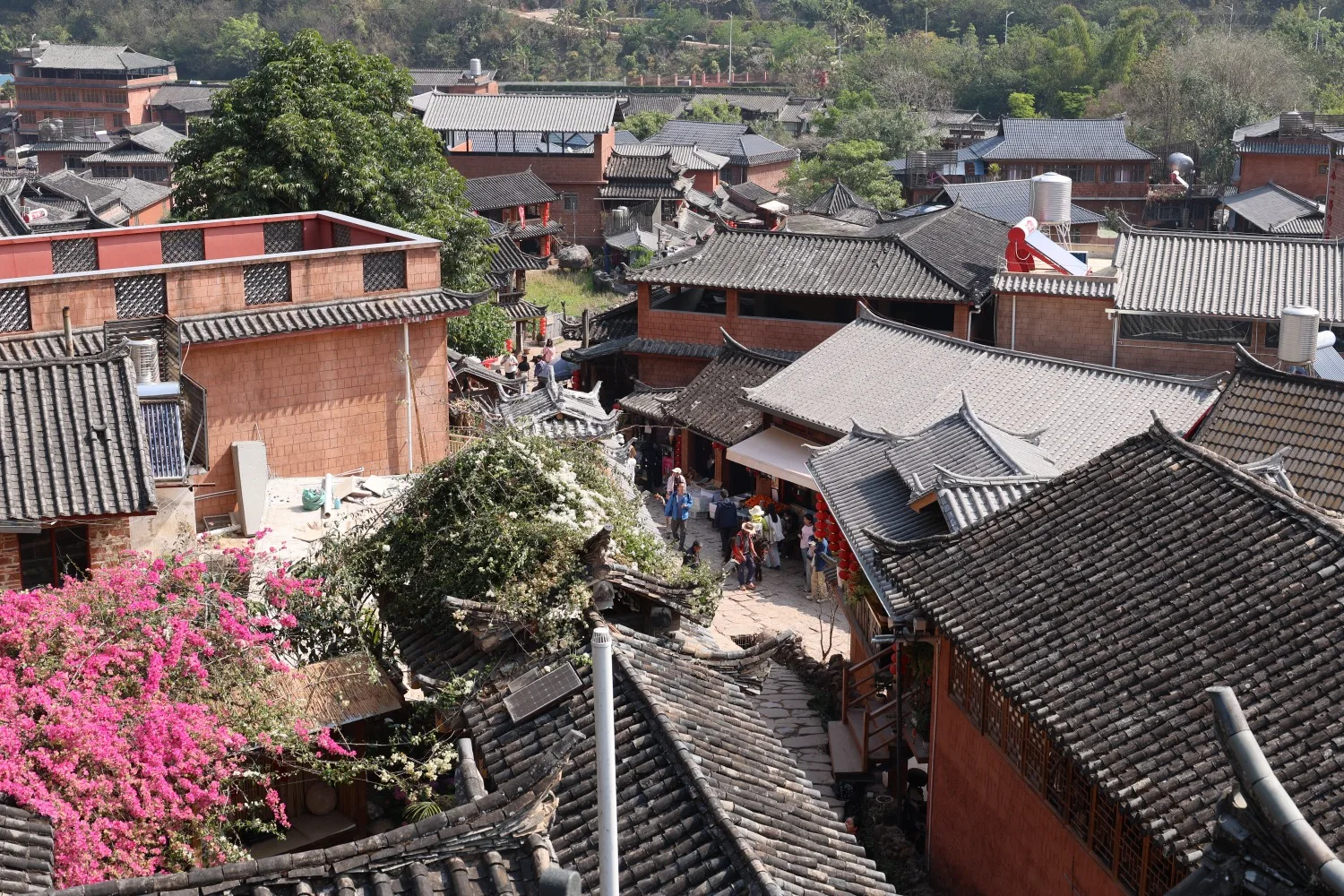
While the scenery is beautiful, most people visit for the legendary local BBQ. You haven’t truly experienced Nakeli until you’ve tried the charcoal-grilled pork belly and smoked sausages, which are famous across the province for their savoury, melt-in-your-mouth flavour.
See our Nakeli Travel Guide.
Daoshengggen Park (Inverted Roots Park)
Daoshenggen park — literally “Inverted Roots Park” — is a tiny, free urban oasis built around one truly extraordinary ancient banyan tree. No ticket required, no crowds like big attractions — just step in for a quick, mind-blowing dose of nature’s weird wonders.
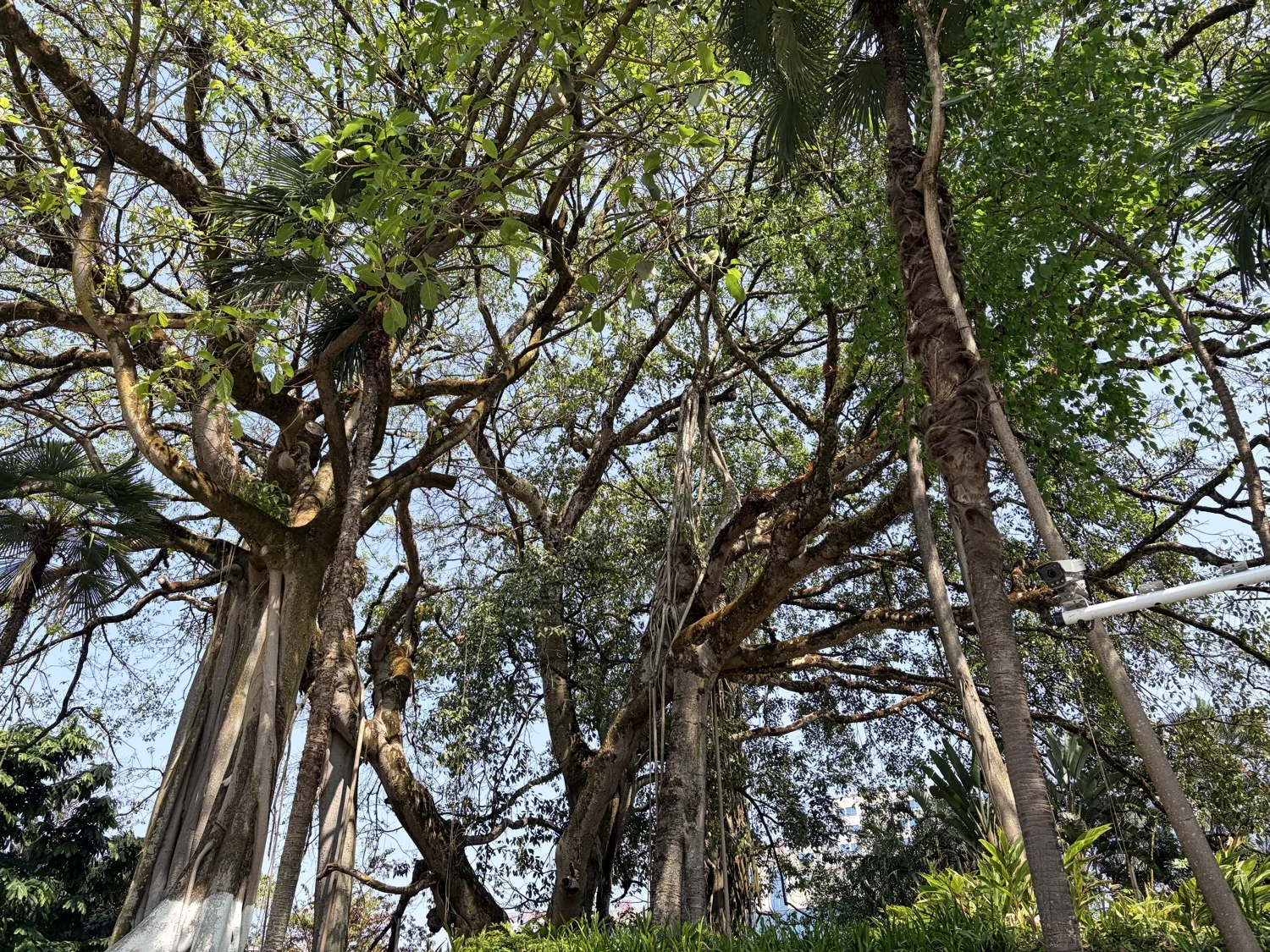 The star is this centuries-old high-mountain banyan (Ficus altissima or similar fine-leaf variety), estimated at 500–800 years old, with a chest girth over 6 meters and height around 18 meters.
What makes it legendary? Its aerial roots don’t just dangle — they grow downward from the branches and trunk (“inverted” or “upside-down” growth), hit the soil, take root, and sprout new trunks.
Over hundreds of years, one single tree has multiplied into a connected cluster of five interlinked banyans, forming a classic “single tree becoming a forest” spectacle. The dense canopy creates a shaded, cathedral-like space perfect for photos, quiet reflection, or just marveling at how one organism turned into an entire grove.
Even more magical: the seasonal split! In autumn, the eastern branches hang heavy with ripe figs, while the western side stays lush and green with fresh leaves — literally “one tree, two seasons” in plain view. It’s a quirky microclimate trick that locals and visitors adore, especially for that Instagram-worthy “time warp” vibe.
Pu’er City Museum
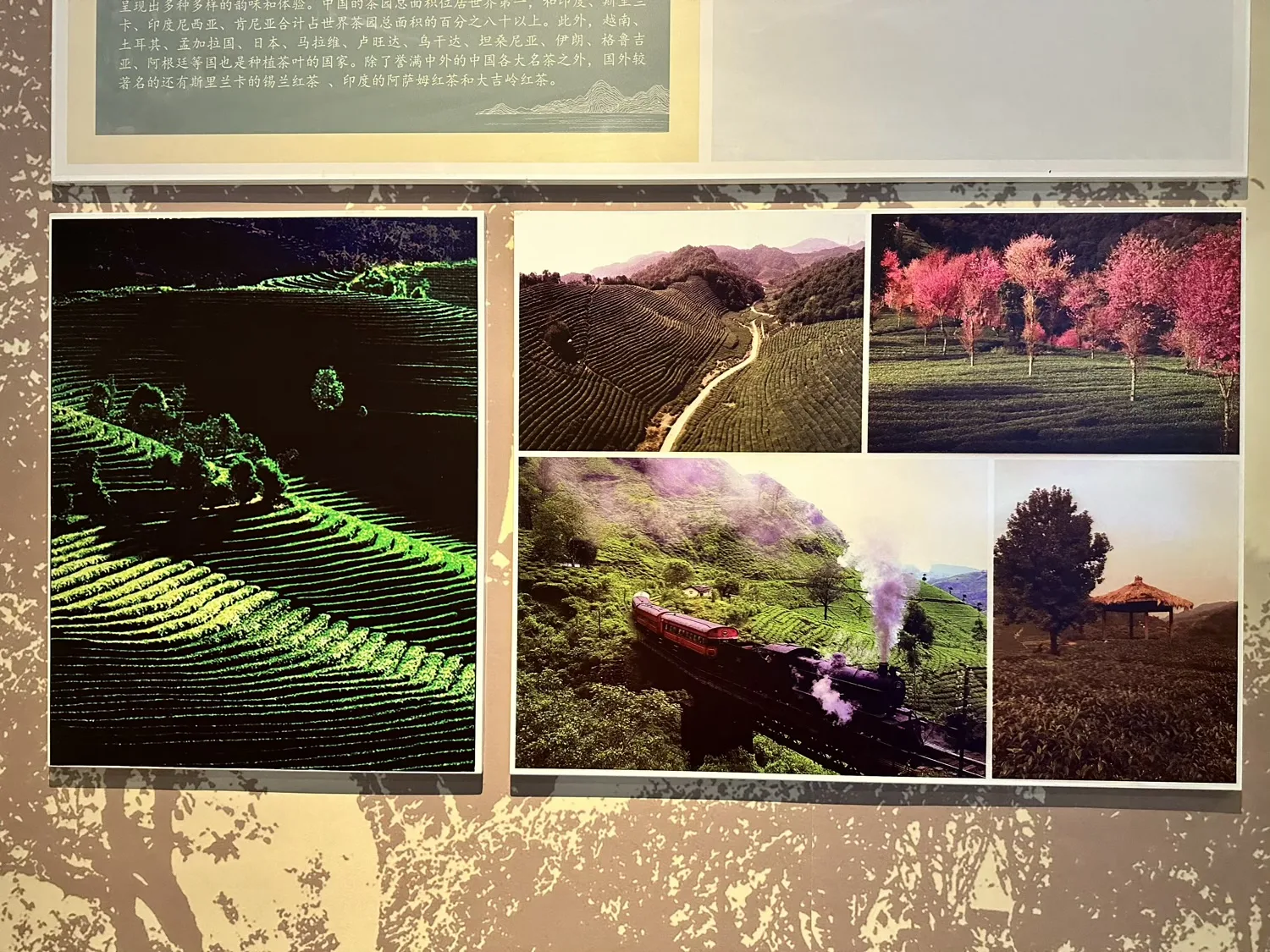
Pu’er city museum is the essential first stop for any visitor looking to understand the “why” behind the city.
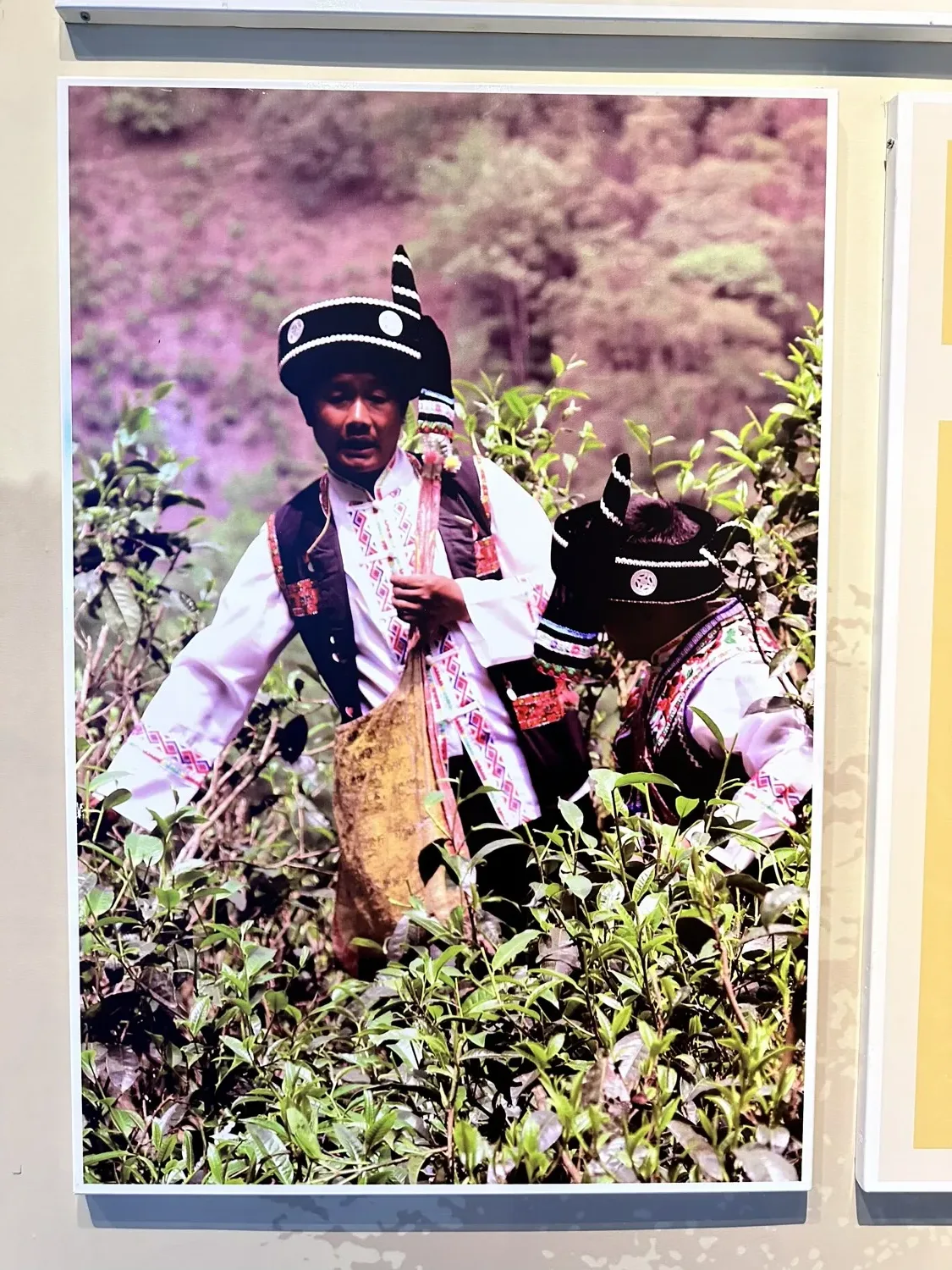
Through immersive exhibits, the museum beautifully chronicles the 1,000-year evolution of tea culture, explaining how a single leaf shaped the economy, the diverse ethnic identities, and the global legacy of Southwest China.
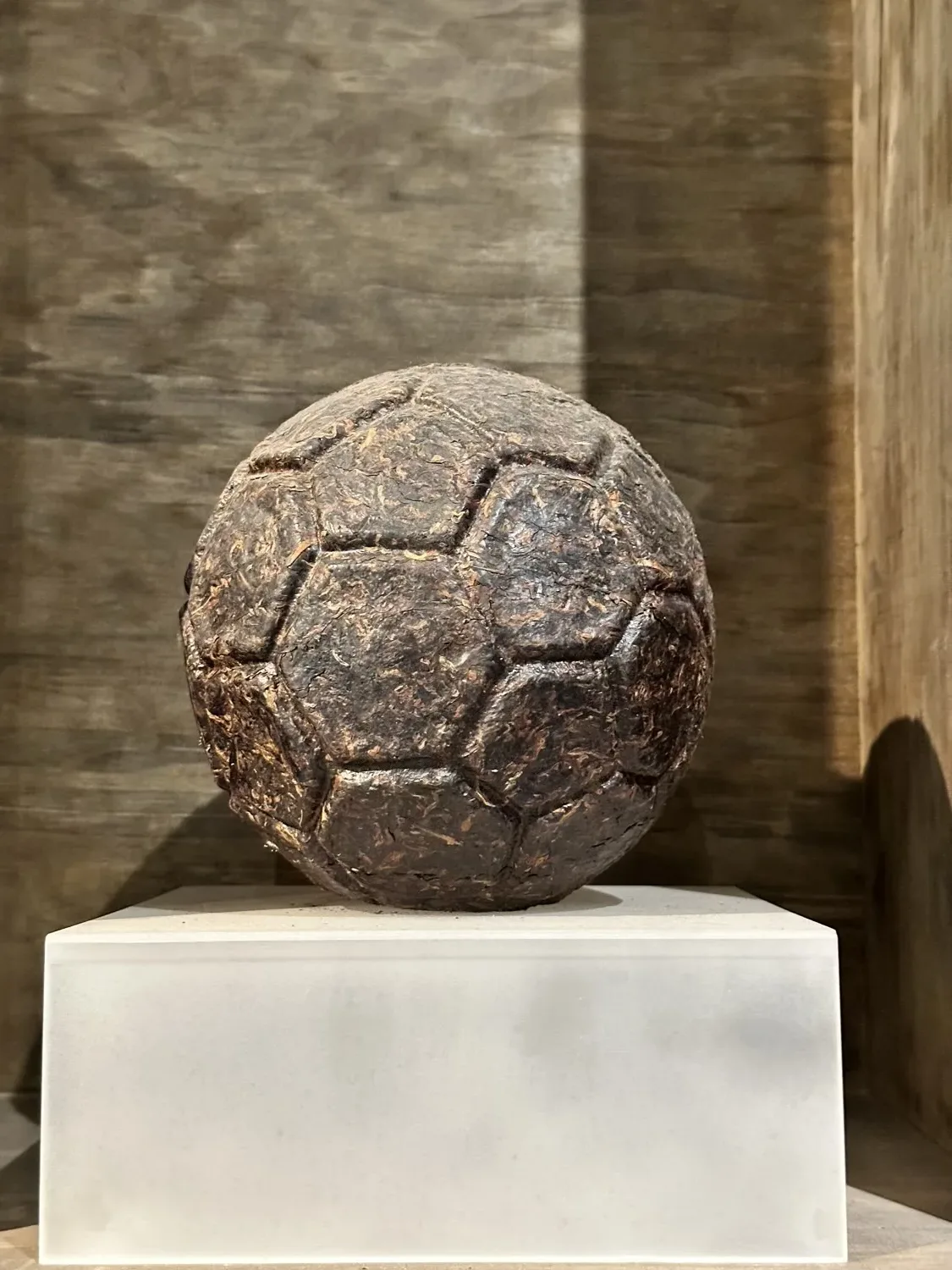
Above is a soccer made out of tea. This is a traditional way of storing tea by steaming and compressing. Learn how teas are stored and transported from Pu’Er to the world in ancient times at Nakeli Village.
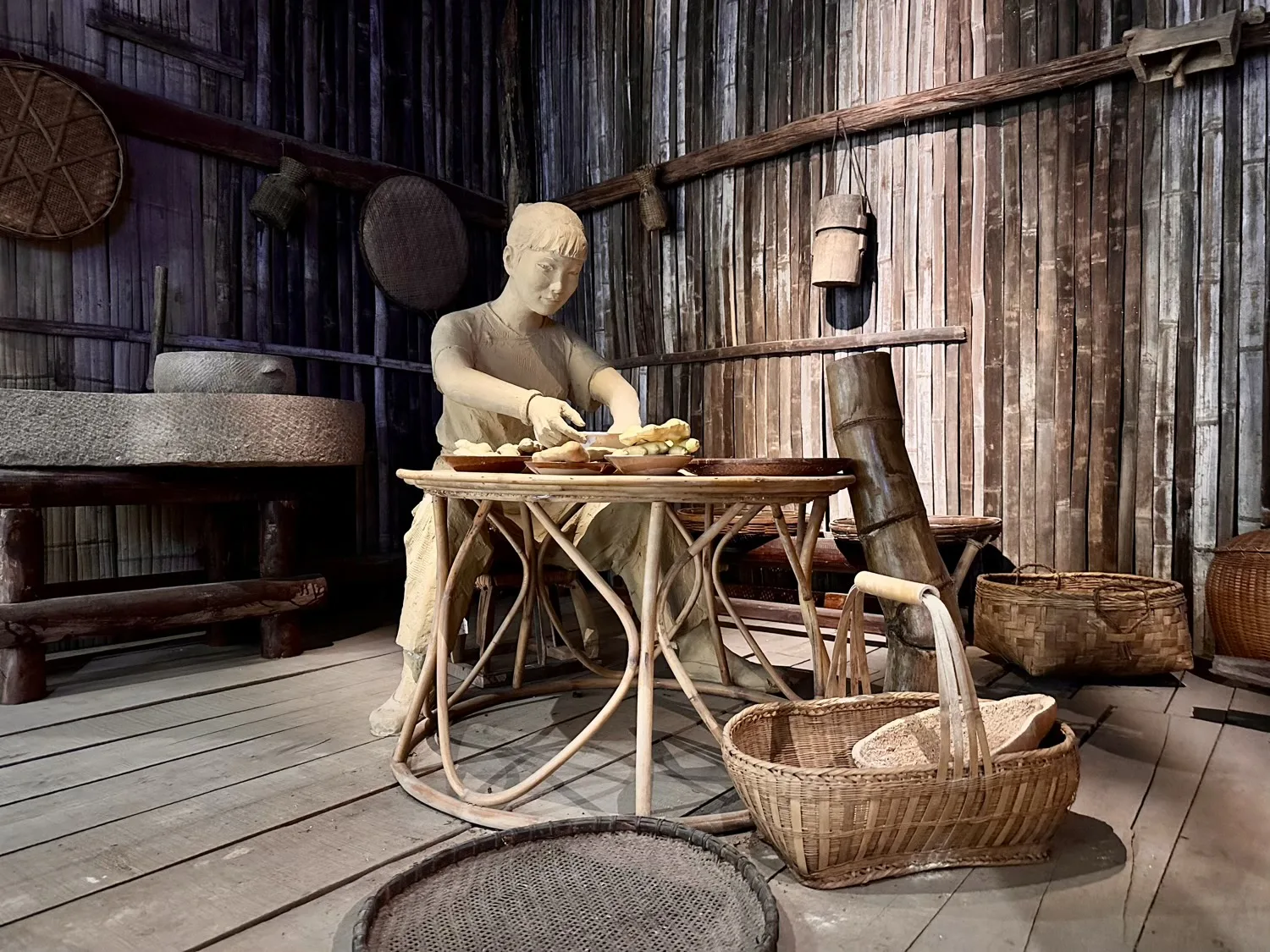
What a villager’s house look like in this region.
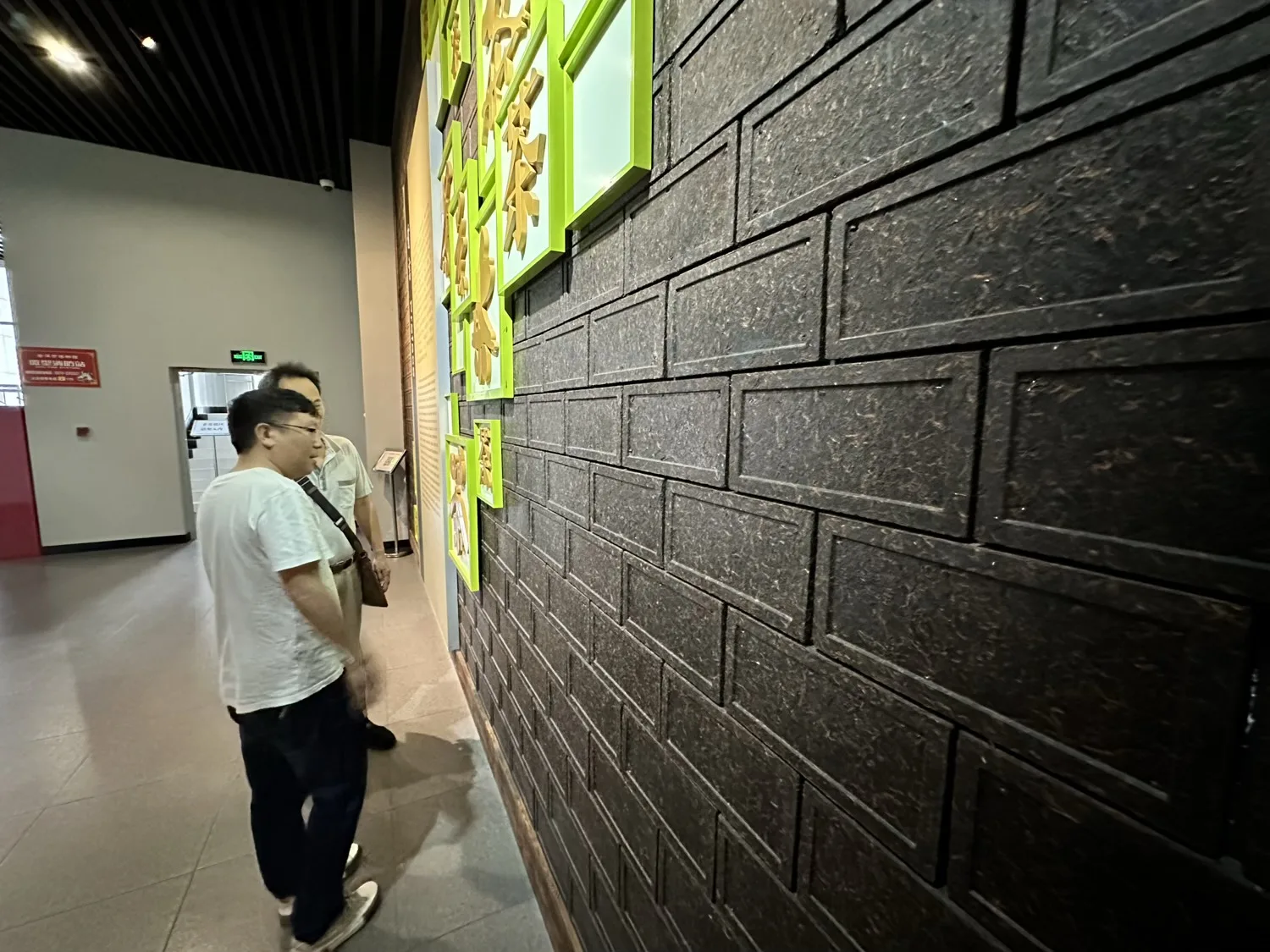
A brick wall made out of tea.
China Pu’er Tea Exhibition Garden
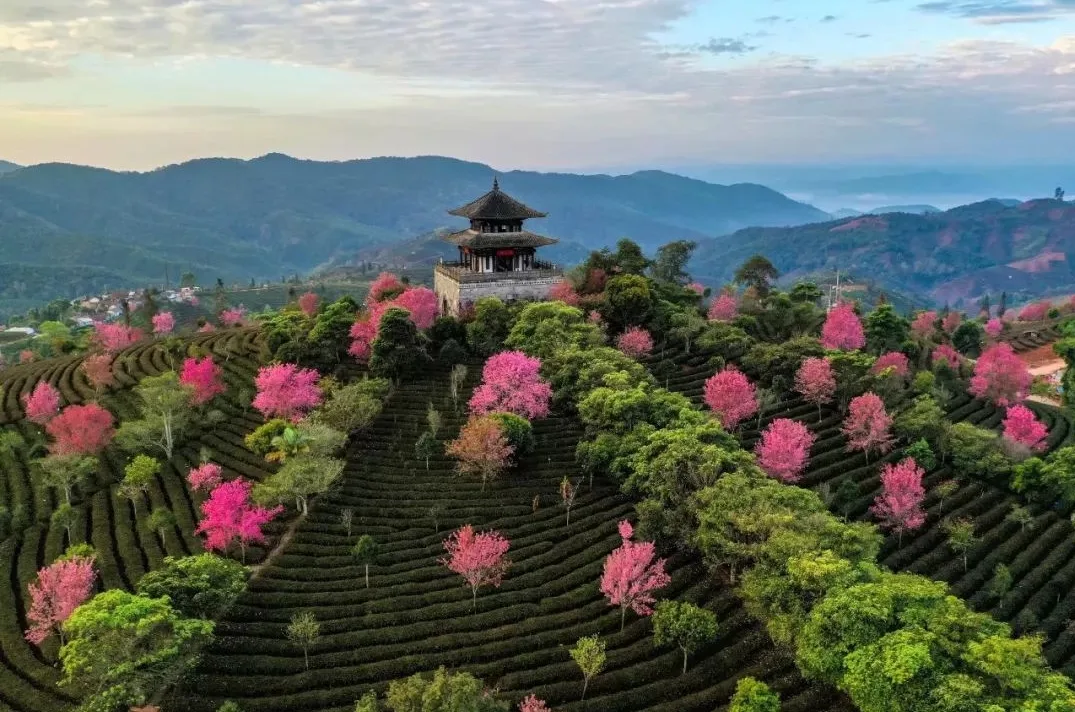
Perched atop the scenic Yingpan Mountain, China pu’er tea exhibition garden is the ultimate destination for tea enthusiasts.
Surrounded by 20,000 acres of lush tea plantations, it offers an immersive journey through the entire life cycle of tea, from picking and processing to traditional ceremonies.
It’s a sensory masterpiece where you can breathe in the fresh mountain air, wander through endless green terraces, and gain a deep appreciation for the “Cradle of Tea” in a setting that feels like a living painting.
Sun River Forest Park & Zoo
A Magical Half-Wild Animal Encounter in Pristine Jungle Nestled within the Pu’er National Forest Park, Sun river forest park (also known as Pu’er Sun River Forest Park or Taiyanghe Forest Park) is a unique semi-free-range zoo set deep in untouched primary rainforest.
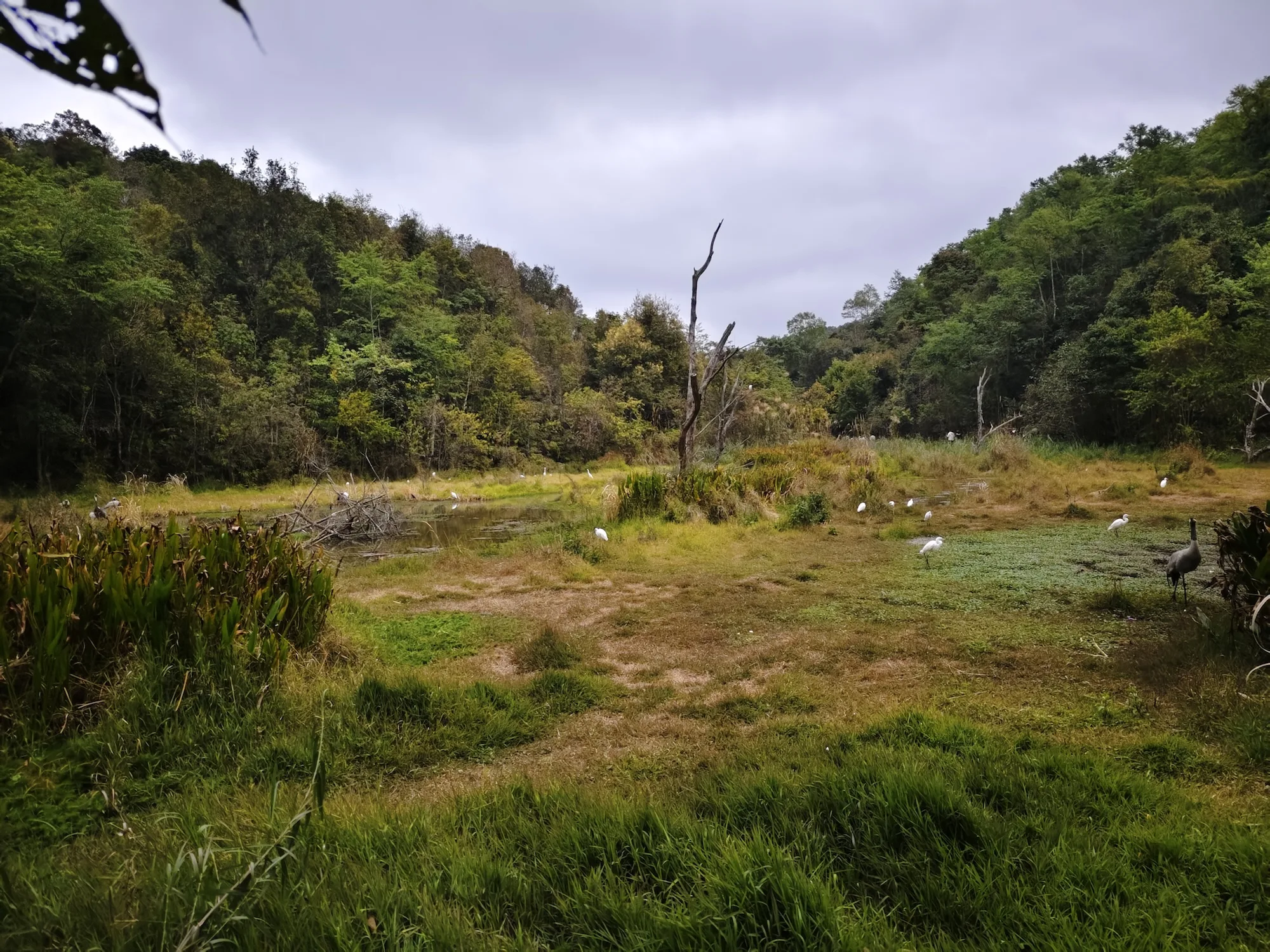
With a staggering 97% forest coverage and over 20,000 negative oxygen ions per cubic centimeter, this place feels like nature’s giant air purifier — perfect for immersive forest bathing and getting surprisingly close to the animals.
The park sits about 50 km from Simao District (the main urban area of Pu’er). The drive takes roughly 1 hour. Admission is 135 RMB per person. Inside, there’s a sightseeing shuttle bus — I highly recommend buying the ticket (an add-on), because walking the full route means covering around 5 km on foot, which can be quite tiring, especially in the warm, humid climate.
Aim to arrive around 8:00 AM. You’ll beat the crowds, enjoy cooler morning air, and have a much better chance of seeing active animals. If the official parking lot is full (it happens on weekends and holidays), just park neatly along the one-way roadside — it’s commonly done and generally safe.
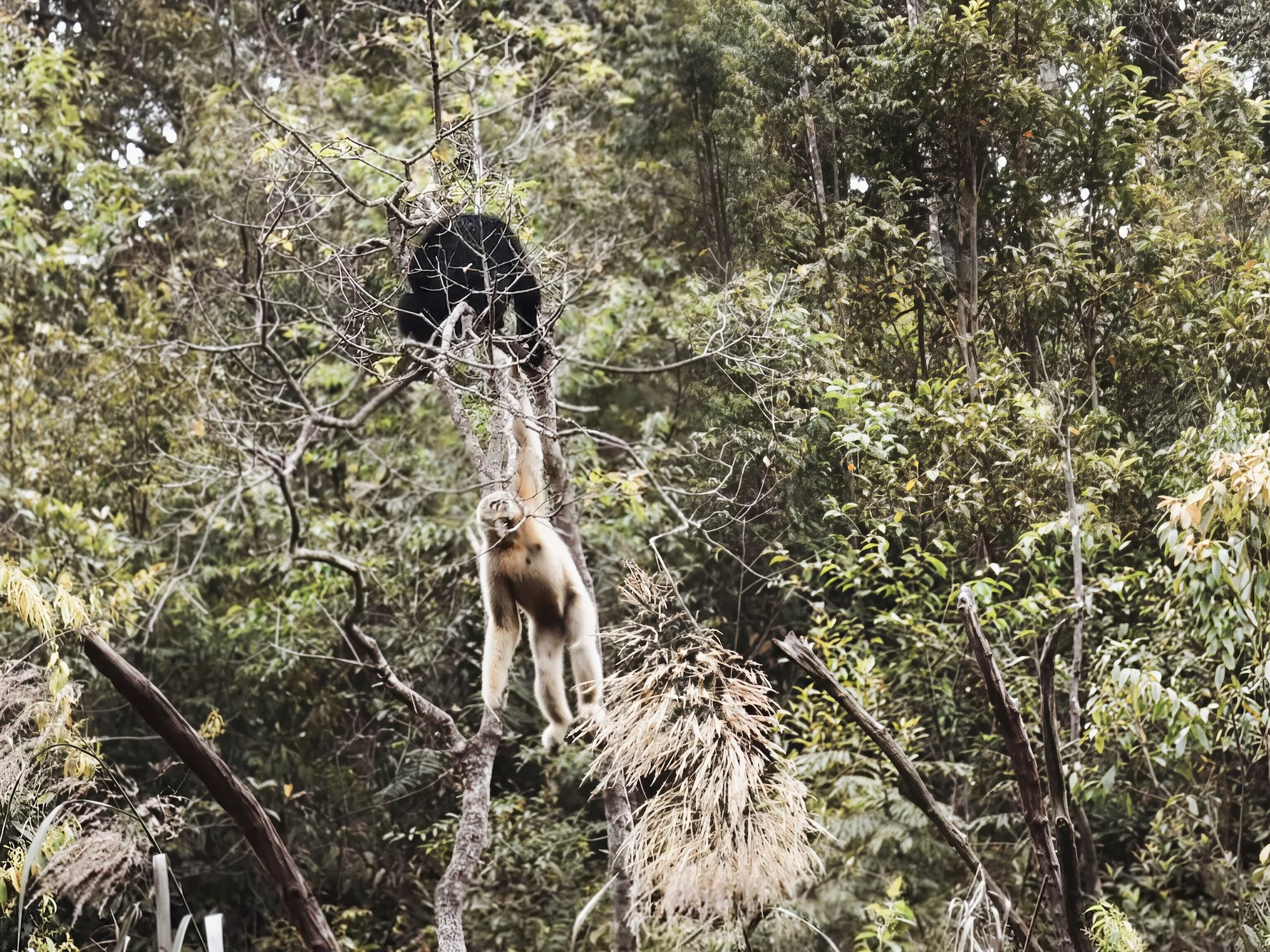
The star attractions here include white rhinos, red pandas, gibbons, capybaras, binturongs (bear cats), slow lorises, raccoons, Asiatic black bears, colorful parrots, and more.
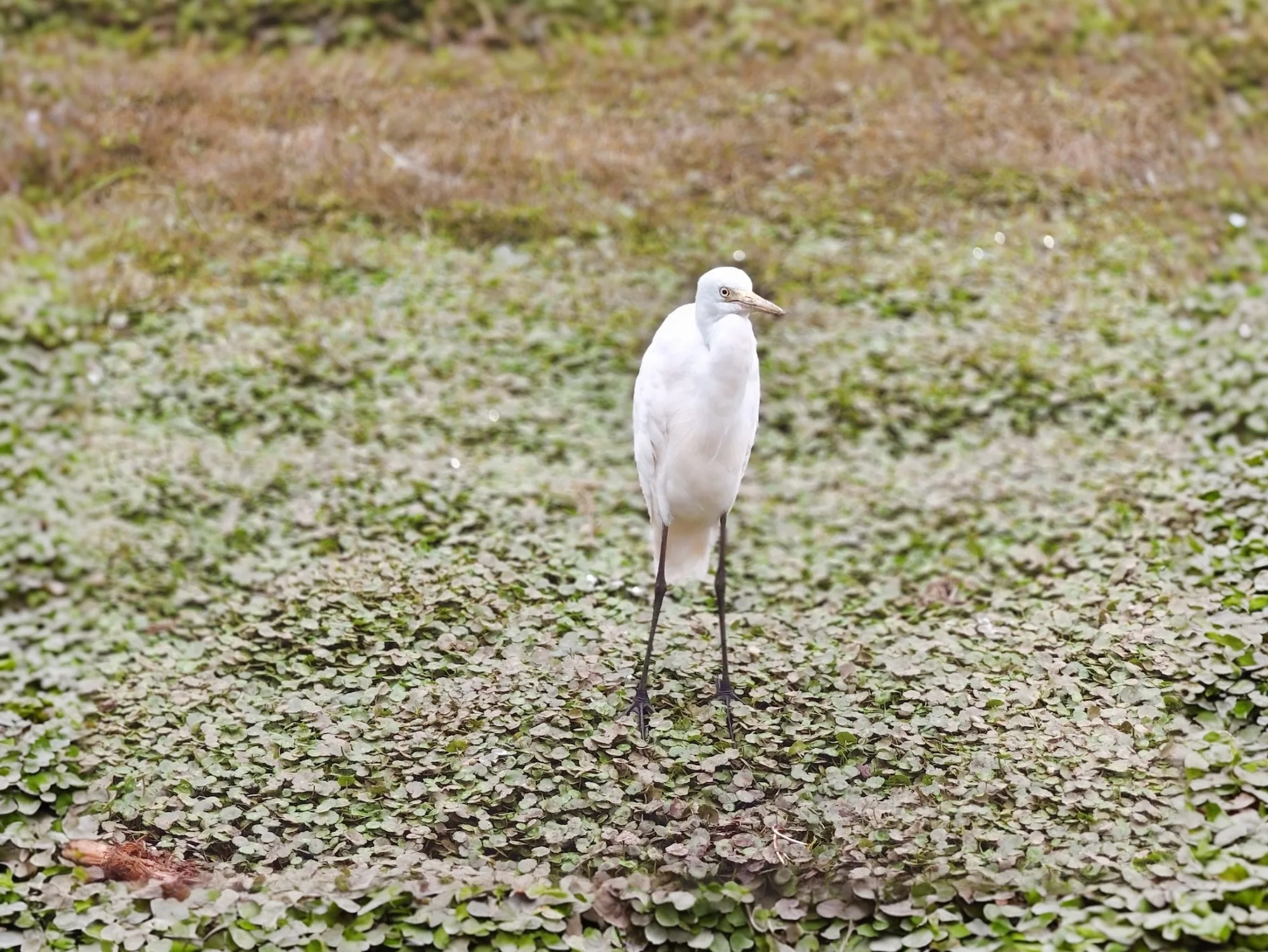
Don’t expect the scale or polished enclosures of big-city zoos like those in Shanghai or Beijing — that’s not the point. The real draw is the semi-open management style: animals roam in large, natural enclosures surrounded by genuine rainforest boardwalks, wooden paths winding through dense jungle, and the constant soundtrack of birds and leaves.
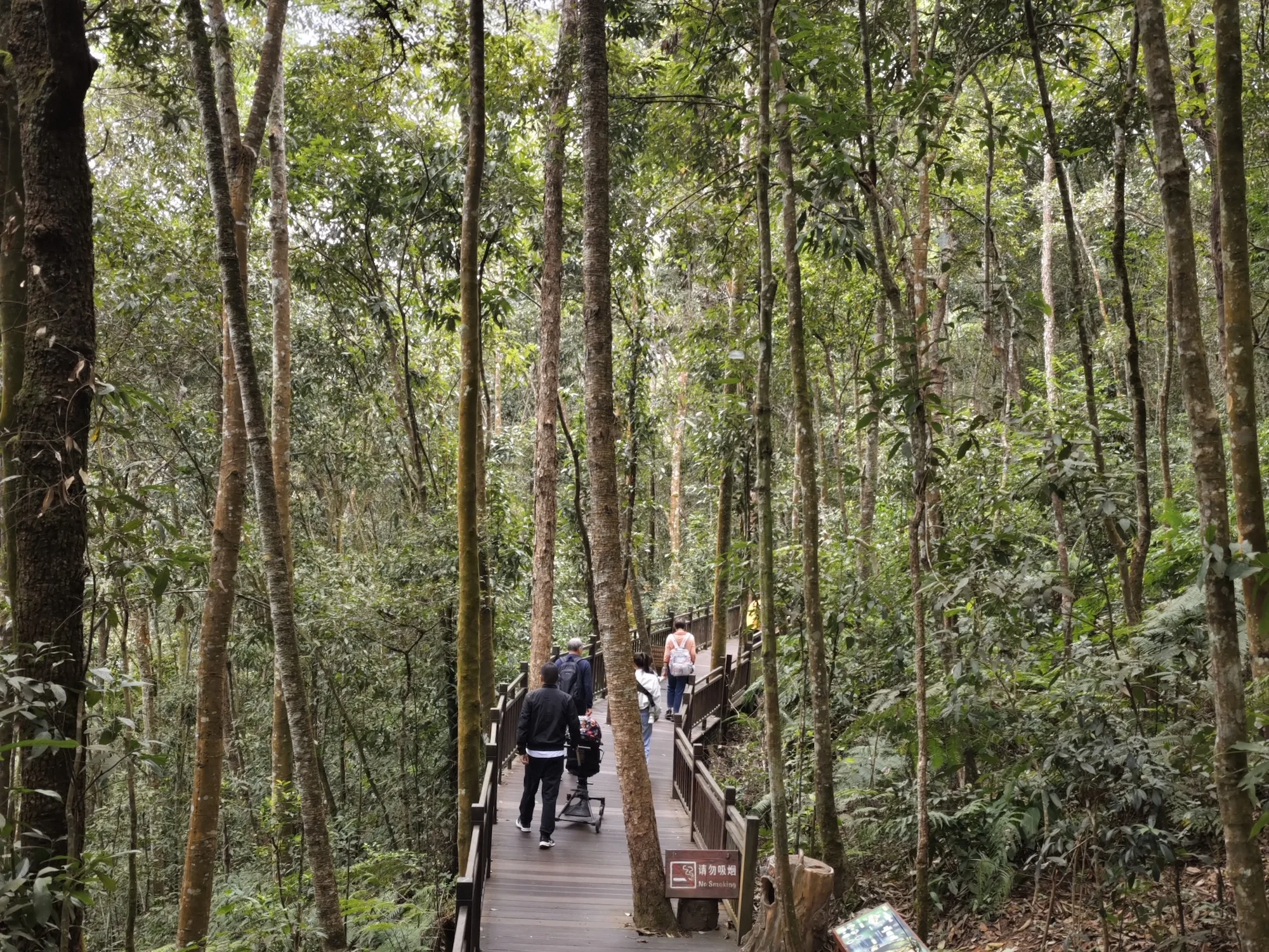 It’s less about seeing hundreds of species and more about feeling immersed in a wild, breathing ecosystem — a rare chance to experience Yunnan’s extraordinary biodiversity up close while breathing some of the freshest air in China.
What to eat in Pu’Er?
Suan Cu Mi Xian (Sour Vinegar Rice Noodles)
When you come to Yunnan, you absolutely have to try rice noodles (mǐxiàn). The ones here are completely different from what you’d find in Chongqing.
Yunnan rice noodles are fresh (not the dried variety), super soft and silky-smooth.
Head to the authentic Suan cu mi xian spot right at Sanjiao Huayuan — it’s a must-visit! Top it with all sorts of condiments, plus dried chives and chili flakes, and the flavor is truly one-of-a-kind — tangy, savory, and utterly addictive.
Grilled Chicken
You’ve got to try the grilled chicken at Li mama kitchen (李妈妈厨房). Go for half a bird if you’re not too hungry — it’s juicy, flavorful, and perfectly charred. A local favorite that’s simple but unforgettable.
Yunxian Fengxiang Chicken Rice Noodle (倒生根云县凤翔鸡肉米线)
Head to Yunxian fengxiang chicken rice noodle. This incredible chicken rice noodle spot is located right across from Dao Sheng Gen (Inverted Roots) Park. The tender chicken paired with blood curd is an absolute knockout — rich, hearty, and full of that classic Yunnan depth. If you’re craving something soul-warming for breakfast or lunch, this is the place.
Beef Hotpot (小黄牛火锅)
Grab a table at the square just outside Tea house scenic area and dig into a Xiao Huang Niu (little yellow beef) hotpot. Customize it with whatever veggies you like — the broth is incredibly tasty, and the fresh beef slices cook up perfectly tender. It’s casual, delicious, and feels like the ideal way to unwind after exploring the town.
Grilled Pork Belly
Don’t miss the grilled pork belly, grilled sausages, and rose cakes in Na Ke Li Ancient Town. The pork belly is smoky and succulent, the sausages pack great flavor, and those rose cakes offer a sweet, floral treat that’s a lovely local specialty. Wander the ancient streets, snack your way through, and soak up the historic vibe.
Shopping in Pu’Er
Although Simao District (the main urban area of Pu’er) isn’t huge, it’s surprisingly well-equipped—like a little sparrow with all the vital organs! Whether you’re after trendy fashion, fresh produce, daily essentials, or international chains, you’ll find everything you need without venturing far.
Yuecheng Shiguangli Shopping Park
For trendy shopping and modern vibes, check out these popular malls: Yuecheng shiguangli shopping park — A lively spot with shops, dining, and a nice atmosphere, often surrounded by hotels and eateries. Great for casual browsing and picking up clothes or accessories.
Chuangji Shangcheng
Chuangji shangcheng features brands like Adidas, Nike, Lining in its sports zone, plus other retail options. It’s a solid choice for fashion and lifestyle items.
Yami Zhixing Shopping Center
Yami zhixing shopping center is a multi-floor mall with supermarkets (like Tianshengxiang inside), restaurants, and everyday shopping. Locals love it for its convenience.
Wu Yi Market
If you’re looking for fresh fruits, vegetables, groceries, and local market vibes, head to Wu yi market — Pu’er’s biggest farmers’ market!
It’s bustling with fresh produce, meats, spices, and all sorts of daily goods. Perfect for experiencing real local life and snagging cheap, seasonal Yunnan fruits or veggies.
Wu Yi Pedestrian Street
Right nearby, Wu yi pedestrian street has shops (mostly clothing) and a lively walkway feel, often blending into the market energy. Street food and casual eats are abundant too.
Riyuehong Department Store
For everyday necessities and supermarkets, Riyuehong department store (日月红商场)— A go-to for household items, clothes, and general shopping.
Tianshengxiang Supermarket
Tianshengxiang supermarket — Reliable chain for groceries, snacks, and daily essentials (multiple locations, including in malls like Yami Zhixing).
And yes, the big international names are here too. Walmart, Starbucks, Kfc, and more — so you can grab familiar comforts whenever you need a break from local flavors.

Discover Chongqing with WelcomeCQ!
From mountains to grasslands, Chongqing has something to offer for everyone.
Start planning, find an inspiration, or search for a place.
Or follow us on social media.