Beyond the Mist: A 3-Day Journey to Sichuan’s Hidden Tea Mountains
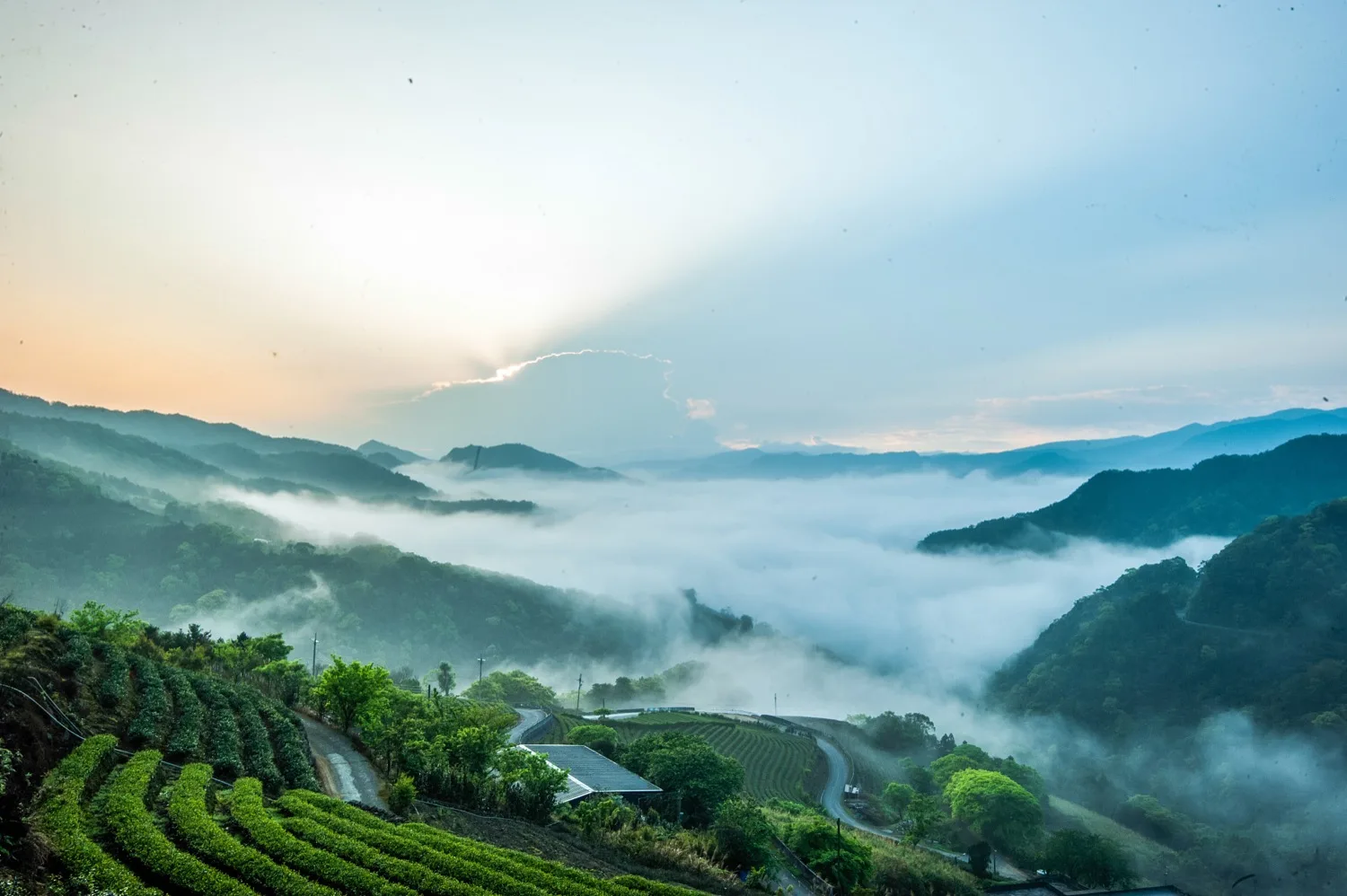
Escape the city heat and the familiar neon lights of the urban core for a three-day journey into the misty, emerald heart of Sichuan to explore Fuxing Tea Mountains, rated by China’s national geography as the most beautiful tea mountains.
This itinerary takes you beyond the typical tourist trails to explore the “Little Jiangnan” of Western Sichuan — a land of ancient stilted houses, Tang Dynasty-inspired aesthetics, and high-altitude tea plantations that seem to float among the clouds.
Fuxing Town 3-Day Itinerary Map
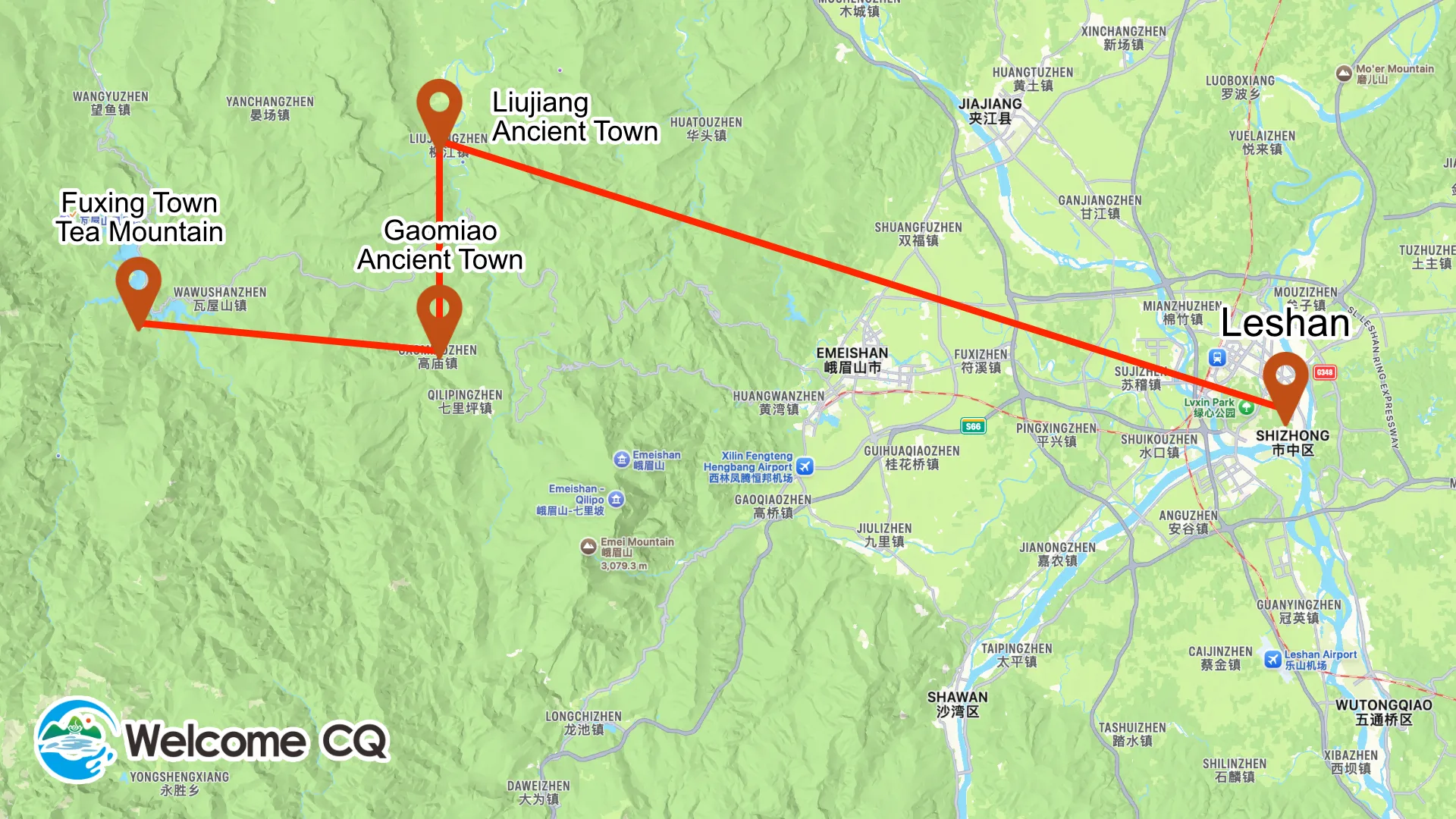
| 🌞Day 1 | Liujiang Ancient Town |
| 🌞Day 2 | Ya’nv Lake and Fuxing Tea Mountain |
| 🌞Day 3 | Leshan |
Day 1: Chongqing to Liujiang
Start your journey early in the morning with a drive from Chongqing toward Guangming Temple in Liujiang.
Set your navigation to Guangming temple.
The drive takes approximately 4.5 hours. Take the exit at the Dongyue Toll Station (东岳收费站).
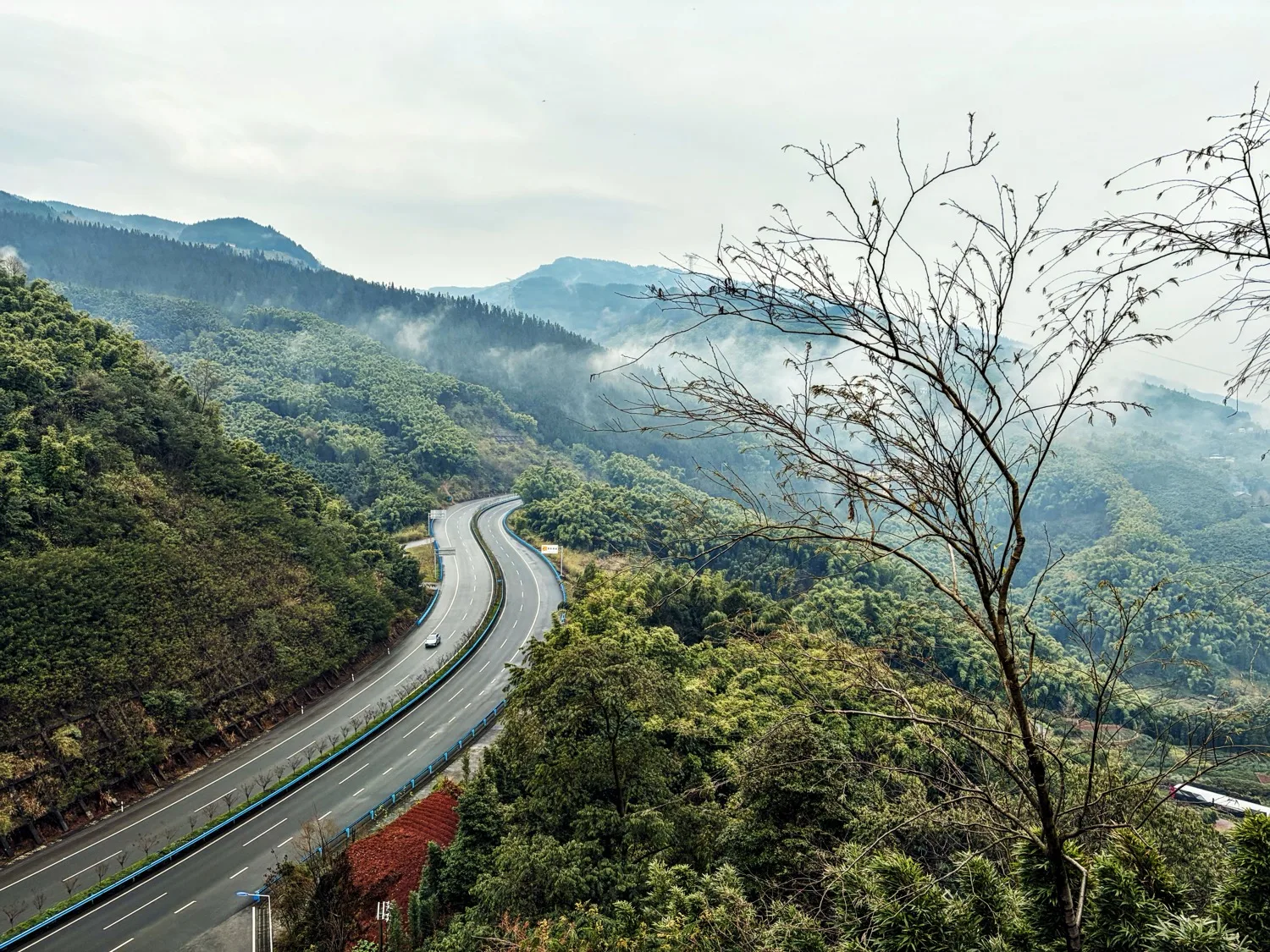
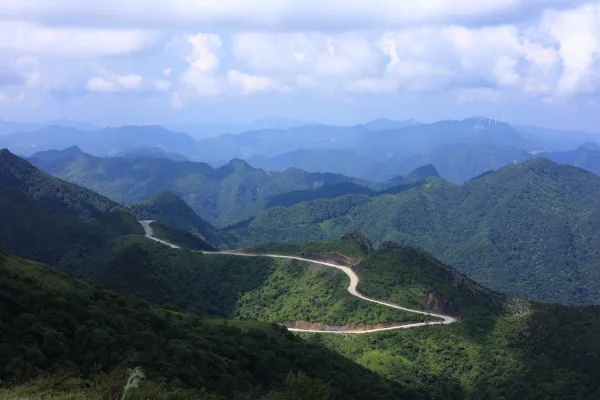
From there, you will enter the beautifully constructed Emei Three Mountains Tourist Loop (峨眉三山旅游环线公路). You’ll find yourself driving back and forth along this scenic route, which offers rewarding views at every turn.
Guangming Temple: The “Kyoto of Sichuan”
Local residents have a saying: “It’s not that we can’t afford Japan, it’s that Meishan offers better value.” They are referring to Guangming Temple.
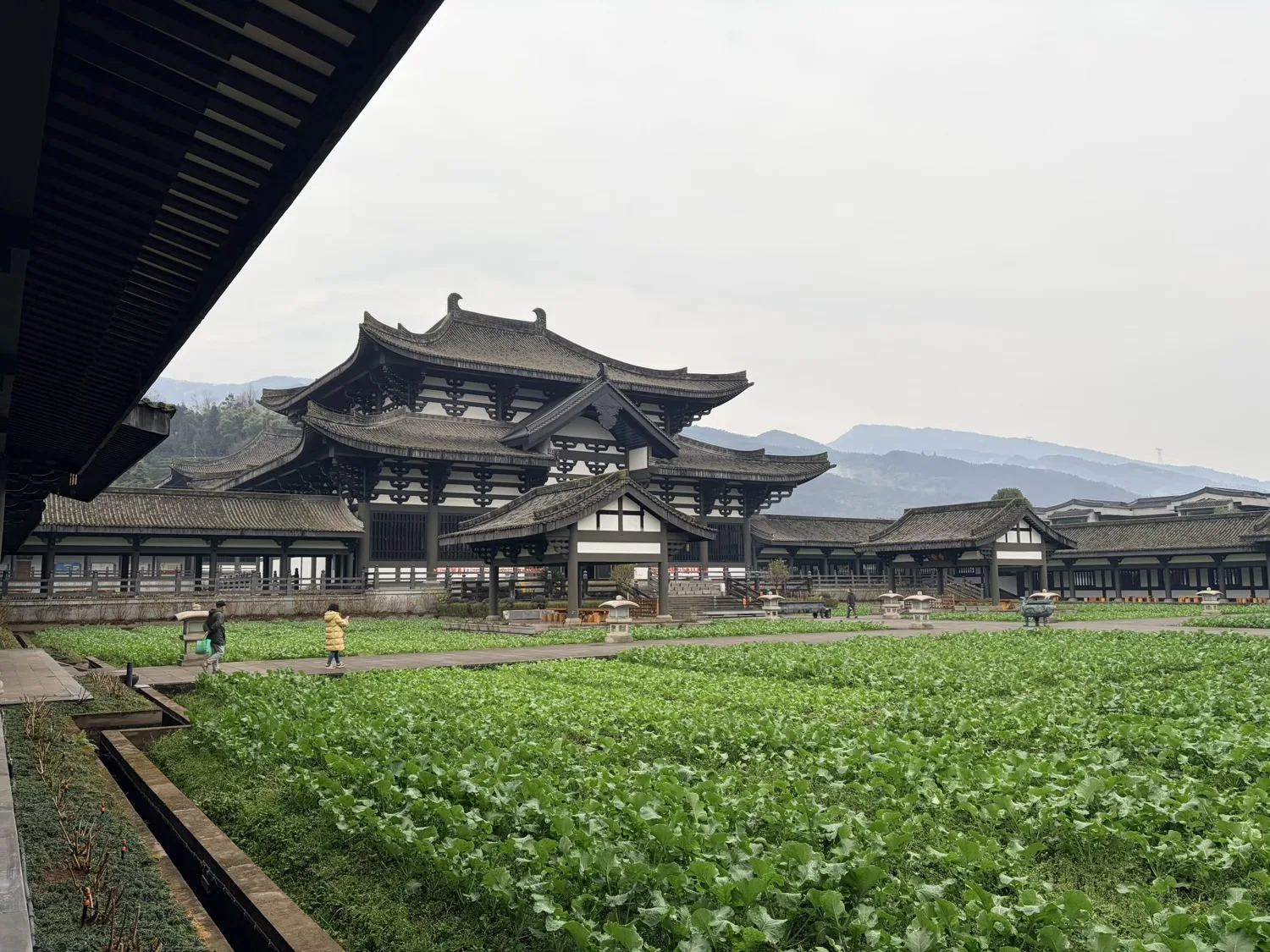
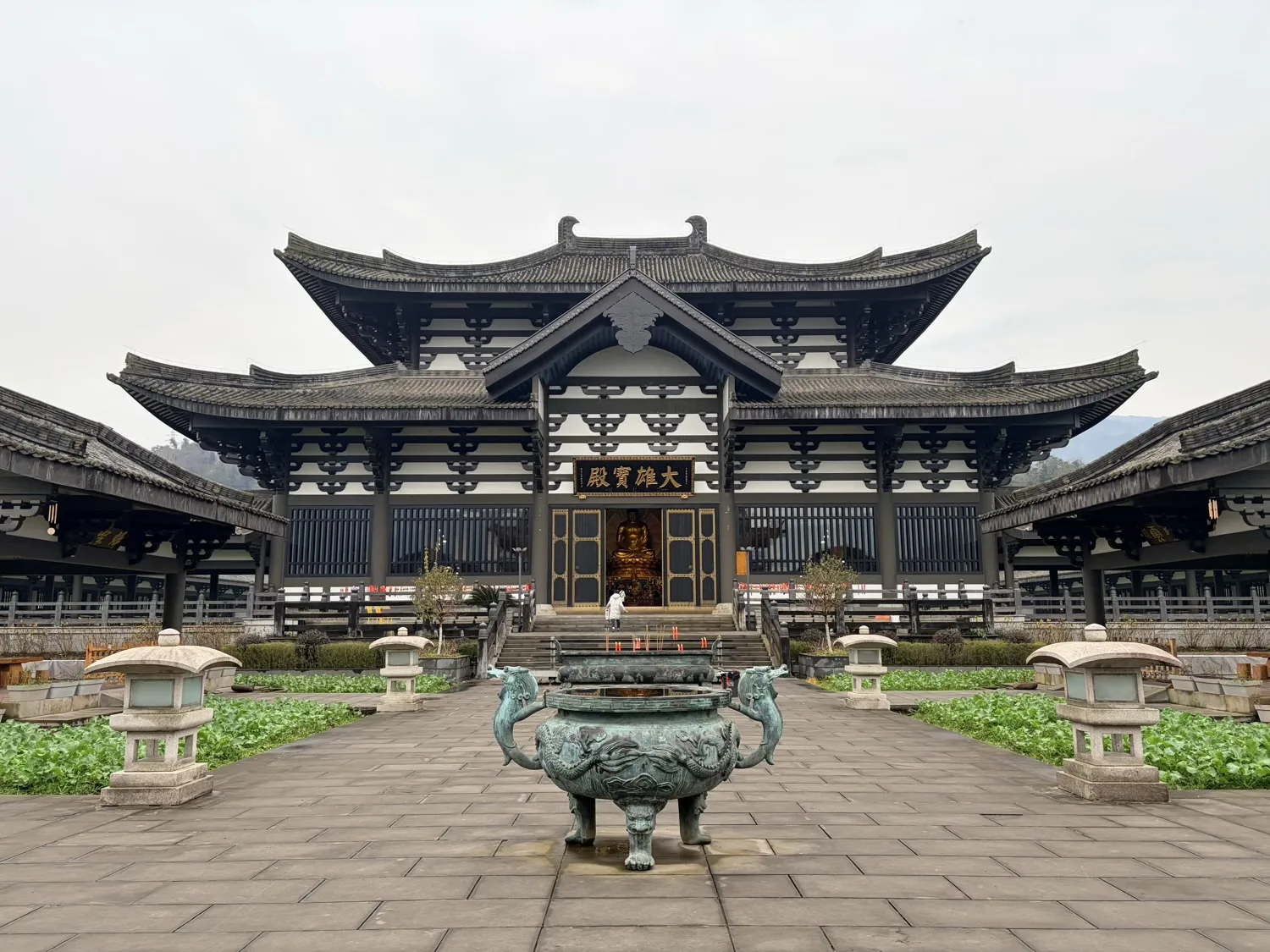
This modern temple is stunningly beautiful, especially during the rapeseed (canola) blossom season. Spanning about 100 acres, it’s the perfect spot to spend an hour taking photos and exploring.
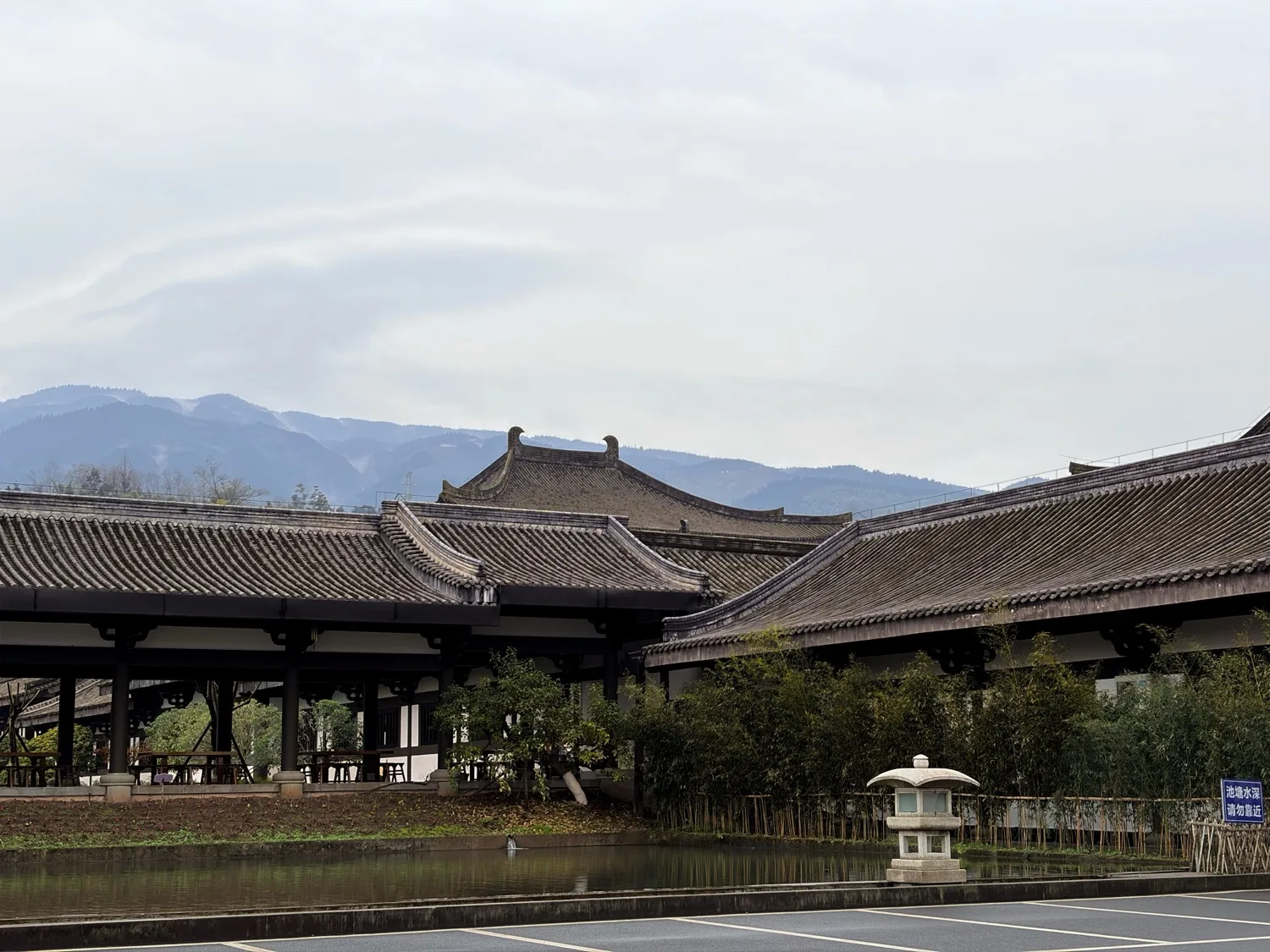
The architecture features a striking black-and-white palette that contrasts vividly against the bright yellow flowers. With its well-placed pavilions and quiet, winding corridors, the temple perfectly captures the pure aesthetic of the Tang Dynasty.
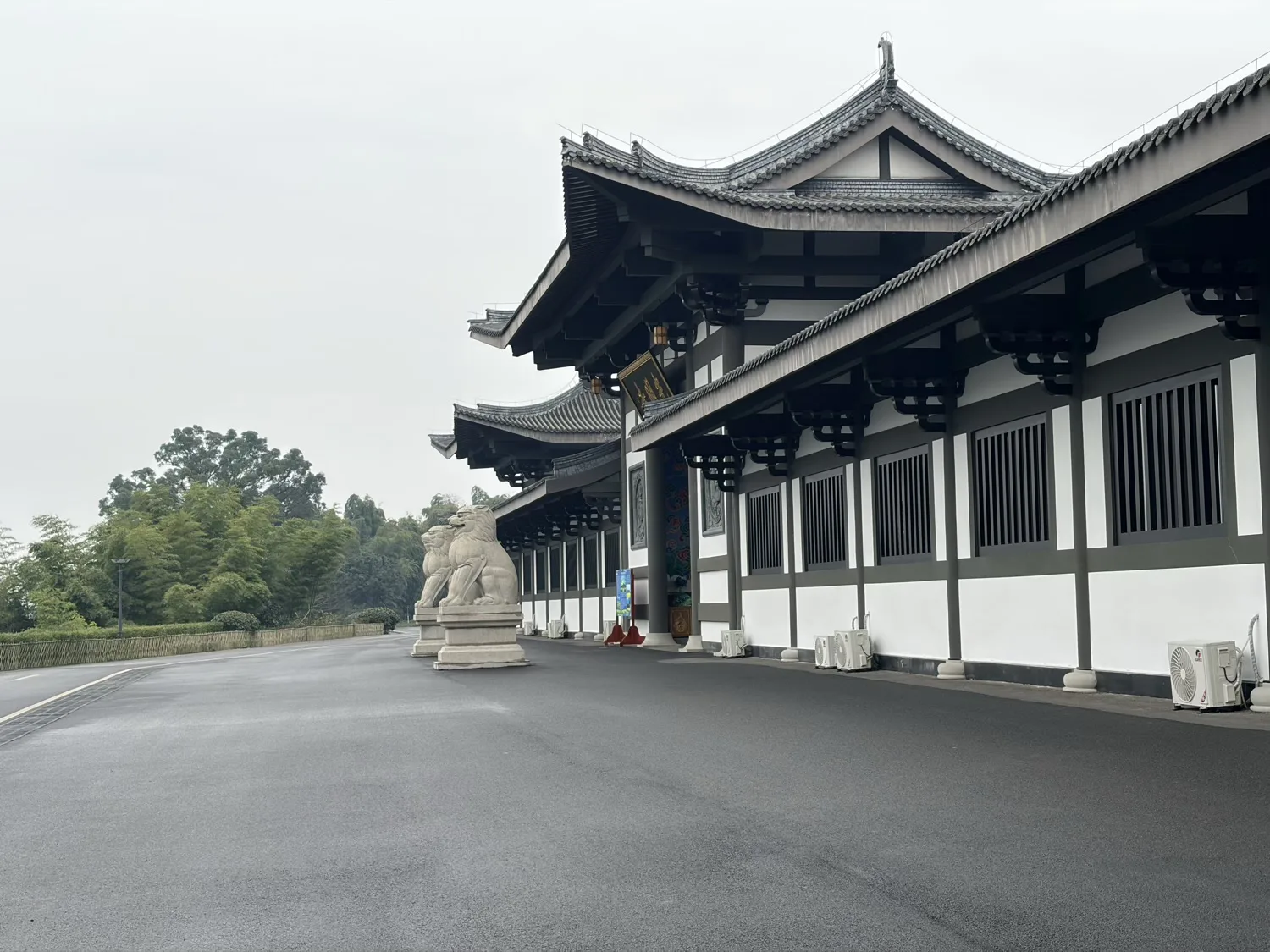
Best of all, admission is completely free. You can enjoy a traditional vegetarian meal at the temple for lunch, or head straight to Liujiang Ancient Town.
Mist and Mountains: Liujiang Viewpoint
Next, continue along the Three Mountains Tourist Loop. Not far from Liujiang, you’ll find the Liujiang viewpoint (烟雨望江台) .
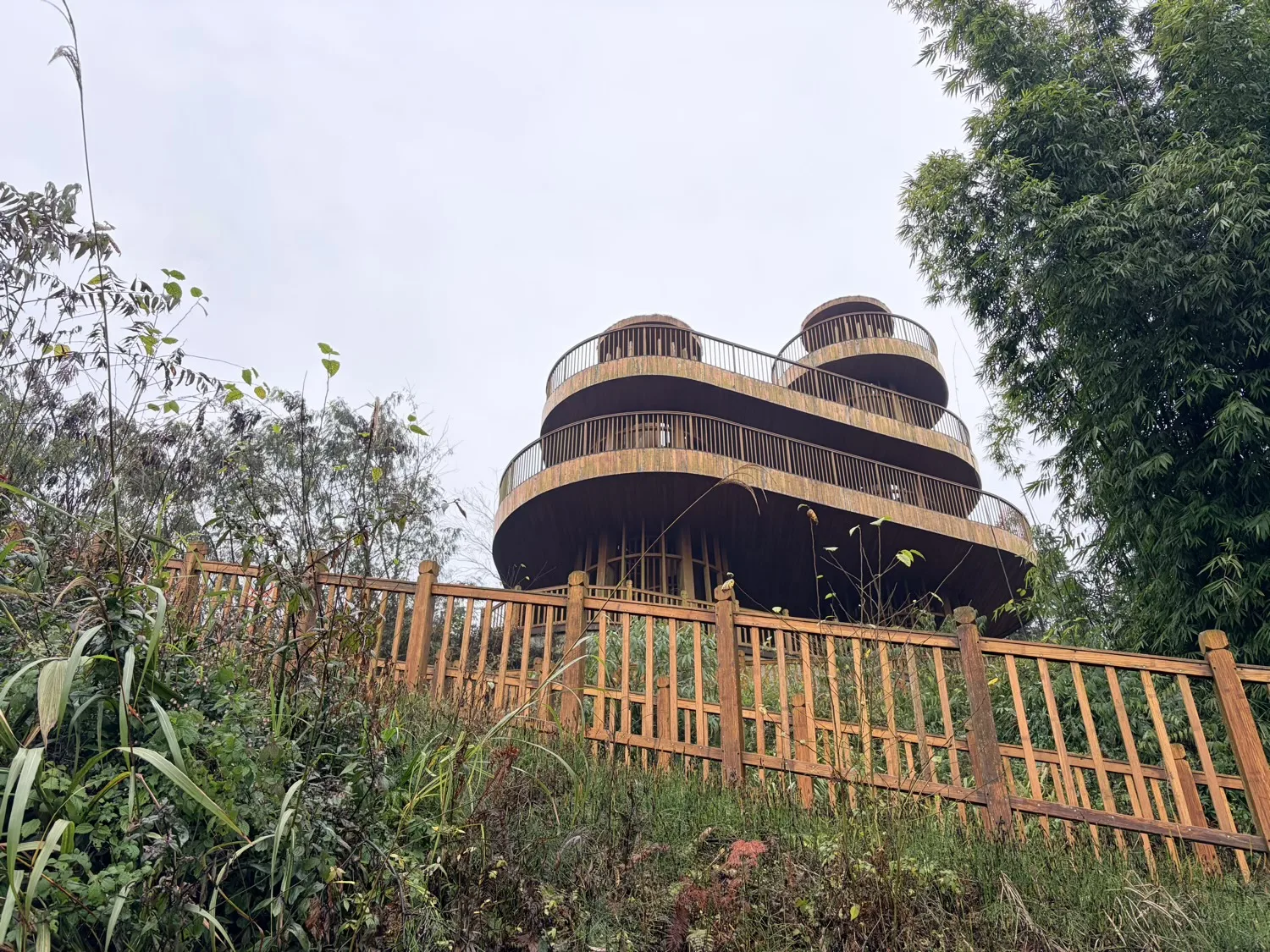
Stop here to hike the wooden plank trails and climb the three-story pavilion for a panoramic view of Liujiang.
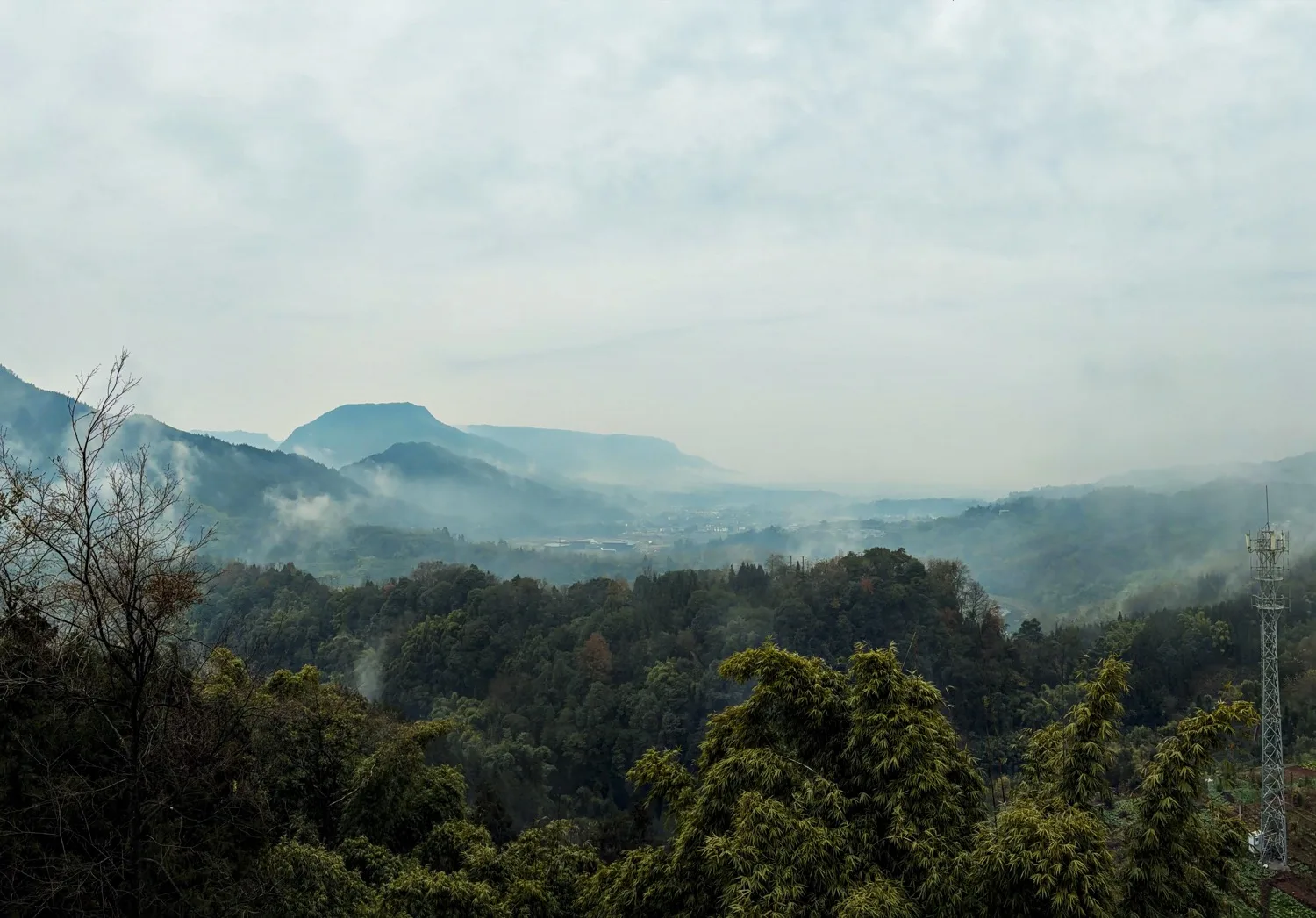
Locals call it “Misty Liujiang” because its location in the humid Sichuan Basin results in over 200 rainy days a year. The air is often filled with a thin mist, draping the mountains and architecture in a dreamy, translucent veil.
The “Spirited Away” Experience: Gaomiao Ancient Town
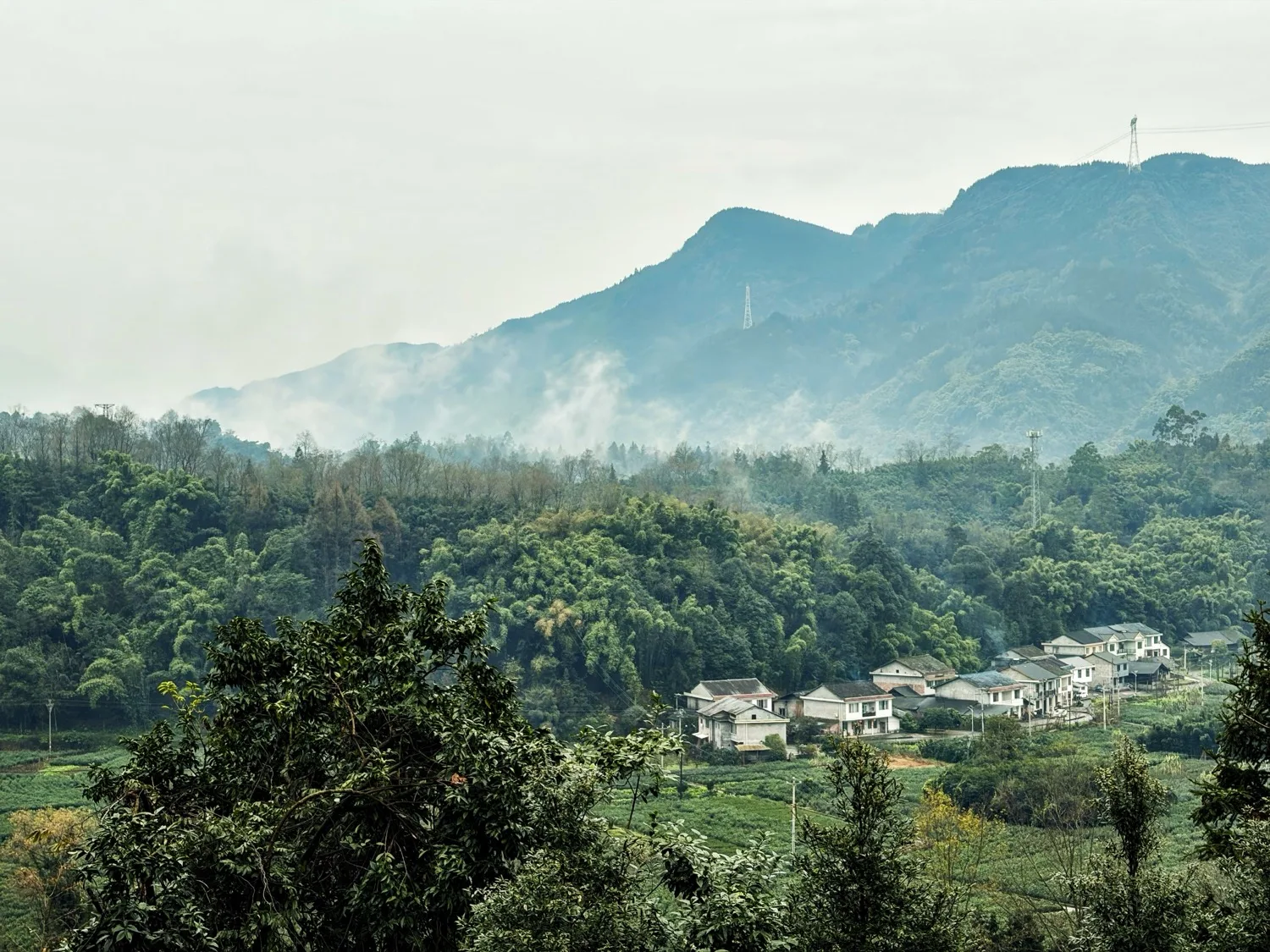
After the viewpoint, continue deeper into the mountains to Gaomiao ancient town. This is a “raw” ancient town that has escaped heavy commercialization.
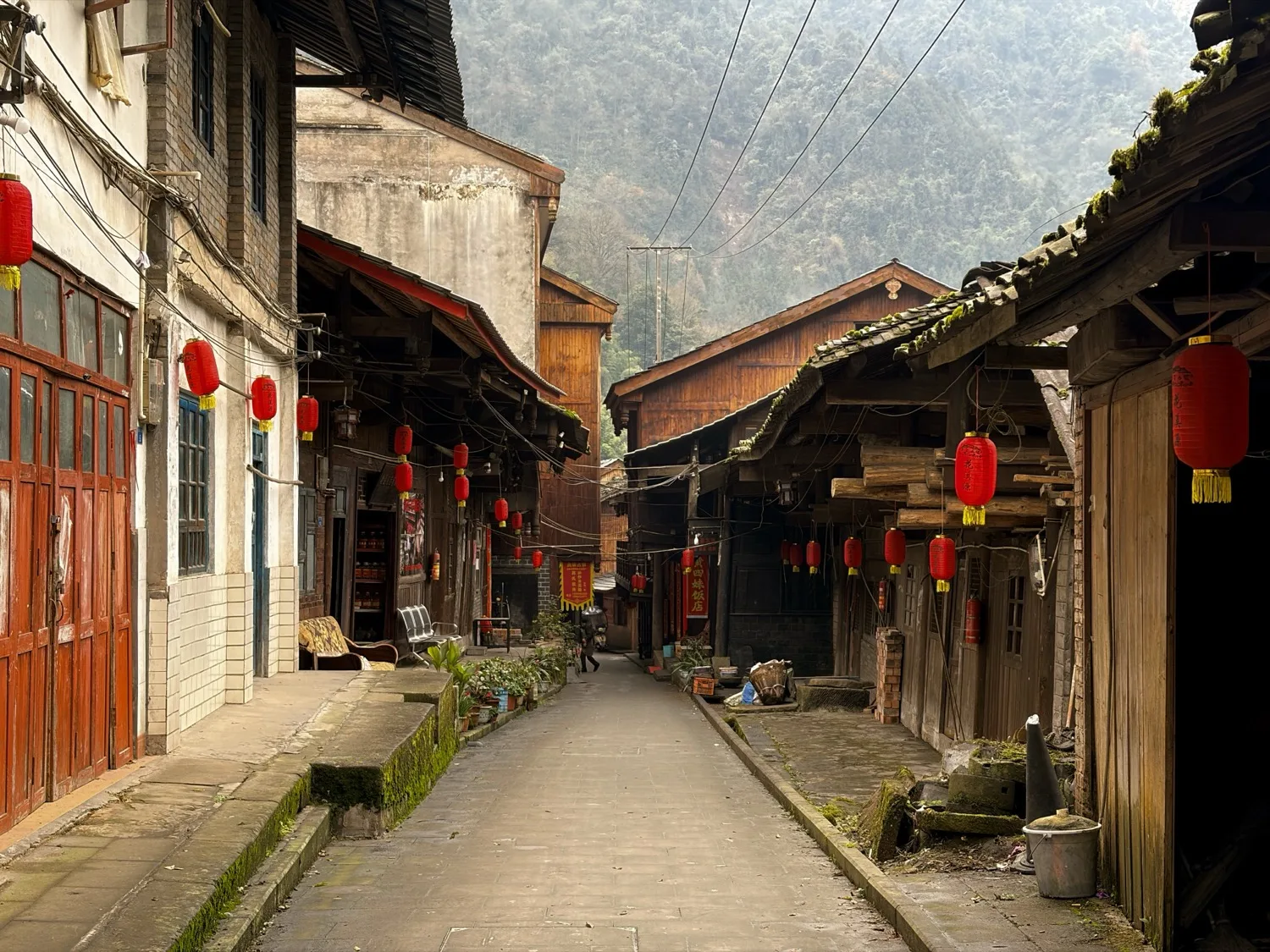
Beyond the local puffed rice candy and smoked meats, many visitors come here to find a specific building that bears a striking resemblance to the “Bathhouse” from Hayao Miyazaki’s Spirited Away.
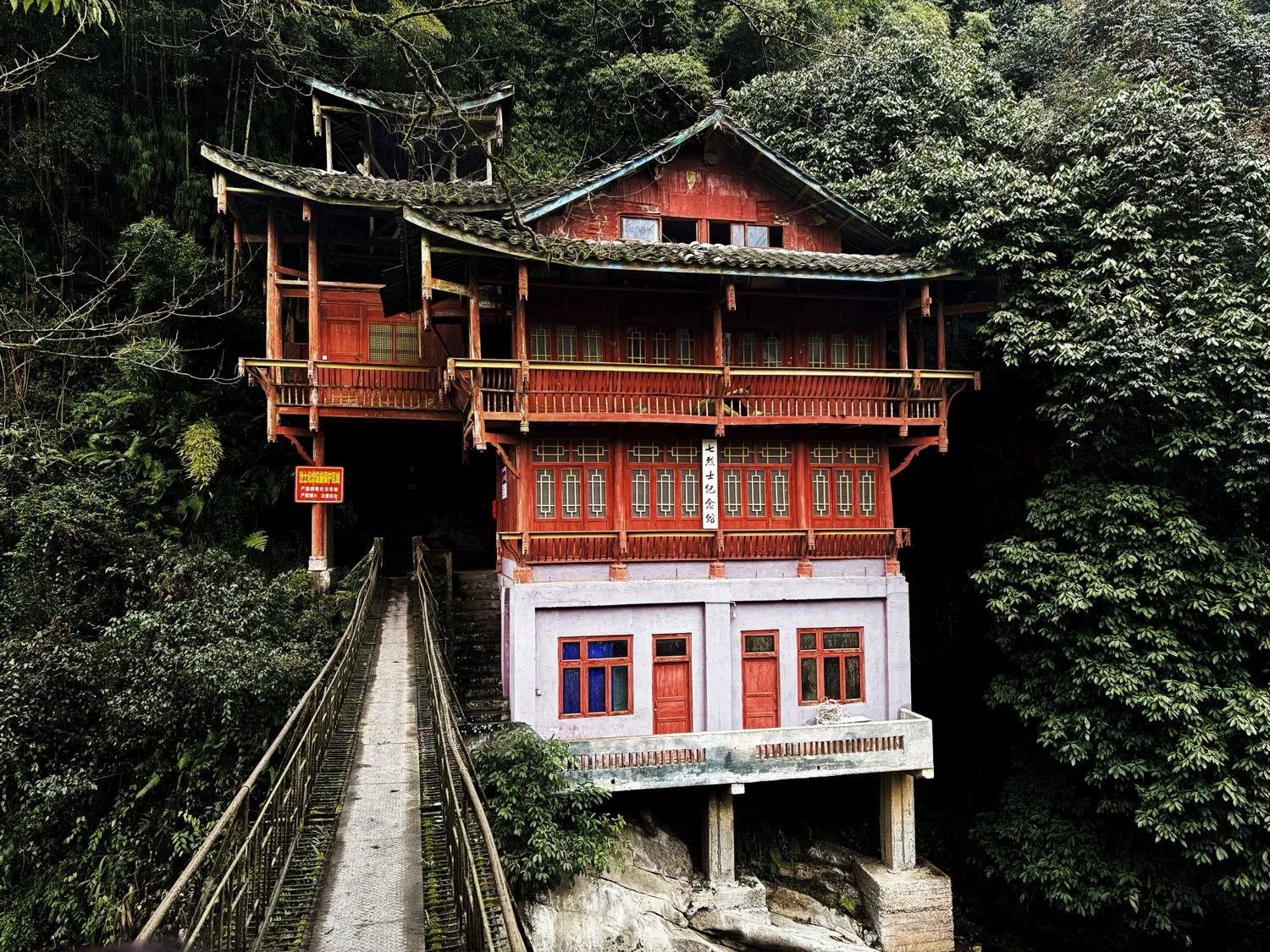
Located right by the river with an ancient suspension bridge in front, it’s incredibly atmospheric. Spend about an hour exploring the town before heading back to Liujiang.
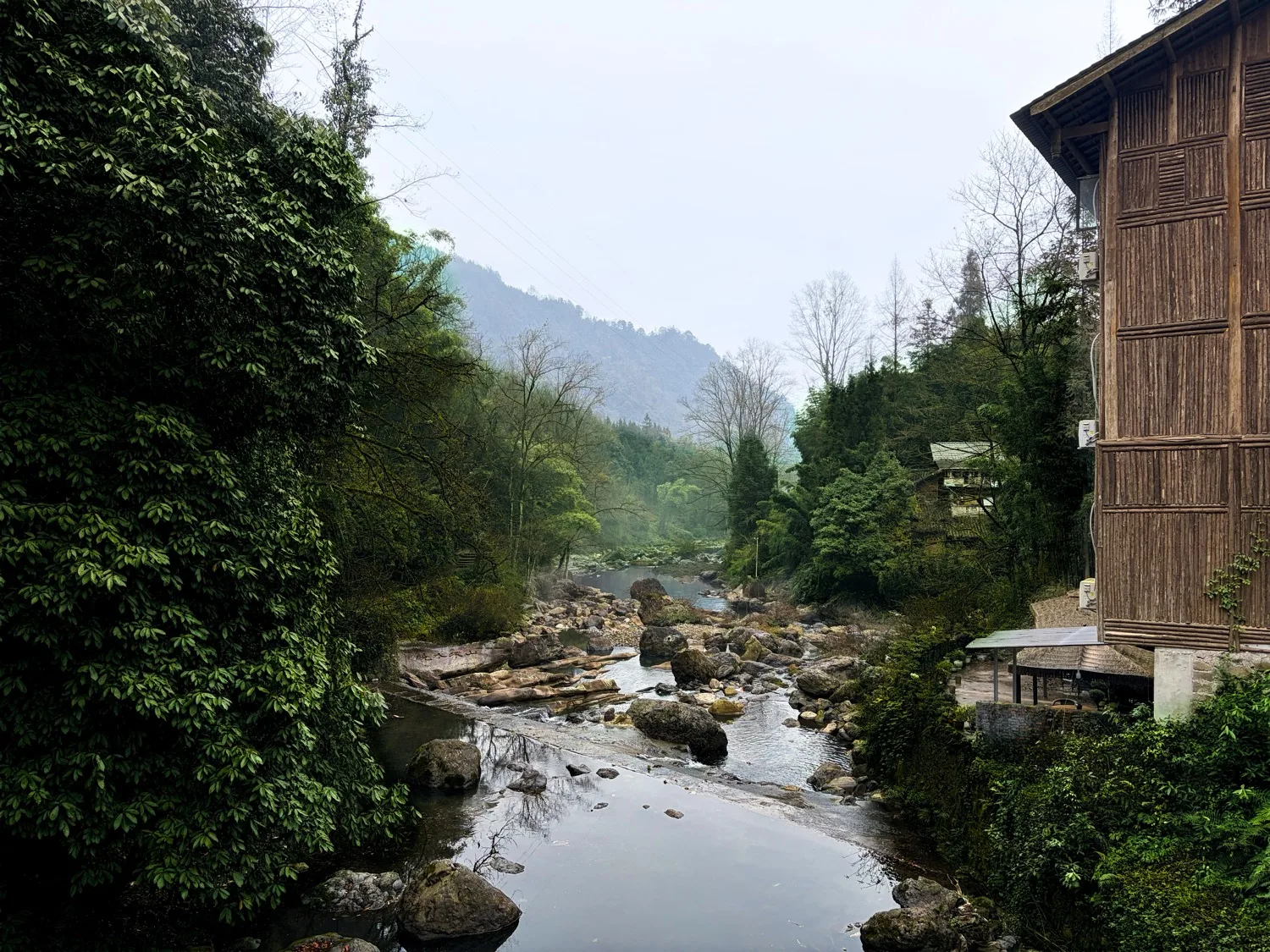
Evening in Liujiang Ancient Town
For the final stop of the day, explore Liujiang ancient town.
Known as the “Little Jiangnan of Western Sichuan,” it is defined by towering ancient trees and traditional stilted houses (Diaojiaolou). There is no heavy commercial pressure here — only the flow of the river and a relaxed pace of life.
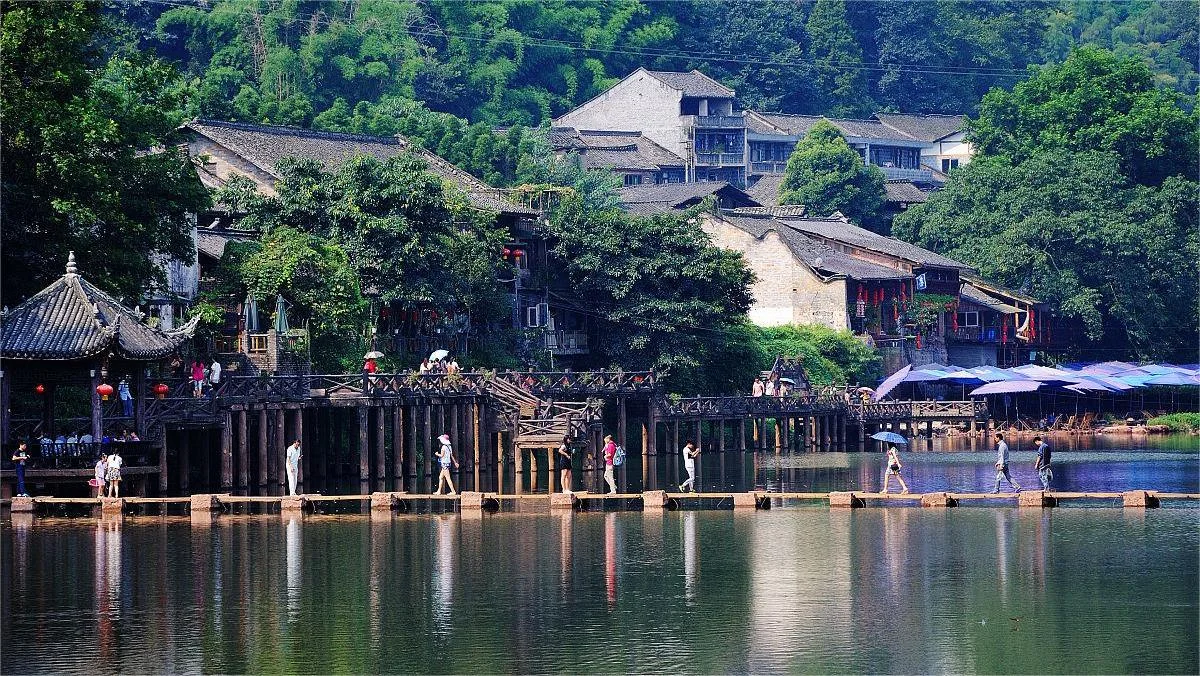
Over 300 stilted houses from the Ming and Qing dynasties line the river, blending seamlessly with the thousand-year-old banyan trees.
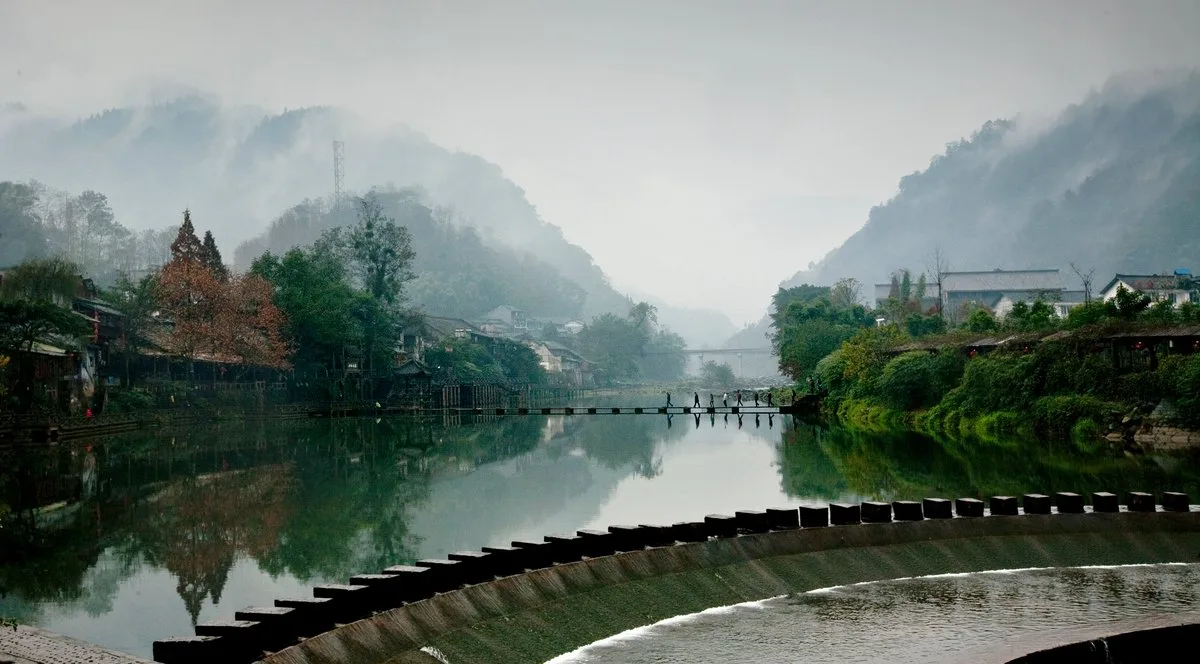
The town is full of charming guesthouses where you can stay the night and conclude your first day of adventure.
Day 2: Fuxing Town, Tea Mountain, and Ya’nv Lake
The Journey into the Clouds
You don’t need to rush this morning. You can take your time enjoying breakfast before leaving for Fuxing Village.
As you leave Liujiang Ancient Town, follow the Wawushan Express Road. You will eventually pass through the Yue’ertai tunnel, and as you emerge on the other side, you’ll enter a completely different world.
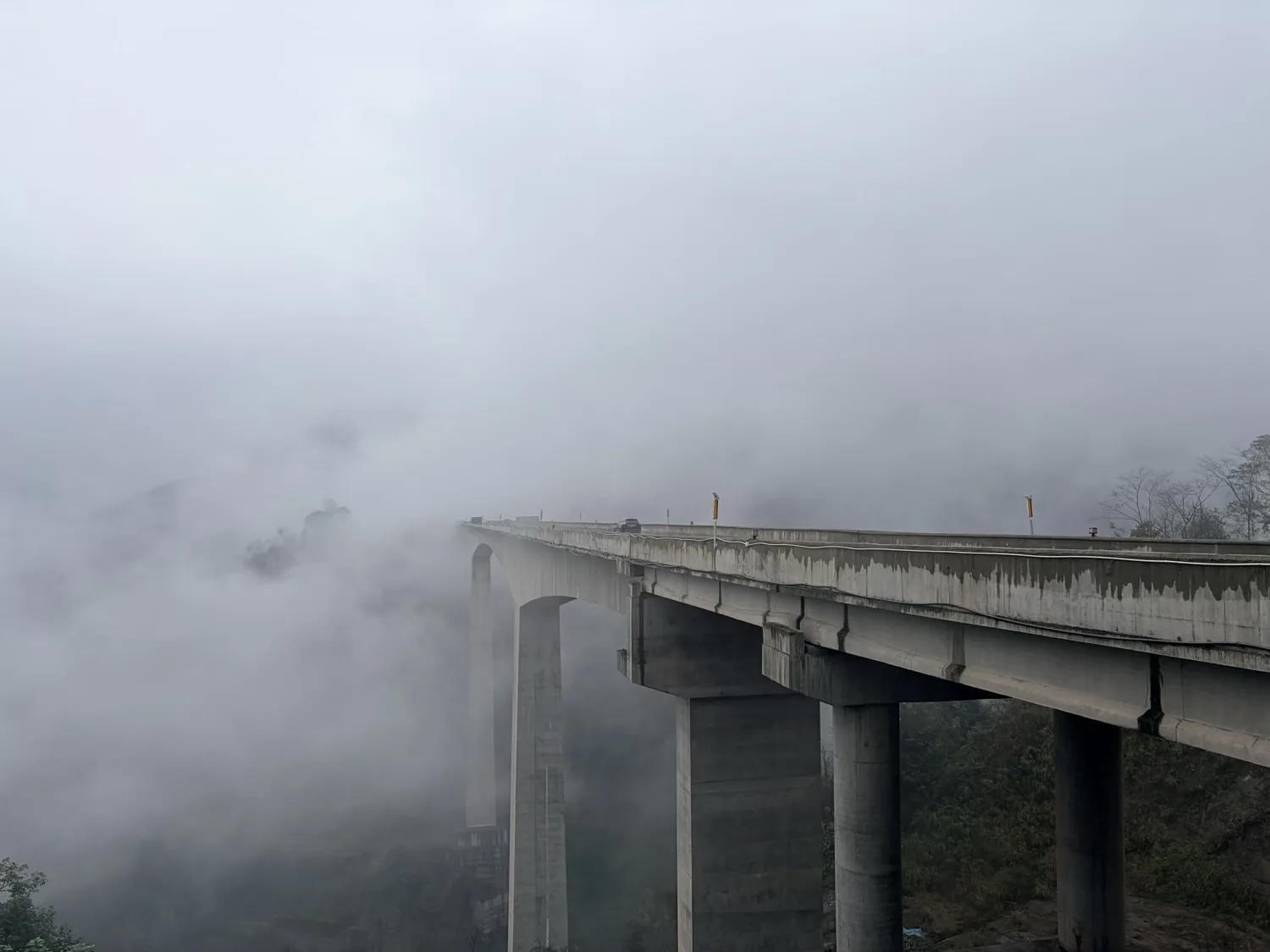
The mist here is thick — sometimes even veering into your driving path. The crossing of the Wangchanggou grand bridge is a highlight; often completely enveloped in clouds, the bridge feels like a “Sky Road” leading directly into a fairy tale.
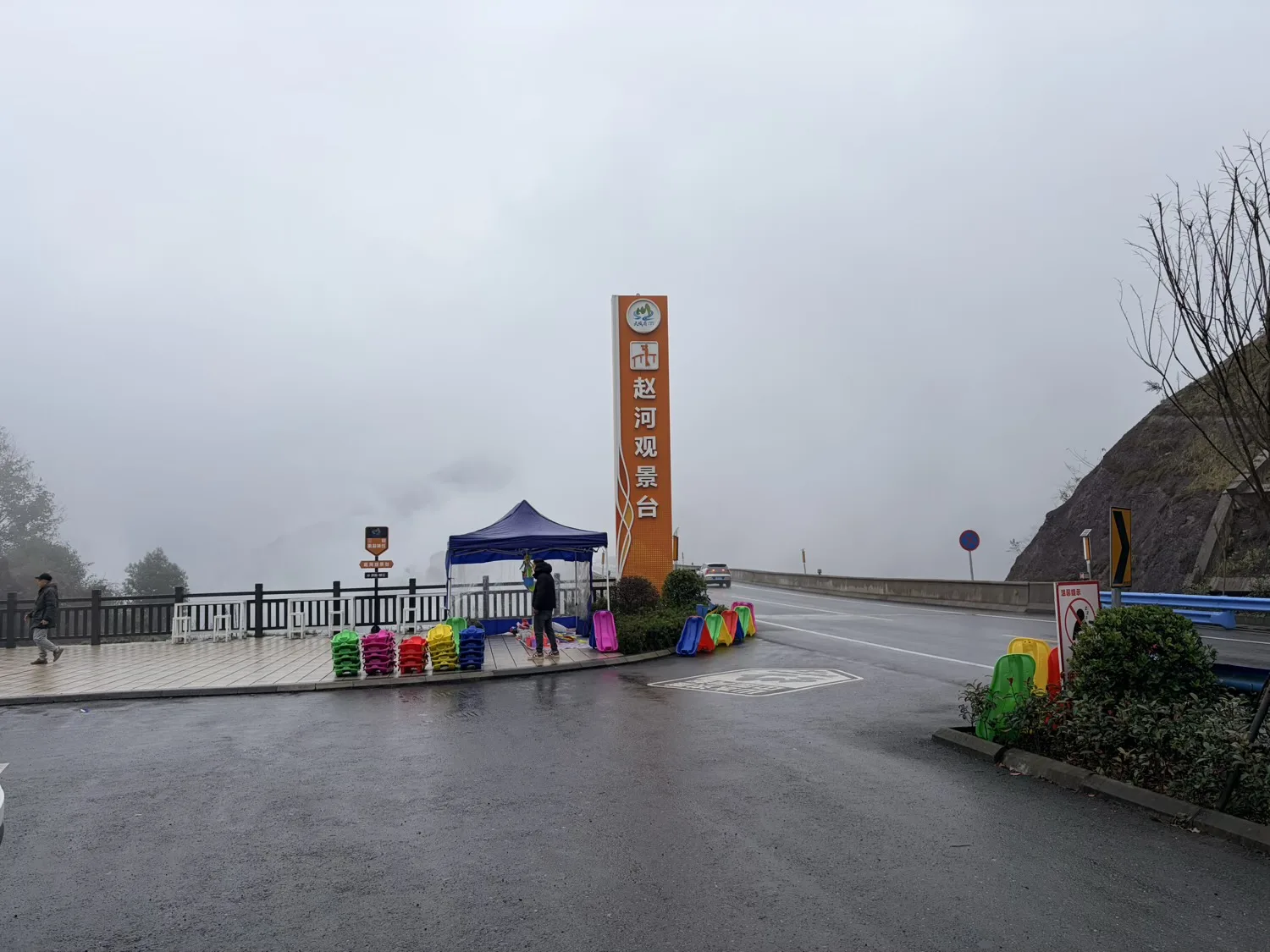
There is a viewpoint on the right side just after the bridge where you can stop to capture the ethereal scenery.
Navigating the Waters of Ya’nv Lake
The most authentic way to reach the tea mountain is to take a local boat from Gaoping pier (高坪码头). You can park your car here.
While driving to the village is possible, the roads are narrow, winding, and significantly more time-consuming. The boat ride is a modest 10 RMB per person.
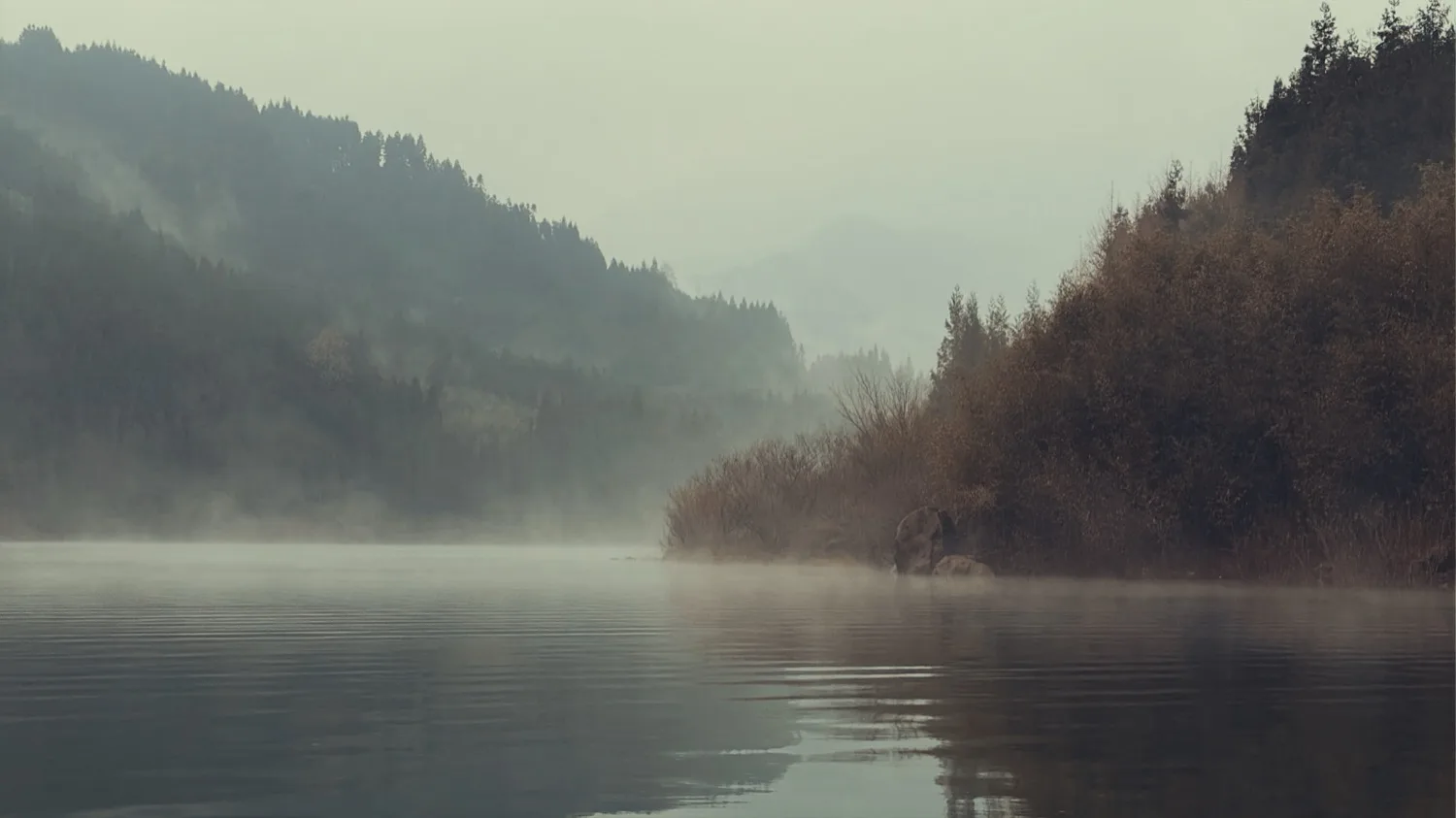
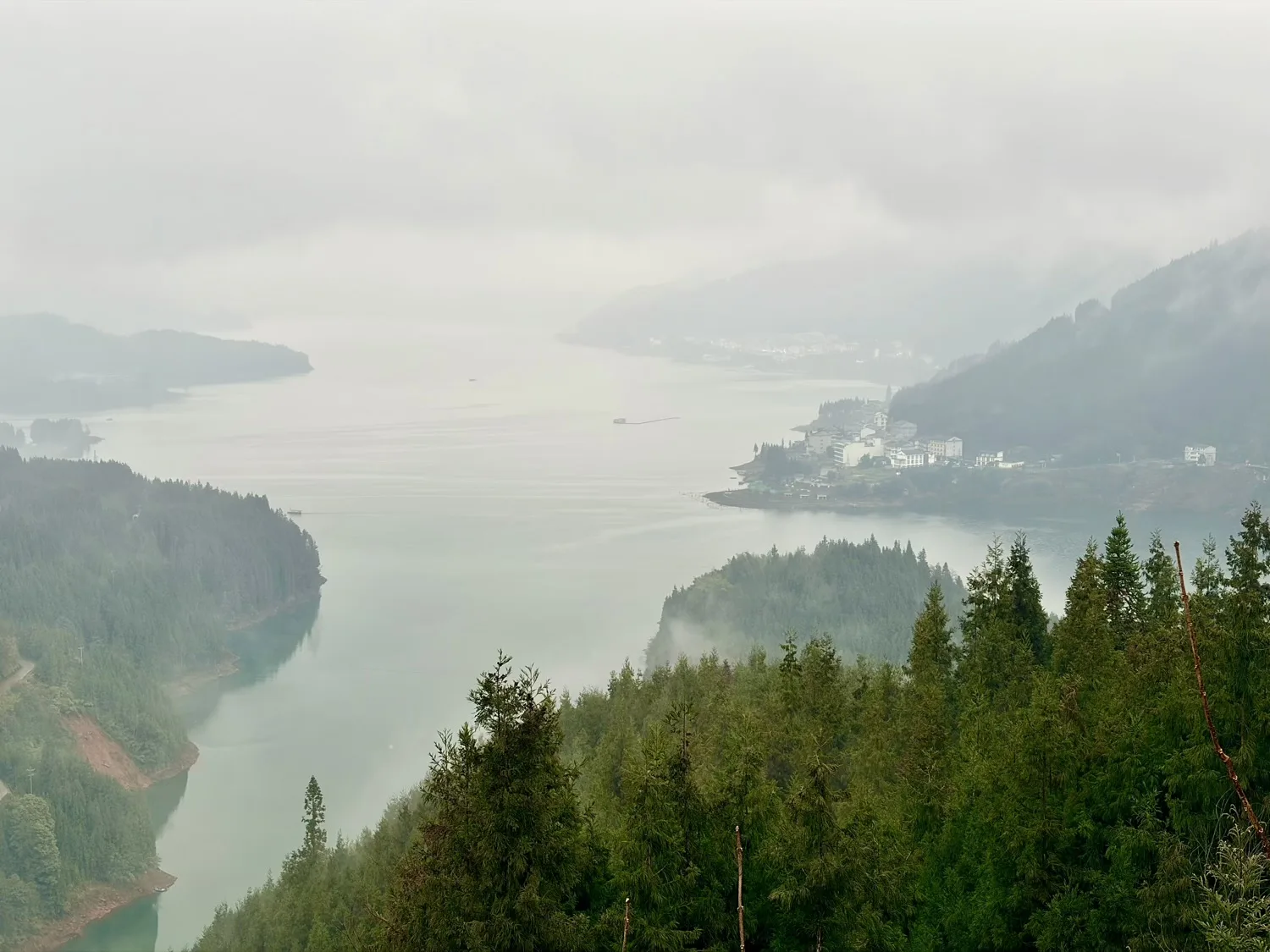
Ya’nv Lake (also known as Elegant Woman Lake or Wawushan Reservoir) sits at an altitude of about 1,000 meters. Formed by a hydroelectric dam, this 15-square-kilometre alpine lake is stunning.
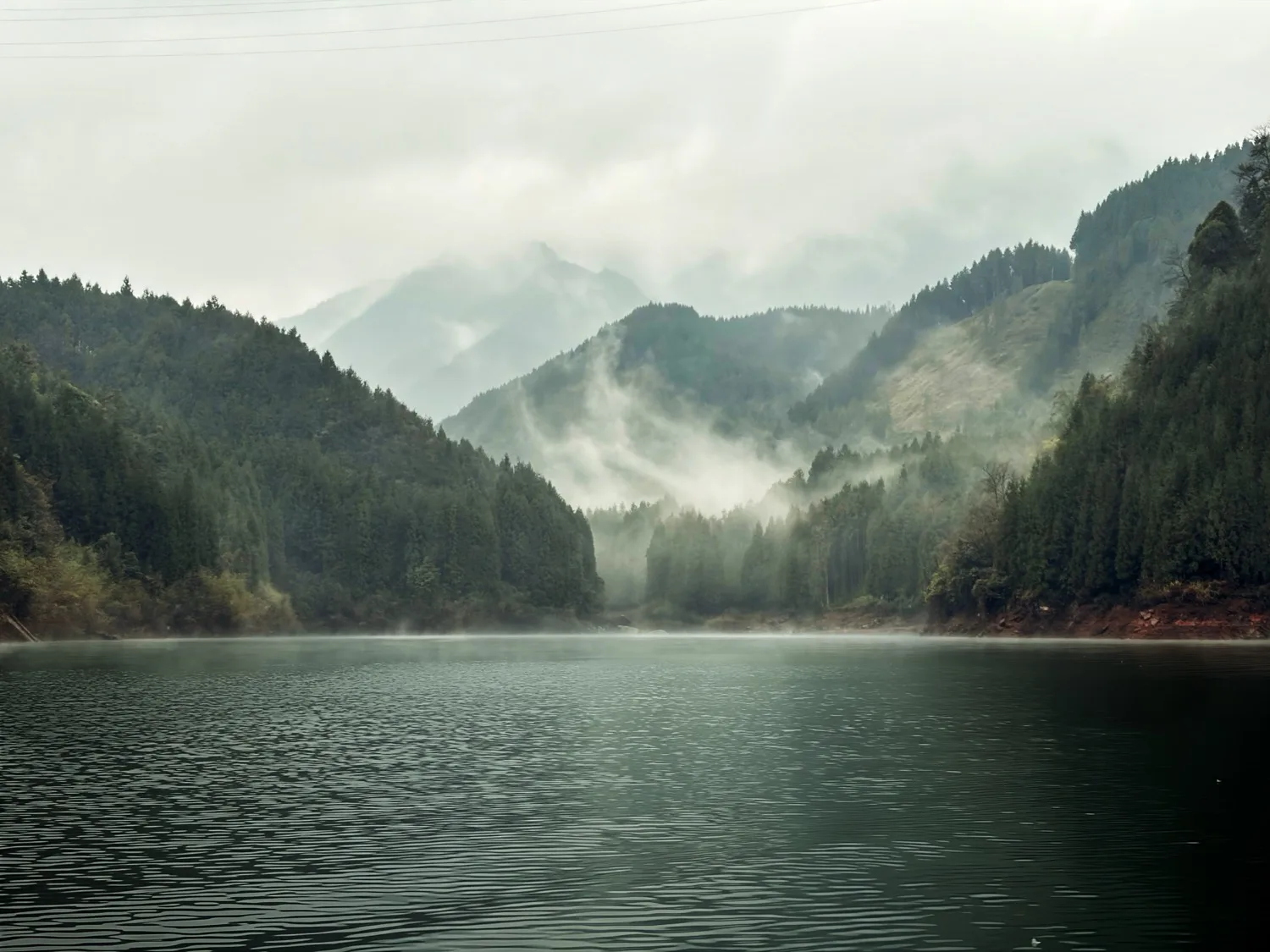
As you cruise for 20 minutes, you’ll experience the “Misty Liujiang” charm firsthand — a layer of thin fog usually dances on the water’s surface.
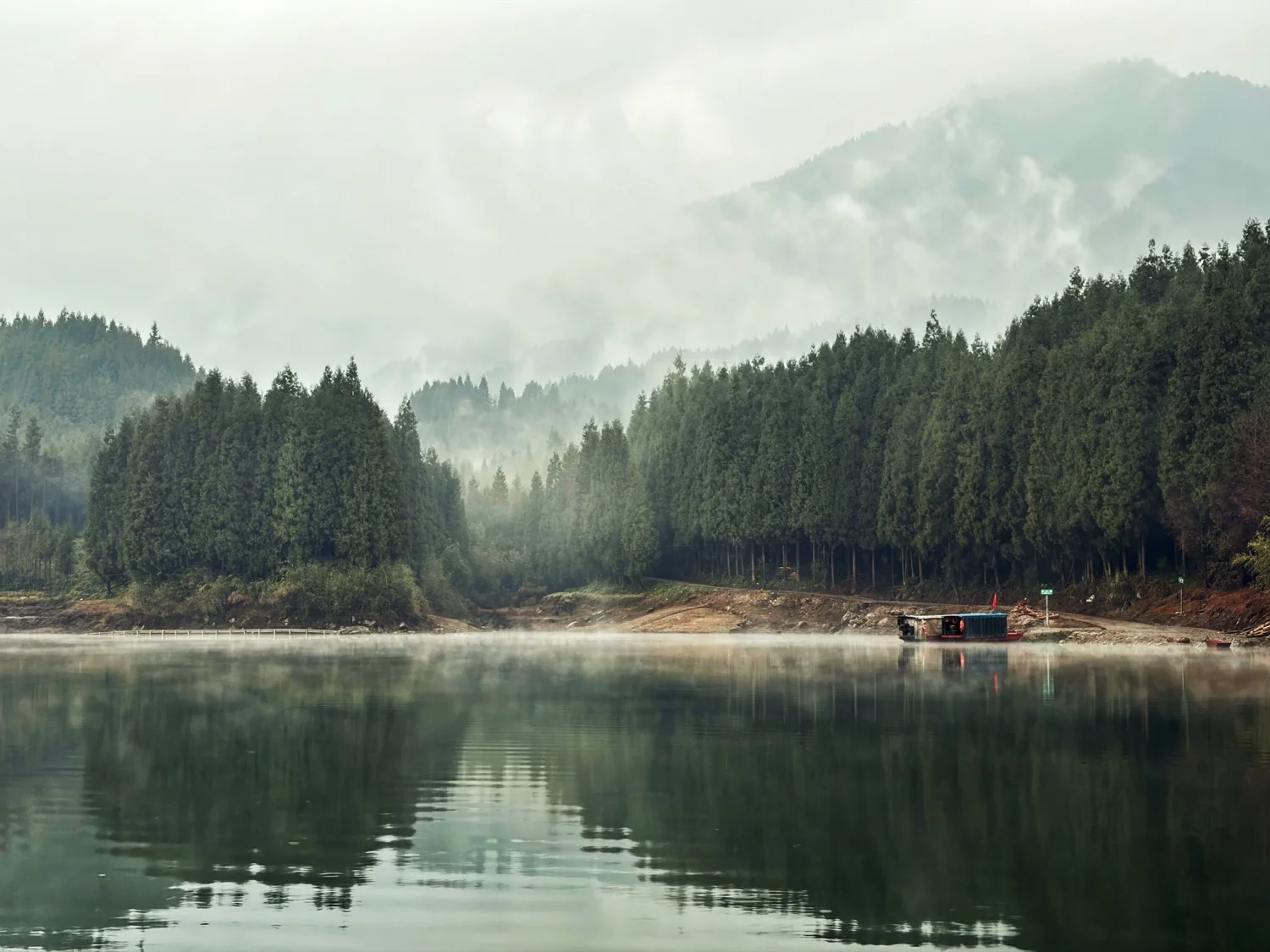
Wear extra layers, as the air on the lake can be quite chilly.
Fuxing Village Tea Mountain: A National Geographic Favourite
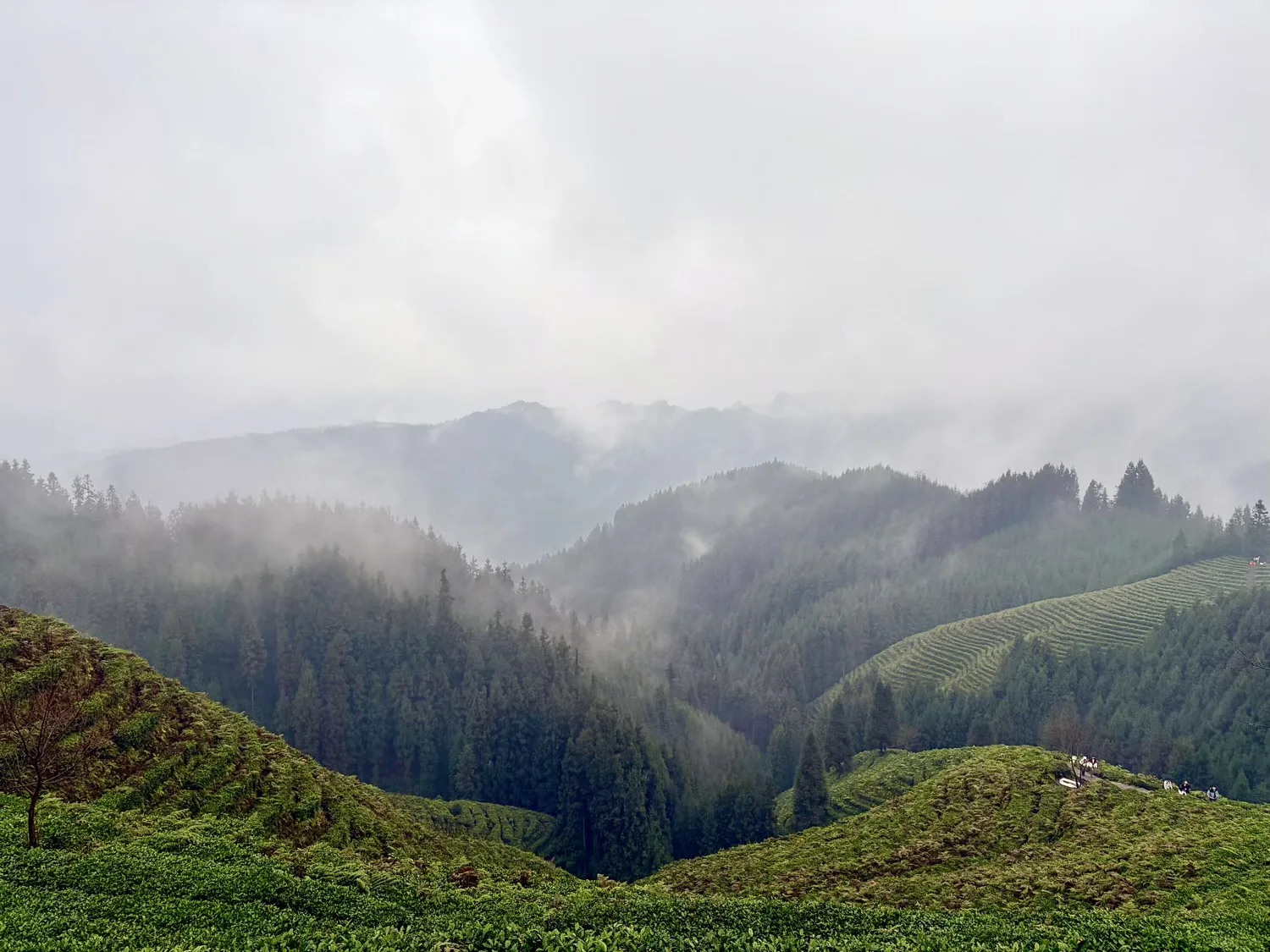
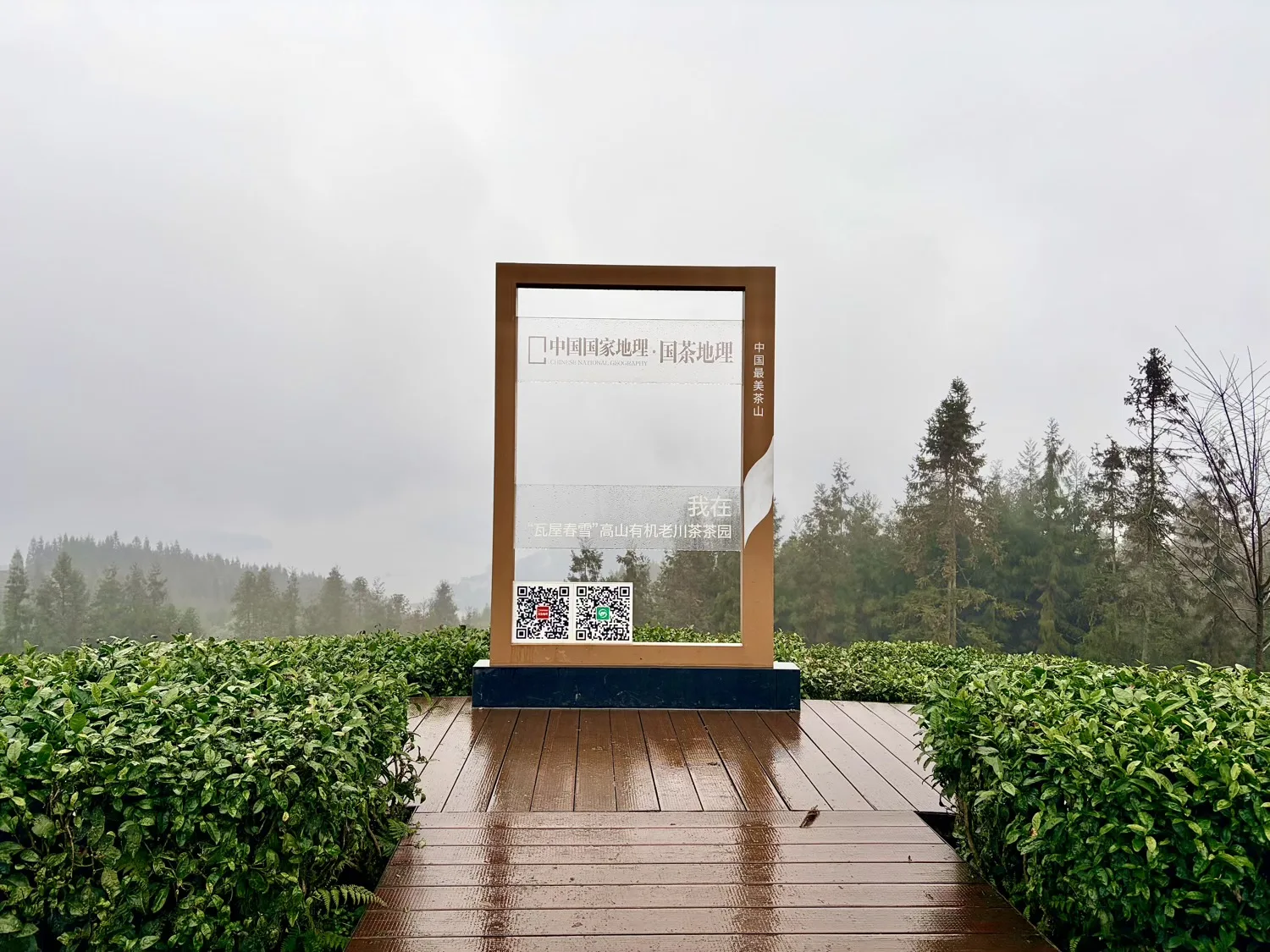
Hailed by China National Geographic as one of the country’s most stunning tea mountains, this high-altitude plantation sits at the foot of Wawu Mountain.
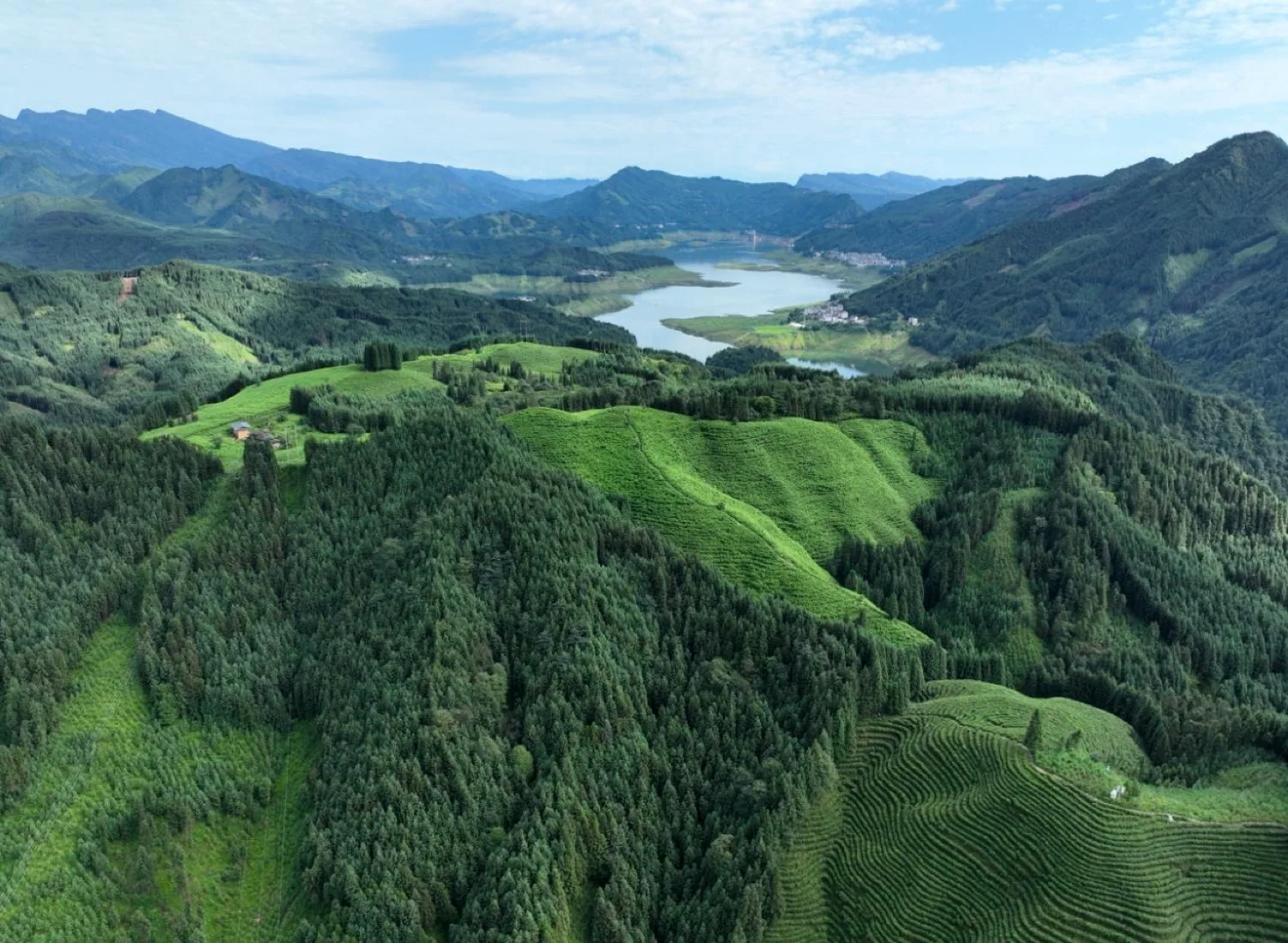
Surrounded by pristine forests and the serene lake, it is a dream for hikers and photographers.
From above, the terraced fields look like “Green Fingerprints” etched into the earth. It is truly a “Tea Garden in the Clouds.”
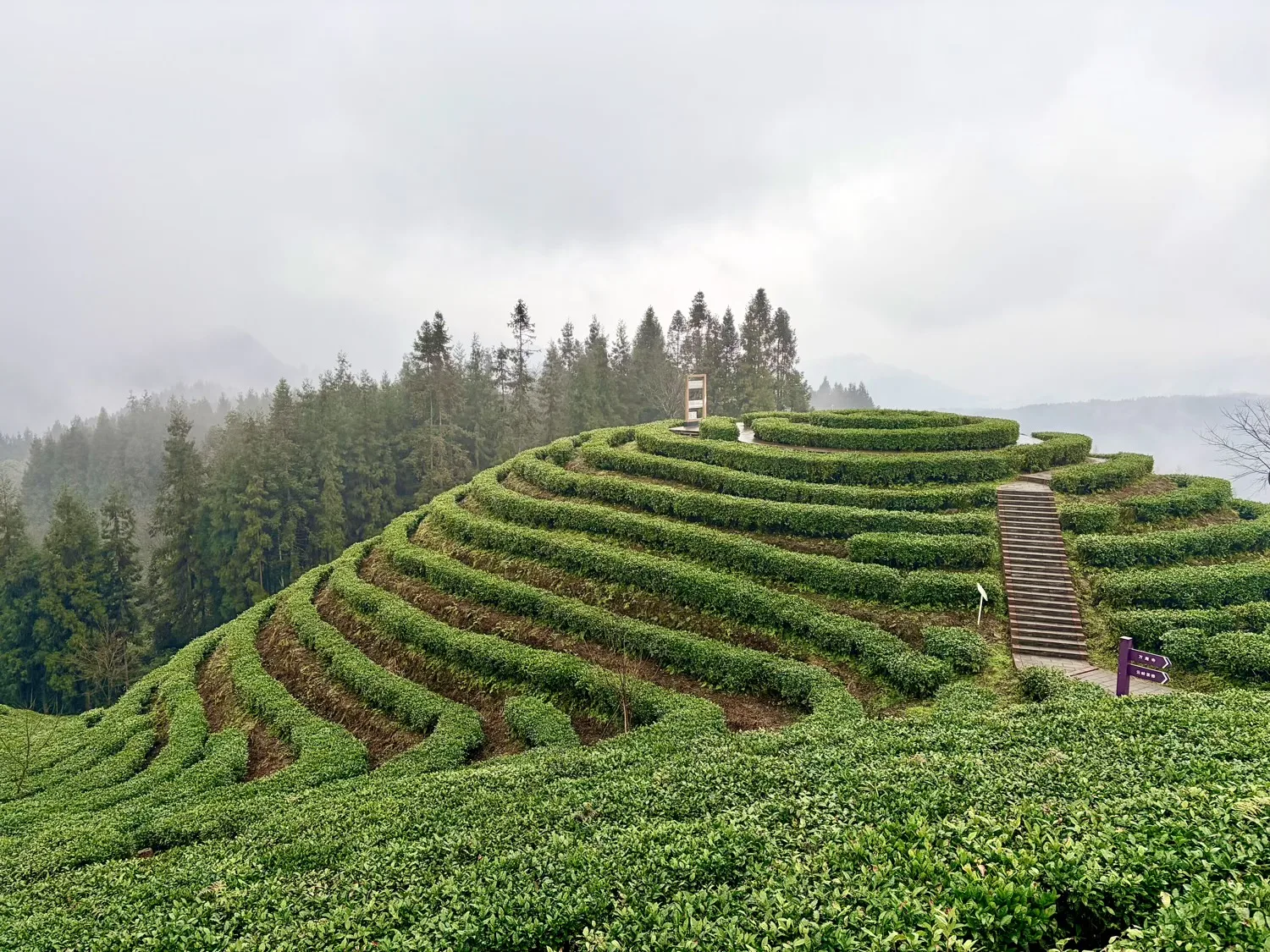
The Hiking Trail: A Complete Loop (Approx. 8.2 km)
The boatman will drop you off at the Fuxing village pier.
This is a one-way loop. You will be picked up at a different location, Fuping Pier (付坪码头), at the end of your hike.
Be sure to save your boatman’s phone number so you can call or text them as you near the end of the trail to arrange your return trip.
- The Start: From the Fuxing Village Pier, walk about 1.2 km (approx. 20 minutes) to reach Trail entrance no. 1. While Trail entrance no. 3 is the fastest route to the top, we highly recommend Entrance No. 1 to experience the full beauty of the trail.
- The Hike: Follow the well-maintained path. You will eventually descend into a valley before climbing back up to the summit. This section is the most physically demanding, but it leads you directly to the famous National geographic photo spot at the highest point.
- The Viewpoints: Continue past the summit to find Two small cottages — perfect for a rest and a cup of local tea. Further along at the fork, turn right to reach the Ya’nv lake viewpoint, which offers a breathtaking panoramic view of the entire reservoir.
- The Shortcut: Return to the main fork, turn left, and head downhill through the forest until you reach the paved road (near the Entrance No. 3 marker). Turn left and walk down the road for about 700 meters. Look for a Small path on your right next to the first house; this is a shortcut that leads directly down to Fuping pier in about 20 minutes.
Winding Down
Once the boat returns you to the starting point, you can choose to explore the lakeside further. The shore is lined with restaurants and boutique guesthouses. It’s a wonderful place to enjoy a meal or stay the night, though prices here are slightly higher than in town.
Alternatively, you can drive back to the familiar comfort of Liujiang Ancient Town to conclude your day 2.
Day 3: The Giant Buddha & The Flavours of Leshan
Heading to the “Oriental Buddha Capital”
On the final day of our journey, we begin our return toward Chongqing, making a stop at the historic city of Leshan.
Often hailed as the “Oriental Buddha Capital,” Leshan is a city where profound spiritual heritage meets a legendary culinary scene.
The Leshan Giant Buddha
The Leshan giant buddha is a staggering masterpiece of ancient engineering. Carved directly into the red sandstone cliffs of Mount Lingyun during the Tang Dynasty, this 71-meter-tall statue is the largest stone Buddha in the world.
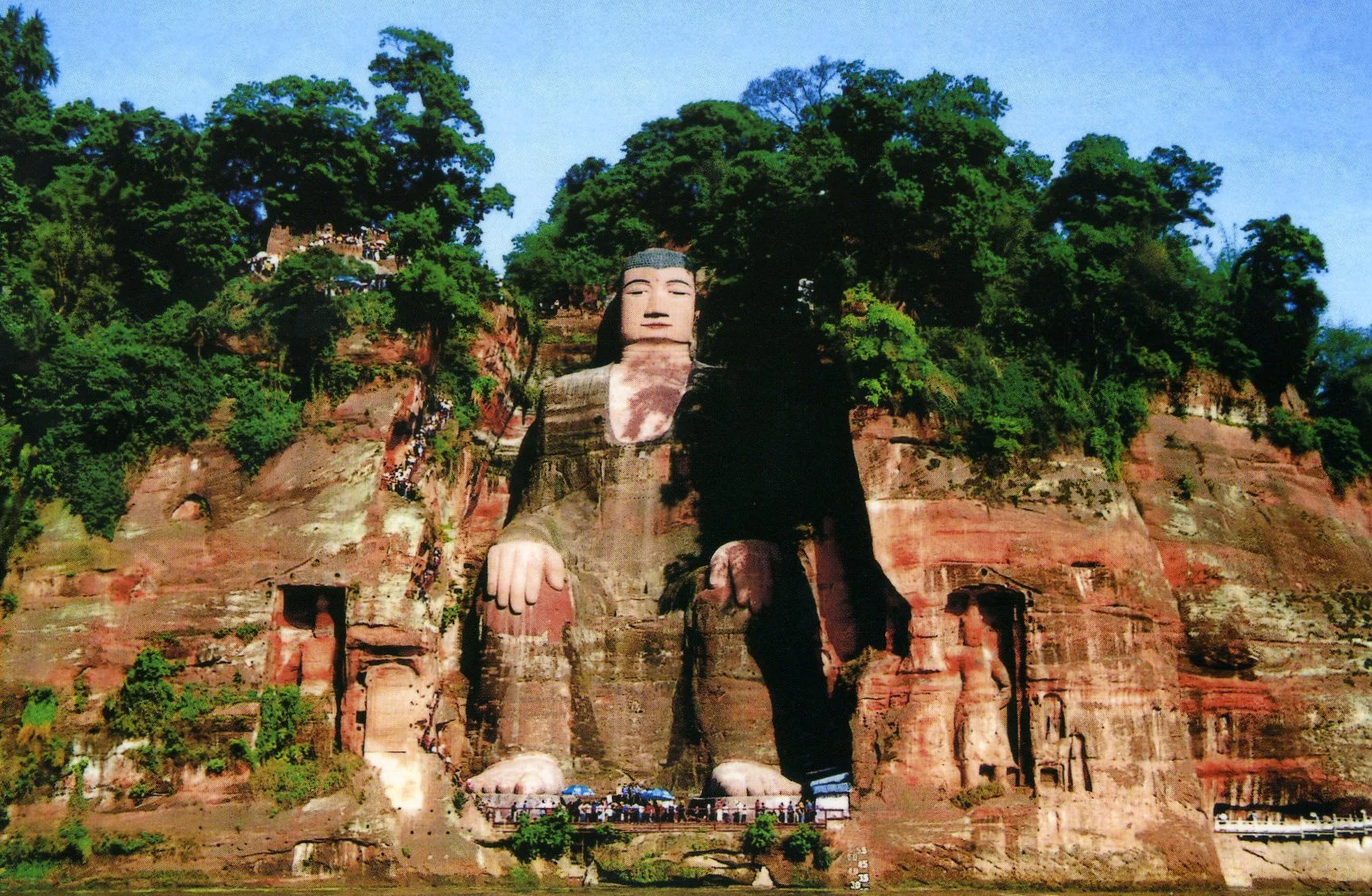
It was built at the confluence of three rivers with the hope that the Buddha’s presence would calm the turbulent waters that plagued passing ships. His shoulders are 24 meters wide, and his smallest toenail is large enough to accommodate a seated person — a true testament to ancient Chinese craftsmanship and devotion.
A Riverside Perspective
While we didn’t take the full tour inside the scenic area today, we enjoyed a stunning alternative view from Leshan riverside park.
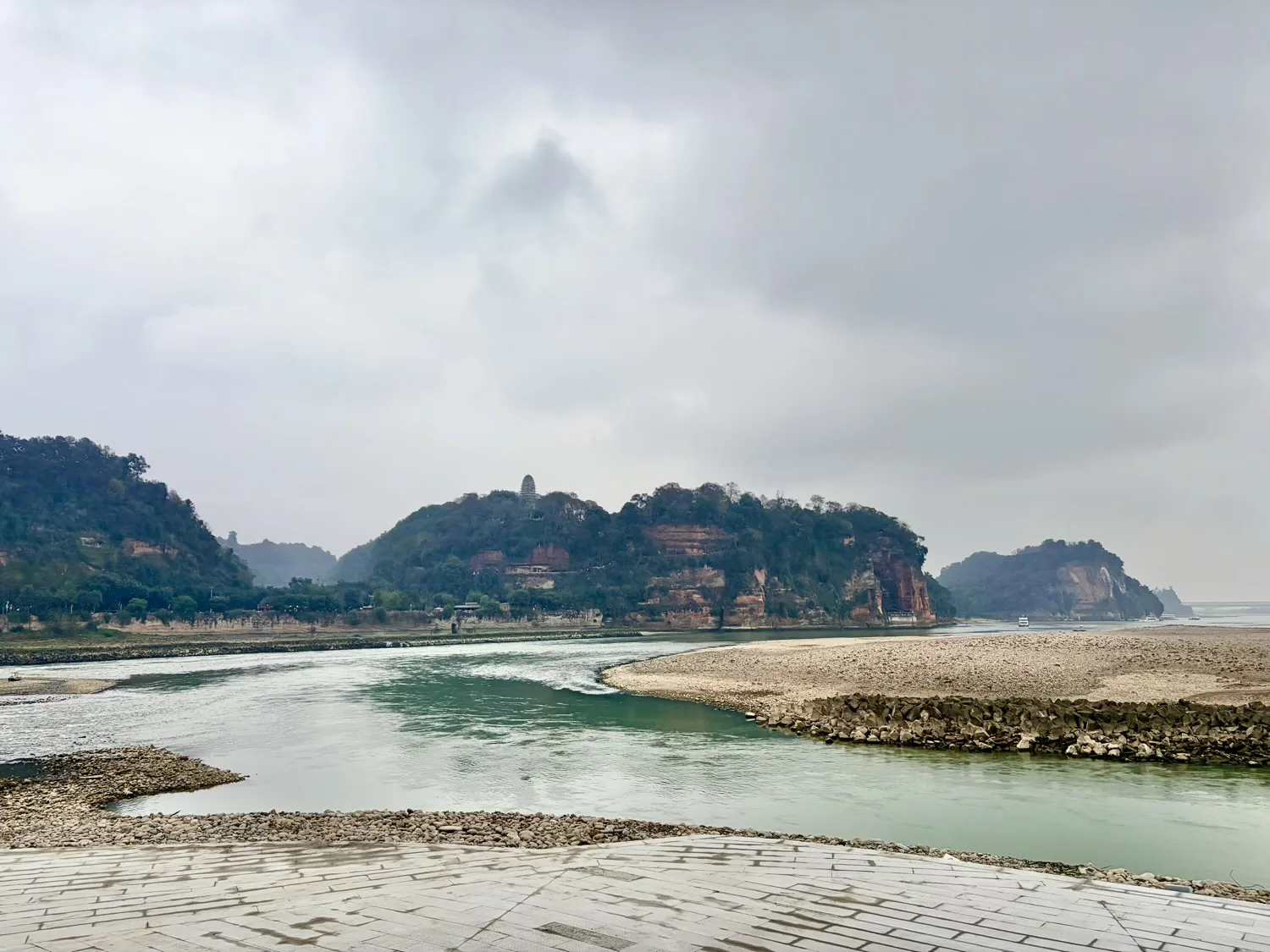
From here, you can catch a glimpse of the Buddha’s majestic silhouette across the water. It’s a peaceful spot to walk along the promenade and witness the powerful confluence of the Minjiang and the famous Dadu River, where the different currents merge into one.
A Culinary Pilgrimage: Jiaxing Road
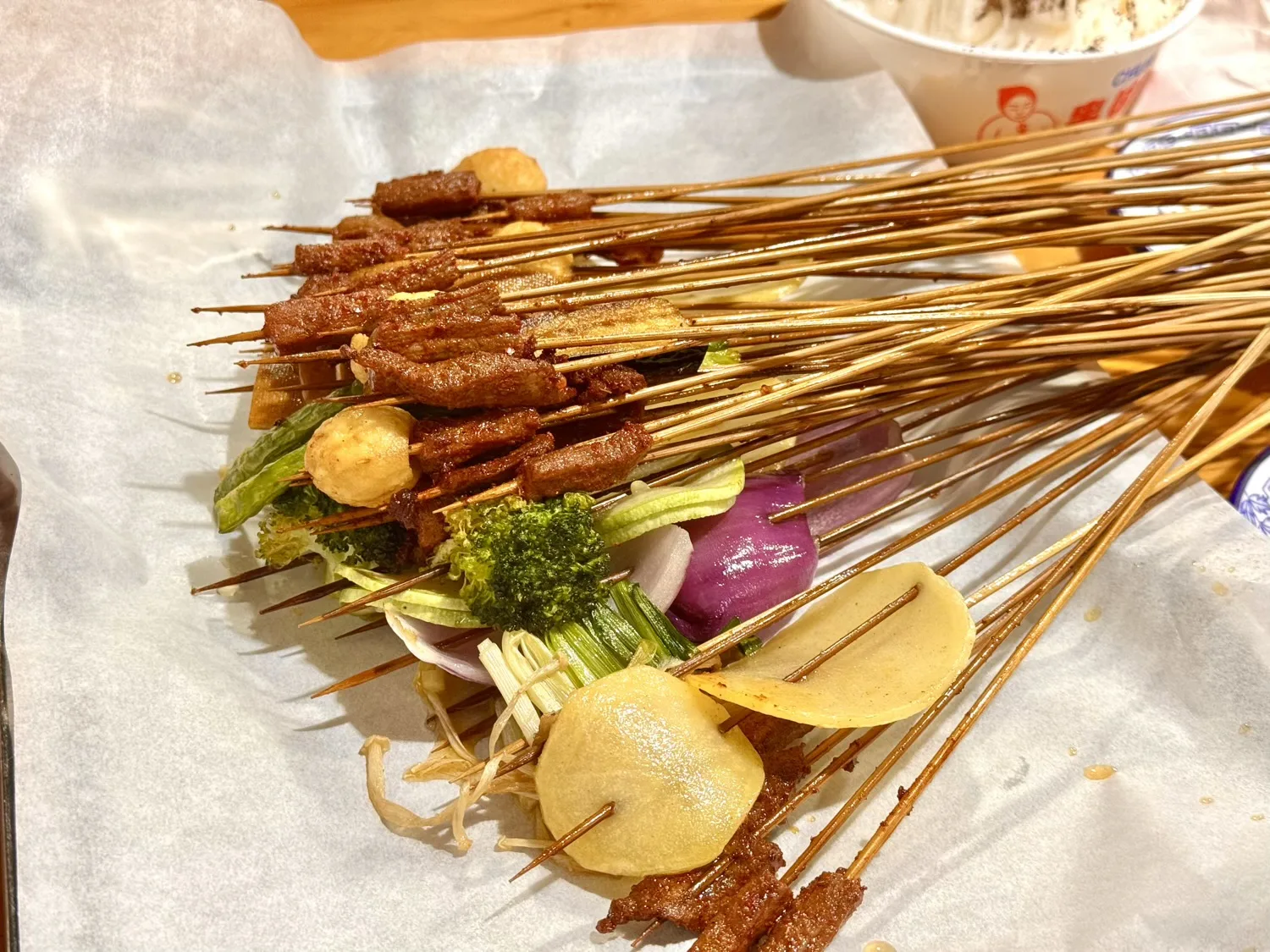
No visit to Leshan is complete without diving into its world-renowned food scene. Head over to Jiaxing road, the city’s most famous “foodie” street, to indulge in local favourites:
- Leshan Fried Skewers (炸串 – Zhàchuàn): Unlike standard street skewers, Leshan’s version is an art form. A variety of meats and vegetables are flash-fried in a seasoned oil to achieve a perfect crunch, then brushed with a secret savoury-sweet sauce and dusted with aromatic chilli powder. It is the ultimate comfort food.
- Qiaojiao Beef (跷脚牛肉 – Qiāojiǎo Niúròu): This “Leg-Crossing Beef” soup has a history of over a hundred years. It features tender slices of beef and offal simmered in a complex, herbal broth made with dozens of traditional spices. It’s served with a side of dry chilli dip, providing a warming, soul-satisfying contrast to the delicate broth.
The Journey Home
After a satisfying lunch, we begin the final leg of our drive back to Chongqing. Congratulations! You have completed our 3-Day “Most Beautiful Tea Mountain” Expedition.
You’re returning home with a heart full of misty landscapes and a palate seasoned by the best of Sichuan.

Discover Chongqing with WelcomeCQ!
From mountains to grasslands, Chongqing has something to offer for everyone.
Start planning, find an inspiration, or search for a place.
Or follow us on social media.